


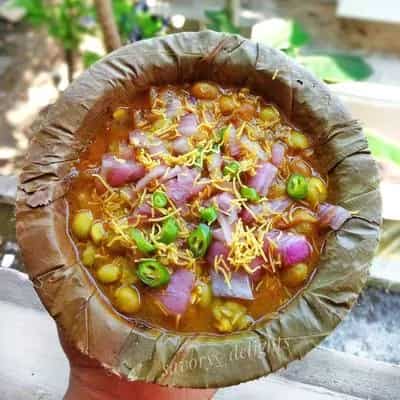
Ghugni
Nutritional Value
1026
Calories
per serving
- Fat8 g
- Protein54 g
- Carbs175 g
- Fiber55 g
- Sodium0 g
- Others0 g
- Place of OriginEAST,INDIA
- CuisineAsian,Indian,East Indian
- Common Ingredients
- CourseStarter & Appetizer
Ghugni is one of Bengal’s most uncomplicated and healthy snacks. Consumed widely on its own, the flavour and aroma of this street-style delicacy is best enjoyed with toppings of chopped onion, coconut, coriander and a dash of lime. In parts of central and north Kolkata—the office hubs of the city—streets are lined with shops selling piping hot Ghugni helpings in bowls made of leaves throughout the day.
Not only does it count as a portion of appetising street food, but it is also just as popular as a regular Bengali breakfast, accompanied by Luchi, Roti, rice, bread or Muri (puffed rice).
Ghugni or Ghuguni (Assamese), is a lentil-based, dense curry made from dried white chickpeas or Bengal gram, popularly known as Matar in Bengali. The variety of pea preferred for the dish originated in what is modern-day Afghanistan. Ghugni is mostly thick yellow curry prepared with dried and ground aromatic garam masala, which lends the dish its distinct taste. In Bihar however, green chickpeas are used for cooking the dish. In fact, a variety of lentils or dals can be used in the preparation, and the dish can be served with a wide range of accompaniments. For instance, the Ragada, a dish similar to the Ghugni, is usually served with potato patties. With all its regional variations, Ghugni continues to be a significantly popular delicacy in eastern parts of the country.
Dal or lentils are a common food item in any Indian household, since the age of the Indus Valley Civilisation. It is precisely the way of cooking that distinguishes one Dal from the other. Every region has its own blend of spices that they add to their version of Dal.
Serving Dal to guests has been a quintessential ritual in Indian tradition and several ancient texts mention ways of serving Dal to guests during festivals. According to various sources, Ghugni originated from a special kind of Dal served at the wedding of Chandragupta Maurya in 303 BC.
Ghugni has undergone constant evolution, leading to multiple iterations of the original recipe, ones that include additional ingredients. Traditionally an authentic vegetarian dish, Ghugni can also be zhuzhed up with the addition of keema (finely chopped meat) and meat chunks, for the die-hard non-vegetarians.
Historically, white peas were preferred for consumption during winter months, because of their high nutritional value. The Bengali reimagination of the Afghani dish led to white peas appearing as a staple in east Indian households.
Nutritional Value
1026
Calories
per serving
- Fat8 g
- Protein54 g
- Carbs175 g
- Fiber55 g
- Sodium0 g
- Others0 g