


- Home
- Slurrp360
- Most searched
- Sooji Kheer
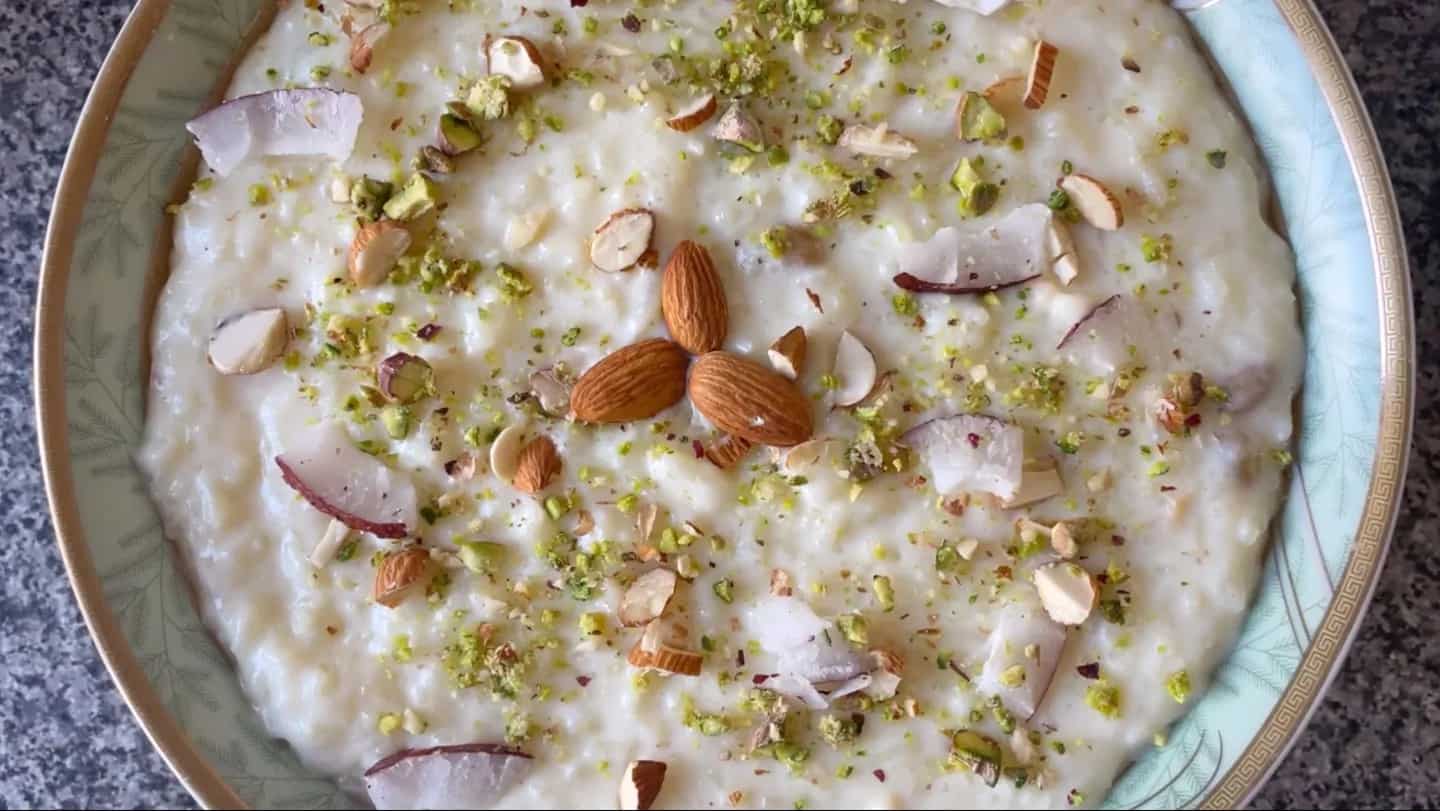
Sooji Kheer
Nutritional Value
1215
Calories
per serving
- Fat57 g
- Protein28 g
- Carbs145 g
- Fiber7 g
- Sodium0 g
- Others0 g
- Place of OriginINDIA
- CuisineAsian
- Common Ingredients
- CourseDessert
Sooji Kheer or Rava Kheer (semolina pudding) is a light, delicious, milk-based dessert. It’s made by bringing together sooji, milk, ghee, and sugar as base ingredients. Also adding to the flavour are cashews, cardamoms, raisins, and anything else you might want to add. With a preparation time of under 30 minutes, it’s a low hassle dish and one that’s easy to digest.
Sooji is a nutritious food with several health benefits. These include it being a great source of iron and instantly energising the eater. Rich in magnesium, zinc, and phosphorus, it also supports the nervous system and helps prevent major neurological disorders. High in protein and fibre, it may also support weight loss. With a low level of salt, it’s also rich in vitamins and minerals, and full of antioxidants that help the body.
While sooji is one option, Kheers can be made with a variety of ingredients, like rice, almonds, makhana, and many, many more ingredients. This versatile dish finds mention in Ayurveda, where it’s recommended as a food for a healthy life, attesting to the fact that it existed in Ancient India. The 14th century Padmavat of Gujarat also mentions Kheer, a word historians say is derived from the Sanskrit word "kshirika" (a dish prepared with milk).
Kheer was mostly served hot but several influences have played upon this ancient dish. The Persians have Firni, which uses rose water and dry fruits and the Afghans have Shola-e-Zard, which uses saffron. Inspired, soon Kheer was also served cold.
There are several varieties of Kheer across India. In South India it's called Payasam and as often happens with Indian favourites, there’s a legend attached to it. The story goes that Lord Krishna, dressed as an old sage, challenged the ruling king to a game of chess. Confident in his abilities and mastery of the game, the king accepted. The deal was that if the sage won, the king would have to offer him rice for each square on the chess board, each pile doubled from the last. Naturally, the king lost, and the tradition of distributing free payasam in temples was born.
Today, sooji or Rava Payasam is a popular variant across South India.
Nutritional Value
1215
Calories
per serving
- Fat57 g
- Protein28 g
- Carbs145 g
- Fiber7 g
- Sodium0 g
- Others0 g