


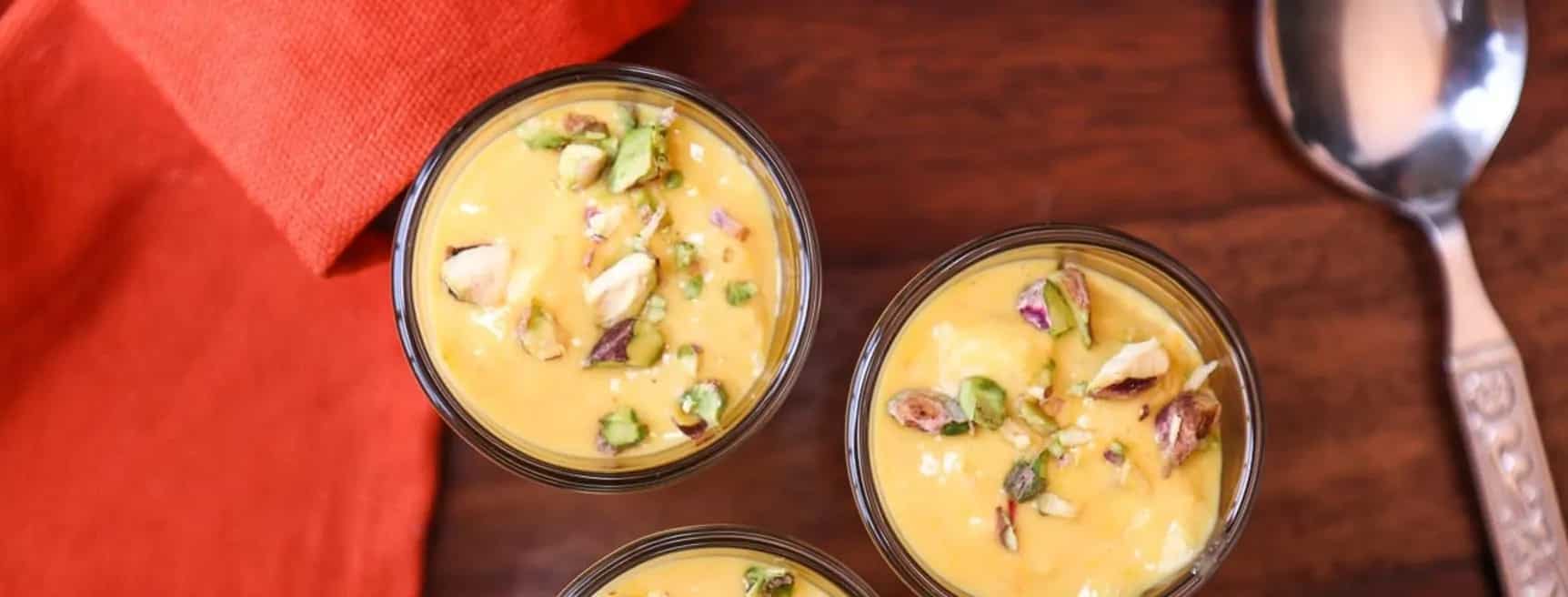
Rabdi
Nutritional Value
1866
Calories
per serving
- Fat111 g
- Protein57 g
- Carbs161 g
- Fiber1 g
- Sodium0 g
- Others0 g
- Place of OriginMATHURA
- CuisineAsian,Indian,North Indian,Uttar Pradesh
- Common Ingredients
- CourseDessert
Rabdi, or more commonly referred to as Rabri, is an ancient Indian sweet that was prevalent for eons in the Indian foodscape.
A rich, creamy, milky dessert, Rabdi finds its origin in Mathura, the land of Lord Krishna. Known for its decedent flavour, Rabdi is essentially thickened and sweetened milk, garnished with spices like cardamom and saffron. Often, other elements like rose water and nuts like almonds and pistachios are also added. The dense, oozing sweet is often coupled with the famed Jalebi or Imarti to add a crunchy factor, forming the perfect bite. Not only Mathura, but Varanasi is also crowned the birthplace of this dish. Varanasi is known for its Bhaang Lassi (a drink comprising an edible dried, cannabis leaf ball churned with buttermilk), but the Rabdi works as the perfect follow-up dessert (often consumed to spike the effects of the Bhaang Lassi).
The quintessential Rabdi is as good as the layer of malai (clotted cream) that forms after slow heating milk. The thicker the malai, the richer the Rabdi. The Varanasi variant of the dessert is laced strictly with dry fruits. Buffalo milk is generally preferred to cow milk. Other states picked up the recipe and adapted it according to their preferences. Be it Lucknow, Gujarat, or Maharashtra, the Rabdi travelled across India, giving rise to dishes like Basundi (which essentially consists of dry fruits, khoya or even saffron).
The first mention of the dessert was in the Mangalkabyas (dates back to the 15th century), stories of the renowned saint Chaitanya Mahaprabhu. The texts mention the dessert, but as "Charu". This entry proved that the dish was very much prevalent in east India. Kolkata still serves the Rabdi in their special style, richly adorned with dry fruits like cashews and almonds. In fact, some outlets even have a thin edible silver strip over wide-mouthed clay bowls that the Rabdi is served in.
Another popular variation is known as the Ghata Rabdi (which literally translates to churned Rabdi) in which the dessert is served with thickened cream and ladled with milk to create a pish-pash structure. This mash is often savoured on its own or atop Malpuas and Jalebis.
Modern renditions of the dish find references in kulfis, ice creams, lassis, and are served alongside Imartis and even Luchis (deep fried flatbread).
Nutritional Value
1866
Calories
per serving
- Fat111 g
- Protein57 g
- Carbs161 g
- Fiber1 g
- Sodium0 g
- Others0 g