


- Home
- Slurrp360
- Most searched
- Moong Dal Halwa
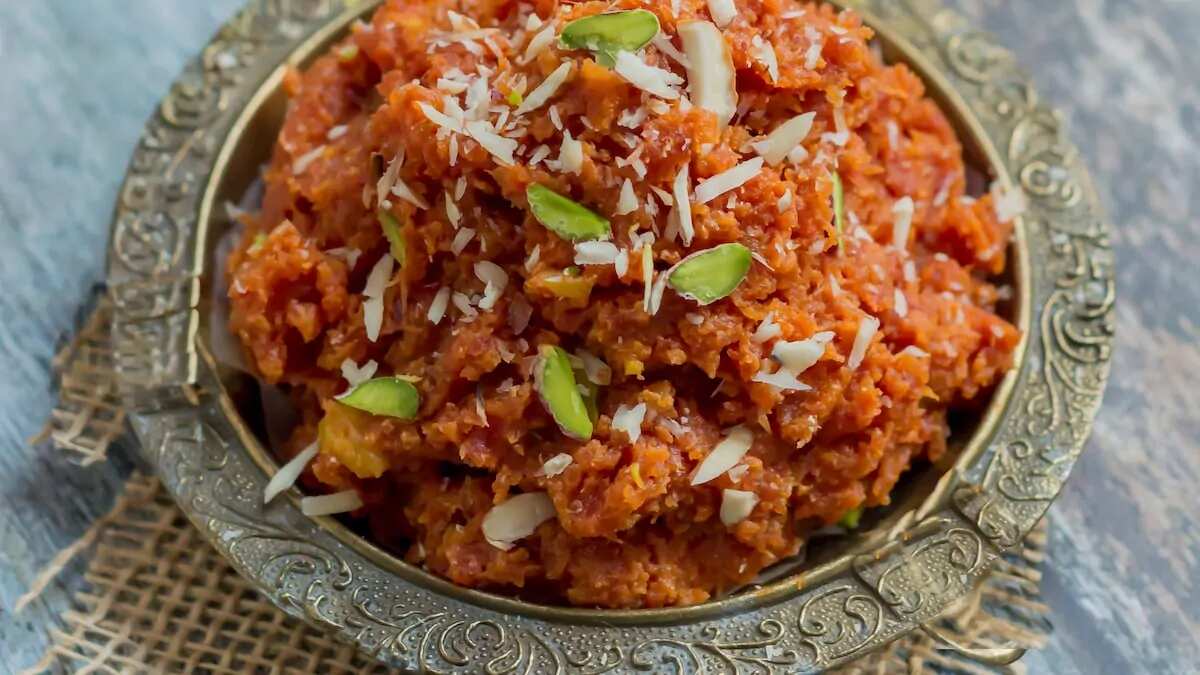
Moong Dal Halwa
Nutritional Value
583
Calories
per serving
- Fat13 g
- Protein26 g
- Carbs88 g
- Fiber11 g
- Sodium0 g
- Others0 g
- Place of OriginRAJASTHAN
- CuisineAsian
- Common Ingredients
- CourseDessert
Moong dal, ghee, milk, sugar—with four base ingredients that are easy to find in most Indian homes, and additions like cardamom, pistachios, and raisins, Moong Dal Halwa is almost like a rite of passage for someone who enjoys cooking—something to try and make at least once in their life. A labour intensive recipe, it can take up to an hour to cook, but the result is a soft, decadent dessert that's like a festival on the tongue. Forged into being in Rajasthan to battle the state’s harsh winters, it soon became a part of festivals like Diwali and special occasions like weddings.
While Rajasthan created the Moong Dal Halwa, Halwas have several varieties, including Almond Halwa, Carrot Halwa, and even Green Chili Halwa, among others. A versatile and customisable dish, the Halwa has a special place in the Indian palette. But its roots are distinctly foreign.
The word derives from ‘hulw’, the Arabic word for sweet. And the cooking process, many believe, originates from the Ottoman Empire. The story goes that Suleiman, the 10th and longest ruling Sultan, had a separate kitchen just for sweet items, and Halwa was one of them. It was made by the helvahâneli with three base ingredients: starch, fat, and a sweetener.
This Turkish "helva", many believe, traces its roots to the Byzantine empire, around the 12th century CE. Many food historians agree that the first Halwa recipe appears in the 13th-century Arabic book Kitab al-Tabikh (The Book of Dishes) by Muhammad Ibn al-Hasan Ibn al-Karīm. The book has eight Halwa recipes.
Halwa entered India, according to Abdul Halim Sharar’s book Guzishta Lucknow, through Persia. However, Colleen Taylor Sen’s book Feasts and Fasts says the Halwa came to the Delhi Sultanate between the 13th and 16th centuries, during Mohammad Bin Tughlaq’s rule.
Whatever its origin, cooks all across India have tweaked the recipe, localising it and making it their own. And just one example is Rajasthan adding moong dal to create its own Halwa.
Nutritional Value
583
Calories
per serving
- Fat13 g
- Protein26 g
- Carbs88 g
- Fiber11 g
- Sodium0 g
- Others0 g