


- Home
- Slurrp360
- Most searched
- Kaju Katli
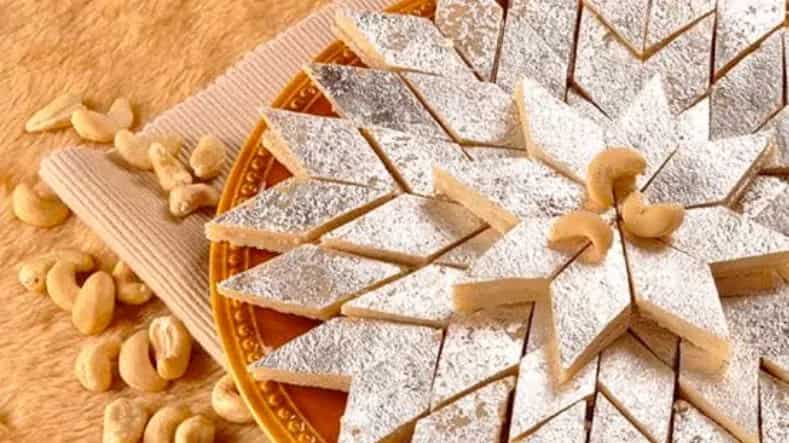
Kaju Katli
Nutritional Value
1377
Calories
per serving
- Fat91 g
- Protein32 g
- Carbs107 g
- Fiber8 g
- Sodium0 g
- Others0 g
- Place of OriginWEST,BENGAL,,PERSIA
- CuisineAsian,Indian
- Common Ingredients
- CourseDessert
Indian festivities and sweets are, no doubt, a match made in heaven, and no celebration is ever complete without a box of glistening, indulgent Kaju Katli. Made from cashew, sugar, cardamom powder and ghee, this classic Indian delicacy is both tasty and presentable. Kaju Katli generally comes wrapped in edible silver foil that adds to its luxurious demeanour. The sweet has a typical Barfi (diamond) shape, which lends it the alternate name of Kaju Barfi. It is an age-old Indian saying that eating Kaju Katli ushers in good fortune and prosperity.
The origin of the Kaju Katli can be traced back to the era of the Mughal emperor Jahangir. It is believed that Jahangir had held several Sikh gurus in captivity in the Gwalior Fort, including Guru Hargovind. During his captive days, the sixth Sikh Guru ensured the well-being of inmates and guards alike, and taught them to be self-sufficient. Pleased with the Guru’s work, Jahangir instructed his release and proclaimed that anyone holding on to the Guru’s robe would also be allowed to leave captivity. Guru Hargovind secretly ordered the other monarchs to make a dress long enough to be worn by all inmates, making it possible for everyone to gain independence without disobeying the proclamation of the emperor. This auspicious day of emancipation is celebrated today by Sikhs the world over as the Bandhi Chor Diwas. In honour of the compassionate Guru, Jahangir’s royal chef prepared a special dish—the Kaju Katli.
A second opinion on the origin of the Kaju Katli establishes a surprising connection of the sweet to rural Bengal. Some believe that Kaju Barfi was first developed in Bengal’s East Midnapore district by renowned confectioner Kalu Moira. The fact that the confectionery closed down following the eminent sweet maker’s death indicates why this version of the origin story is rarely discussed.
No matter the version, it can be certainly concluded that Kaju Katli became a common Indian delicacy after the 17th century. This is because cashew was introduced to India by the Portuguese in the 16th century. Though the sweet is traditionally shaped by hand, modern confectioneries use mechanical presses to obtain the perfect cut in large batches. Moreover, new flavoured variants of the sweet have emerged in the Indian market, as have packaged versions with significantly longer shelf lives. Despite the varying tastes and ingredients, the indisputable shape and core ingredient have helped maintain the touch of tradition to the sweet to this day.
Nutritional Value
1377
Calories
per serving
- Fat91 g
- Protein32 g
- Carbs107 g
- Fiber8 g
- Sodium0 g
- Others0 g