


- Home
- Slurrp360
- Most searched
- Hot Chocolate
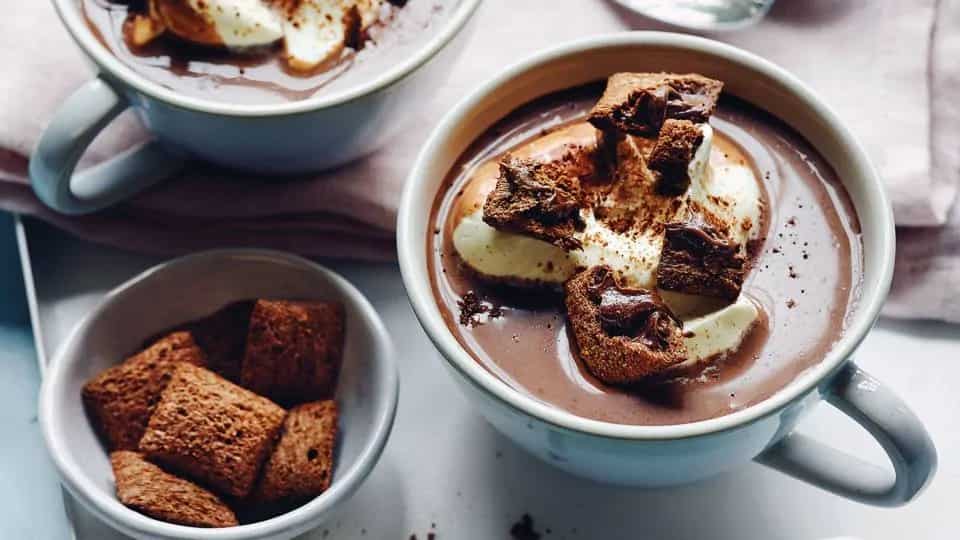
Hot Chocolate
Nutritional Value
378
Calories
per serving
- Fat12 g
- Protein13 g
- Carbs70 g
- Fiber49 g
- Sodium0 g
- Others0 g
- Place of OriginMEXICO
- CuisineNorth American
- Common Ingredients
- CourseStarter & Appetizer
In the cosmopolitan cities of India, hot chocolate is the ultimate symbol of a cross-cultural exploration. The lip-smacking beverage, made from cocoa powder and creamy milk, is a common drink today and certainly a winter-favourite. Though the British introduced cacao to India in 1798, it was not until the confectionery giant Cadbury started operations in the 1960s that chocolate products, including hot chocolate, became the nation’s dearest indulgence.
The first hot chocolate was probably consumed in Mayan Mexico as early as 500 BCE, but with ground cacao seeds, cornmeal, and chilli peppers mixed in cold water. Such was the Mayan fondness for the drink that spouts containing hot chocolate were offered as grave goods in tombs. Evidence of the same has been found in many archaeological discoveries at Mayan sites in Guatemala.
The Essential Codex Mendoza indicates that the hot chocolate, in its existing cold form, was an essential part of Aztec ceremonies in the 1400s. In 1528, after defeating the Aztecs, explorer Cortez brought cacao beans and chocolate-making equipment as war bounty back to Spain. It was here that the Mesoamerican drink started to be sweetened and served hot. As the drink slowly gained popularity in Europe, Emperor Charles V adopted the beverage into his reserve of royal drinks and turned it into a symbol of luxury and aristocracy among the European nobility.
Hot chocolate was popularised as a local drink in 18th century London by the newly established chocolate houses, precursors of modern coffee shops. In the late 1700s, Britain obtained the Jamaican recipe of mixing chocolate in hot milk, which became an instant favourite with the British. Such was the craze of this new beverage that almost every British household made hot chocolate a mandatory after-dinner drink.
Today, hot chocolate is available in every part of the world. While England continues to prefer the traditional thick texture, the United States dilutes it with water to achieve a thinner consistency. Spain’s Chocolate a La Taza and Italy’s Cioccolata Calda are no less than creamy frothy fantasies. On the other hand, Latin America continues to enjoy the spiced traditional version Chocolate Para Mesa.
It is enthralling to think that this globally favourite beverage has traversed the entire world, witnessed ancient civilisations flourish and decline, and, for a significant part of history, was acclaimed as the drink of the gods.
Nutritional Value
378
Calories
per serving
- Fat12 g
- Protein13 g
- Carbs70 g
- Fiber49 g
- Sodium0 g
- Others0 g