


- Home
- Slurrp360
- Most searched
- Filter Coffee
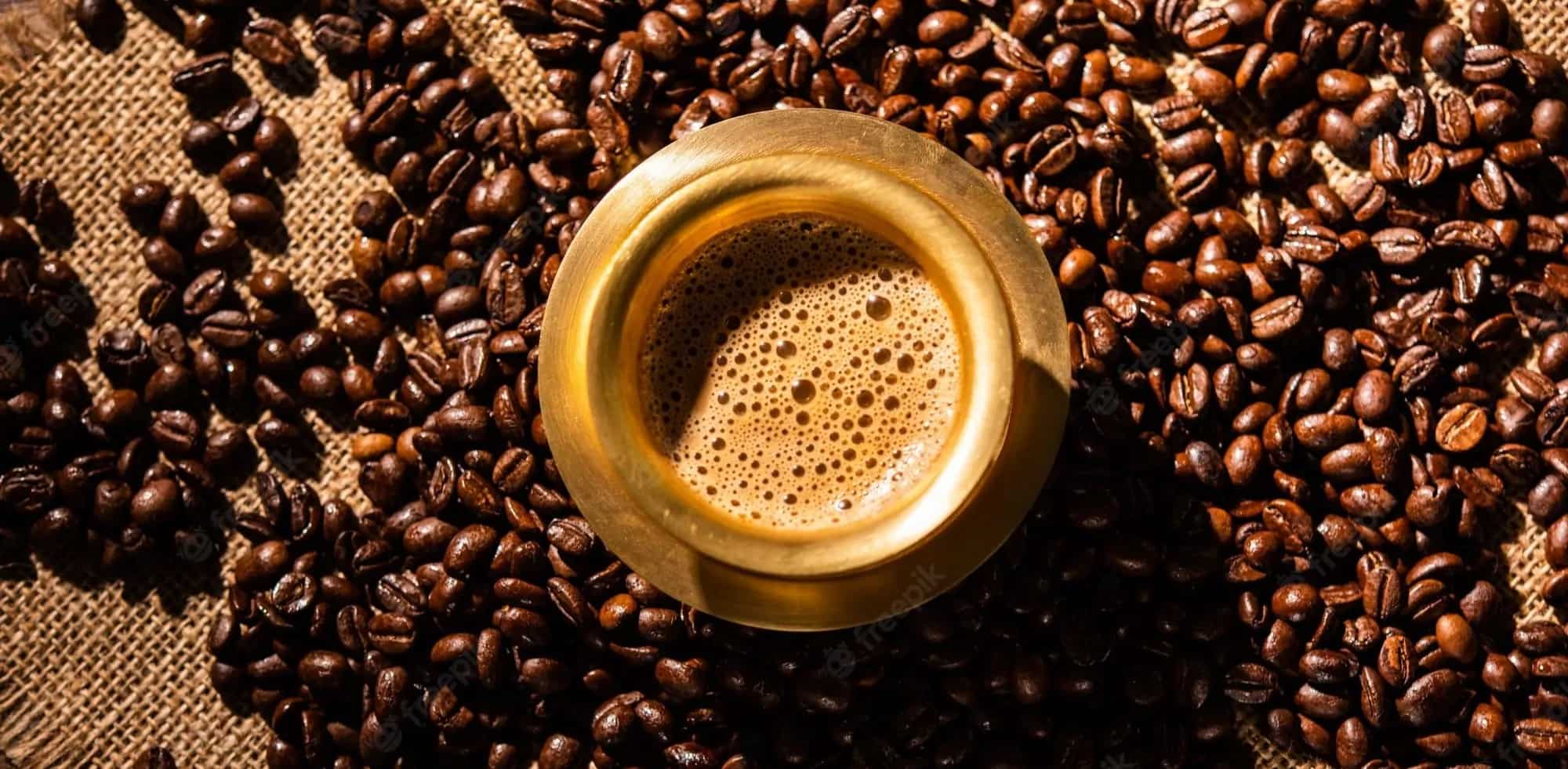
Filter Coffee
Nutritional Value
249
Calories
per serving
- Fat15 g
- Protein7 g
- Carbs22 g
- Fiber0 g
- Sodium0 g
- Others0 g
- Place of OriginSOUTH,INDIA
- CuisineAsian
- Common Ingredients
- CourseStarter & Appetizer
Long before caffeine addicts sprinted to the nearest Starbucks for a quick expresso shot or a cup of iced latte, they swore by Filter Coffee, a beverage integral to the South Indian cuisine that is sweetened with milk and sugar and served in a steel tumbler.
This coffee or kaapi, as referred to by locals, is a thick frothy drink prepared in a special steel or brass apparatus. The utensil is made of two parts—the part on top has perforations that allow the coffee powder and water to slowly trickle out into the bigger vessel at the bottom. Then this concoction is added to a mix of boiled milk and jaggery or sugar. It is then served in a tumbler set known as dabarah, consisting of a small cup and a bigger cup shaped like a saucepan. The coffee is poured from one vessel to another repeatedly until a film of foam forms above the drink.
Another salient feature of Filter Coffee is the addition of chicory to it. Chicory is a substitute for coffee that closely mimics both the colour and the aroma of coffee. While traditionalists scoff at this addition, it is said to have been a lifesaver for coffee enthusiasts during World War II with its supply to India getting disrupted.
The story of how coffee became an indispensable part of India is quite a fascinating one. Legend goes that a Muslim saint by the name of Baba Budan smuggled a few coffee beans into India from Yemen in the wake of the 17th century. He then started cultivating the crop in Karnataka’s Chikmagalur. The drink became a permanent feature with the Muslim elite. But there was still time for the subcontinent to be swept by the coffee revolution. Around two centuries later, the British acquired lands in Mysore to grow and export coffee to other European countries.
According to Tamil historian AR Venkatachelapathy, the more the supply dwindled, the more the demand for the beverage grew among the middle classes. It was the aspirational drink sipped on by the West, and consuming the same became a status symbol. The drink became so popular that coffee houses started mushrooming around the country. However, Indians were not allowed inside these establishments. In response to this racial discrimination, the Indian Coffee Board set up its first-ever Indian Coffee House in Bombay’s Churchgate in 1936.
Nutritional Value
249
Calories
per serving
- Fat15 g
- Protein7 g
- Carbs22 g
- Fiber0 g
- Sodium0 g
- Others0 g