


- Home
- Slurrp360
- Most searched
- Falooda
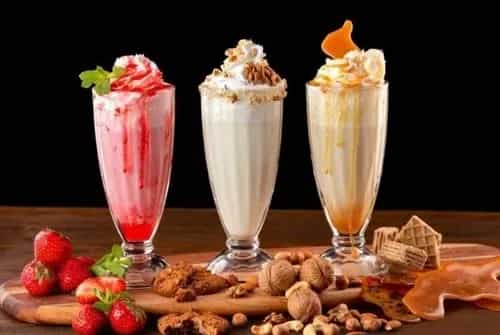
Falooda
Nutritional Value
1526
Calories
per serving
- Fat66 g
- Protein44 g
- Carbs184 g
- Fiber10 g
- Sodium0 g
- Others0 g
- Place of OriginPERSIA
- CuisineAsian
- Common Ingredients
- CourseDessert
Born a dessert, yet equally enjoyed as a felicitous summer drink, the curious taste and texture palette of the Falooda makes it one of the most atypically fascinating culinary achievements of the Indo-Persian cuisine and a bolt of nostalgia for all 80s and 90s kids in the country. Believed to have been inspired from the Persian dish Faloodeh, which lends the Indian variant its name as well as its guiding recipe, the Falooda is widely popular across the entire Asian continent and even localised in parts of Africa and South America.
The globe-trotting cold dessert is made from a perfectly blended culmination of silky-smooth vermicelli noodles, slithery black sweet basil seeds, and ice cream or crushed ice, all steeped in a colourful bath of milk and rose syrup. The vermicelli traditionally used for making the Falooda comes from wheat, though noodles made from arrowroot, corn-starch or Sago can also be used.
In the Indian subcontinent, the Falooda is generally relished in either its authentic Persian smoothie consistency or as the enticing Kulfi-Falooda, a plate of Indian pistachio ice cream called Kulfi frozen to a popsicle, topped with a mesh of vermicelli noodles and a generous splash of rose syrup. Historically, the Falooda was created in ancient Shiraz (modern Iran) in Persia around 400 BCE, making it one of the oldest desserts in the Asian mainland.
In the old Hindustani idiom, Falooda meant ‘shredded’, referring to the strands of vermicelli peculiar to the dish. Since Persia has always been an epicentre of global trade and housed numerous conquerors, it is believed that Persian merchants and expanding dynasties were behind the widespread dispersion of this modern ice cream sundae float and its diversified inclusion in most Asian cuisines. Food historians credit the Mughal emperors for importing the recipe to the Indian subcontinent and its extensive popularisation across the northern part of the country.
The modern Indian Falooda is however believed to have originated in the royal court of Jahangir, known to be an avid lover of the jelly-like dessert and the patron behind its royal status in the imperial Dastarkhwan (dining). There are others however who contest that the Falooda was brought to Indian shores by Nader Shah, but irrespective of the proponents, the Falooda is no doubt a quintessential Persian delight, indicated by its fascination among Zoroastrian Irani immigrants, who continue to revere their traditional Persian delicacy, especially on the Jamshedi Navroze.
Nutritional Value
1526
Calories
per serving
- Fat66 g
- Protein44 g
- Carbs184 g
- Fiber10 g
- Sodium0 g
- Others0 g