


- Home
- Slurrp360
- Most searched
- Aam Panna
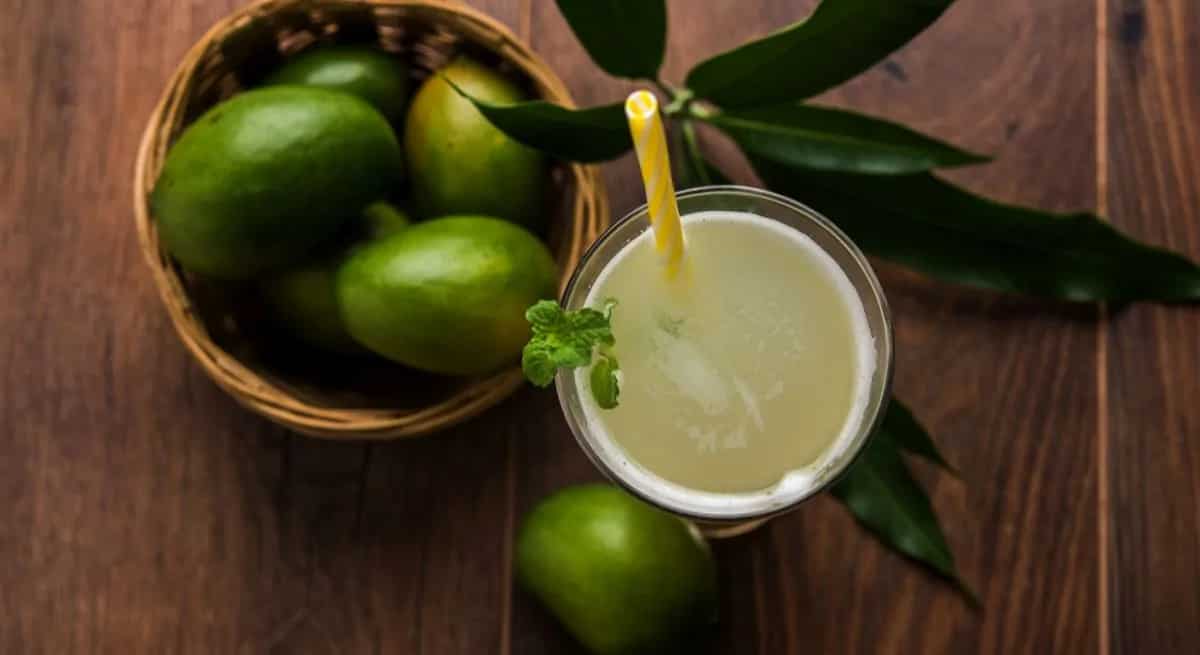
Aam Panna
Nutritional Value
509
Calories
per serving
- Fat24 g
- Protein4 g
- Carbs70 g
- Fiber2 g
- Sodium0 g
- Others0 g
- Place of OriginNORTH,INDIA
- CuisineAsian,Indian,North Indian
- Common Ingredients
- CourseStarter & Appetizer
As a tropical country, India cannot escape its fair share of unbearable summer heat every year. With the scorching sun comes the time when refrigerators are filled with water bottles, sodas pop in every shop, and the sales of cold beverages witness sharp spikes. The national fruit becomes a regular at all markets, right from when they are unripe—waiting to be picked up, garnished in chilli powder and rock salt, and head straight to the plates of Indian households.
To satiate the quenching thirst and revitalise the severely dehydrated bodies, Aam Panna or Aam Jhoori, a very popular sweet-tangy Indian drink taken with a pinch of spices and black salt, comes handy. Rich in Vitamin C,B1 and B2, this coveted summer drink is made with either raw mangoes or mangoes that have just started to ripen and have reached a light-yellow colour.
Historically, mangoes were a revered fruit during the reign of the Mughals, evident from their numerous references in the Baburnama as well as the 16th century Ain-i-Akbari. It is a general contention that Aam Panna is an essentially Mughal creation. However, historians like Pushpesh Pant refute such theories, claiming that Aam Panna was an already popular drink of the subcontinent, merely adopted by the Mughals. He argues it to be a drink from the times of ancient India, citing its descriptions in the Ayurvedic literature of Kalidasa. He also opines that the word “Panna” comes from the Sanskrit word “Paaniya”, which literally translates to drinkable.
With the humongous quantities and varieties of mangoes cultivated annually in the Indian mainland, a common custom of preservation is to make Achaars or pickles. Besides, the great Indian Aam often finds its presence in various desserts and drinks. Similarly, the Aam Panna has its own variations pertaining to the different regions of the sub-continent. In Maharashtra, the typical recipe involves using jaggery, nutmeg (sugar) and cardamom, while in North India, the process heavily relies on adding kesar (saffron) to the beverage. Furthermore, in the east, Aam Pora is a relished delicacy, where the raw mango is burnt on a naked flame and the pulp is mashed to create a unique sherbet.
Due to the usage of raw mangoes, Aam Panna not only quenches thirst but also maintains the body’s sodium-potassium balance. The Indian mocktail is indeed a powerhouse of nutrients and vitamins. The drink is also consumed for its numerous medicinal properties, which help combat gastrointestinal disorders, and has been traditionally used to treat cholera, dysentery, tuberculosis, and anemia.
So the next time you sip on a glass of Aam Panna on a blazing summer noon, besides enjoying the sweet-tart-spicy refreshment, feel good about the wonders it does for your body with every satiating gulp.
Nutritional Value
509
Calories
per serving
- Fat24 g
- Protein4 g
- Carbs70 g
- Fiber2 g
- Sodium0 g
- Others0 g