


- Home
- Slurrp360
- Main course
- Vindaloo
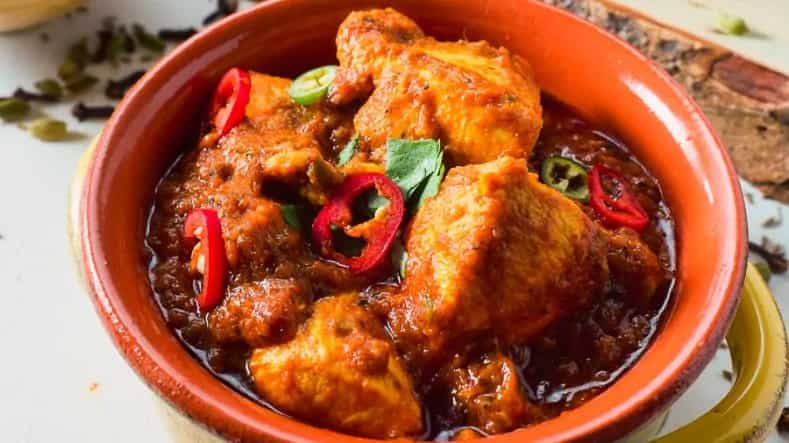
Vindaloo
- Place of OriginPORTUGAL
- CuisineEuropean
- Common Ingredients
- CourseMain Course
The Vindaloo is yet another example of a culinary marriage that created magic on the plate. A culmination of food cultures from three different continents, Vindaloo has its roots firmly embedded in Portugal. Through major trade routes, this recipe journeyed into the Indian coastal city of Goa. Celebrated and prepared specially by Goan Catholic communities, the Vindaloo is a spicy meat curry. In fact, the Vindaloo is a mere replication of the Portuguese recipe of Carne de Vinho e Alhos, where the word Vindaloo is a corrupted end-product of "vinho e alhos", states food historian Lizzie Collingham in her book Curry: A tale of Cooks and Conquerors.
Vindaloo refers to a unique way of marinating meats to ensure they remain consumable for long periods of time. The various meats, whether it be chicken, pork or even beef, are dunked in a stock made from salt, garlic, vinegar and wine for hours to allow the meat to soak in all the flavours and yet remain ripe for cooking (due to the presence of preservatives like vinegar and salt). This concept was born from the nomadic lifestyle of traders and sailors back in the day, where they would have to ensure indigenous ways of curing meats to sustain elongated periods of travel.
However, the Indian rendition was achieved through a rather laborious process. Due to the lack of vinegar as an ingredient, Franciscan priests were known to have manufactured vinegar from locally available coconut toddy (an alcoholic beverage that was derived from the sap of palm trees). The condiments added underwent an evolution based on the readily available spices in Goa. Thus the stock was then mixed with cloves, black pepper, cardamom, cinnamon, garlic and a generous helping of tamarind pulp.
The fact that the Vindaloo was a spicy dish was no mere coincidence. The advent of chillies into the Indian subcontinent occurred with the Dutch influx. These foreigners got the chilli from Brazil and introduced it into the oriental cuisine. But the list hardly ends there.
Tomatoes, pineapples, potatoes and cashews were also brought in for the first time. Prior to this, black pepper was used whenever culinary maestros wanted to lend fiery hotness to their dishes. But after the Dutch settlements across southwestern India, the Mirchi (chilli) became an indispensable part of the Konkani cuisine. In fact, a special type of chilli called the Gowai Mirchi (referring to something ‘from Goa’, that is their location of cultivation) was often used while preparing Vindaloo to lend a most authentic taste.