


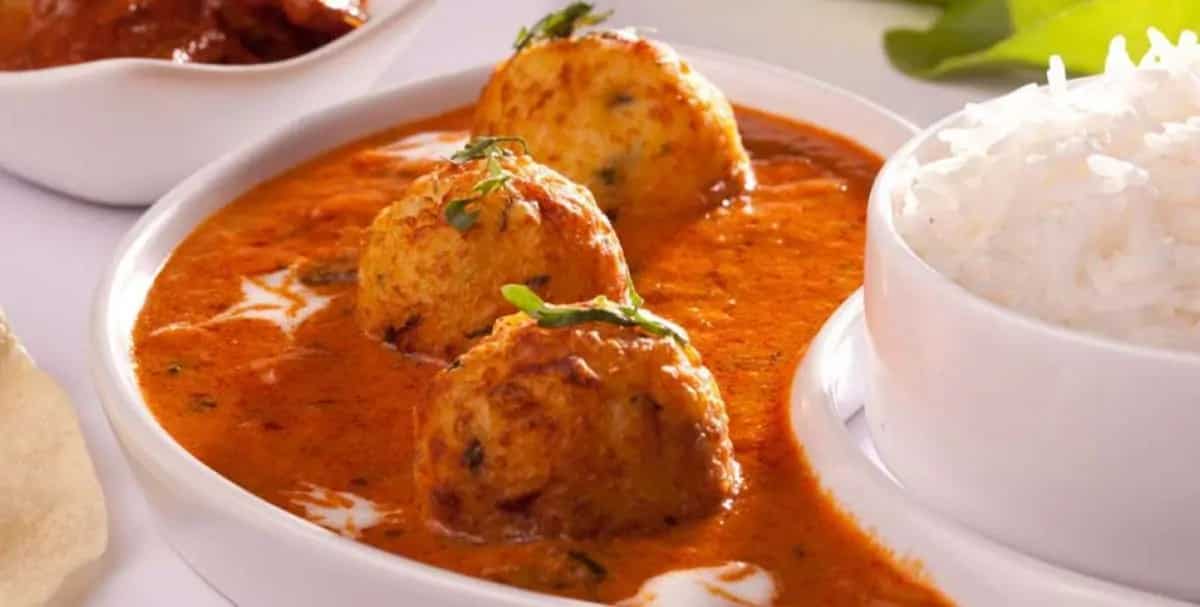
Rista
Nutritional Value
2013
Calories
per serving
- Fat123 g
- Protein211 g
- Carbs15 g
- Fiber17 g
- Sodium0 g
- Others0 g
- Place of OriginNORTH,INDIA
- CuisineKashmiri
- Common Ingredients
- CourseMain Course
Often hailed as the land of poets, artists, emperors, travellers, saints and dreamers, Kashmir is known for its scenic wonders and delectable dishes. The authentic Kashmiri cuisine is dubbed the Wazwan and involves at least 36 different scrumptious preparations of meat and sweets, of which the most innovative and laborious is undoubtedly the Rista.
This luxurious dish starts by pounding fatty lamb or goat meat traditionally using a millet on a smooth stone till a moist paste is obtained. The pounded meat is then moulded into balls by hand and mixed with exotic and endemic spices like Kashmiri red chillies, fennel, cardamom, cinnamon, saffron and peppercorn. The process is indeed labour intensive as only the right blend of delicate, moist meatballs and carefully tampered spices can create the magic gravy. Other important aspects of cooking an authentic plate of Rista are the no-holding-back approach when it comes to adding clarified butter and the compulsory use of Mawal or dried cockscomb flower to lend the gravy its distinctive red appearance.
As with most dishes of the Wazwan, the origin of Rista is deeply embedded in the culture of Persia, and is believed to have arrived in the Indian subcontinent with Timur Lane in the 14th century. Legend has it that Timur brought with him skilled artisans, weavers, woodcarvers, architects, calligraphers and cooks from Samarkand. It is the descendants of these cooks who became masters of Indo-Persian flavour profiles and came to be known as the Wazas or the creators of Wazwan. The Rista might have been the brainchild of one such Waza who combined locally available ingredients, traded exotic condiments, and traditional Persian methods of mincing meat to arrive at a culinary wonder. With Akbar’s annexation of Kashmir in 1586 and the subsequent Mughal emperors, the residents of the valley became increasingly familiarised with the Wazwan. In fact, Jahangir and Shah Jahan’s fascination with the picturesque valley turned Kashmir into the Mughal summer capital and consequently, led to the fine-tuning of dishes like the Rista.
The spongy succulent Rista is the first dish to be served in a Wazwan platter traditionally eaten from a large copper plate called the "traem". It is customary to serve exactly four pieces of Rista in each traem unless requested for more, which nobody does knowing there are at least a couple of dozen more rich gravies, Kebabs, and Meetha (sweets) waiting to be relished.
Nutritional Value
2013
Calories
per serving
- Fat123 g
- Protein211 g
- Carbs15 g
- Fiber17 g
- Sodium0 g
- Others0 g