


- Home
- Slurrp360
- Main course
- Pindi Chhole
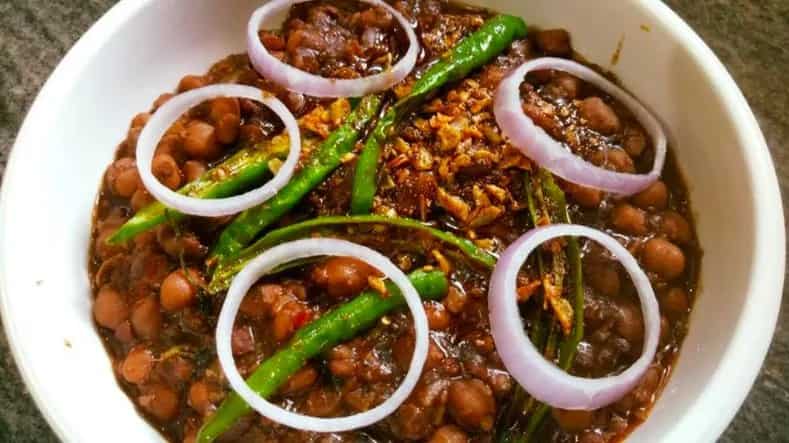
Pindi Chhole
Nutritional Value
356
Calories
per serving
- Fat9 g
- Protein12 g
- Carbs59 g
- Fiber45 g
- Sodium0 g
- Others0 g
- Place of OriginPUNJAB
- CuisineAsian,Indian,North Indian,Punjabi
- Common Ingredients
- CourseMain Course
A Punjabi favourite, Pindi Chhole is a niché offshoot of the Chole Bhature. Though still a very homegrown recipe, Pindi Chhole has slowly but steadily made its way into people’s hearts. A North Indian dish of spicy chickpeas, Pindi Chhole has a rich culinary history. The historical event of Partition in 1947 was not merely the drawing of a boundary line between two countries, but like a spear driven through the heart of two prolific cultures that had learned to live and survive as a unit. As a result, their socio-cultural aesthetics were similar. On being forcefully separated, many Pakistani culinary ways seeped into Indian cooking and vice versa. With one such Indian refugee, Kasturi Lal Wadhwa, came the Pindi Chhole into Indian sectors.
The famed streets of Rawalpindi were the genesis of this fiery dish, a fact Wadhwa acknowledged in the dish’s name itself. A strapping lad, all of 20, Wadhwa arrived in Delhi and decided to hone his love for food and sell his wares. Thus was born the Pindi Chhole, which Wadhwa first sold with Kulcha (a form of Pakistani flatbread) for two annas. Initially selling out of a food cart, Wadhwa’s legacy grew into multiple eateries and a thriving business.
Another version of the legend associates this dish’s roots to the heartlands of Punjab. The fact that Pindi Chhole has very basic Punjabi patterns in its recipe, may be the reason behind this association. Also, the word Pind means ‘village’ in the Punjabi language, which draws another possible connection to the North Indian state.
The main ingredients which go into the Pindi Chhole are cloves, cumin, bay leaves, fennel seeds, coriander, garam masala, tomato, along with a ginger-garlic-onion paste. Chickpeas form the staple for this dish. Certain versions of the dish are even rumoured to infuse a dipped tea bag into the dense curry. The essence of the tea leaves are believed to enhance the flavours of the spices.
Another unique feature about the Pindi Chhole and its Pakistani heritage is the addition of Kasuri Methi (dry fenugreek leaves) to the dish. Kasur, a district in the Lahore division of Punjab (currently placed in Pakistan), has a food tradition of drying the fenugreek leaves and adding the powdered leaves or dry leaves into their dishes, hence the condiment’s term Kasuri (from Kasur). This concept was picked up by various Punjabis who ultimately made the shift to India. Shahi Paneer (a cuisine rooted to the Persian cuisine brought in by the Mughals) also uses Kasuri Methi to give an extra fragrant undertone to the dish.
Nutritional Value
356
Calories
per serving
- Fat9 g
- Protein12 g
- Carbs59 g
- Fiber45 g
- Sodium0 g
- Others0 g