


- Home
- Slurrp360
- Main Course
- Neychoru
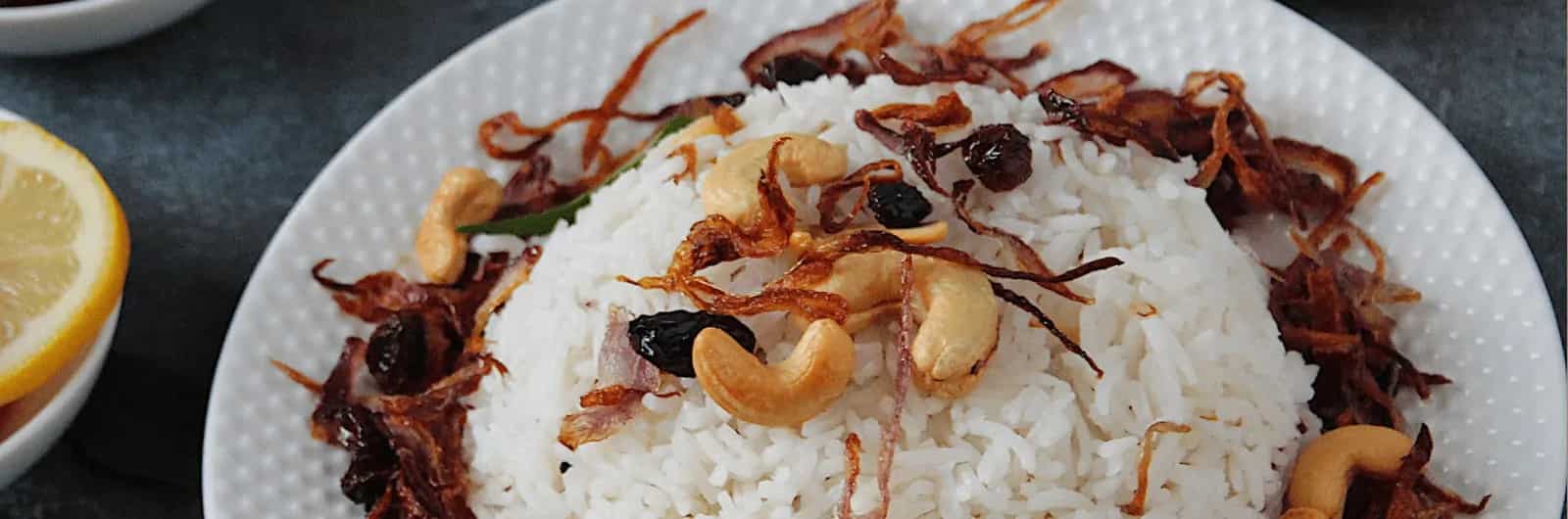
Neychoru
Nutritional Value
2696
Calories
per serving
- Fat21 g
- Protein63 g
- Carbs553 g
- Fiber61 g
- Sodium0 g
- Others0 g
- Place of OriginKERALA
- CuisineKerala
- Common Ingredients
- CourseMain Course
S ometimes, the simplest things bring the most satisfaction. And one of life’s greatest pleasures is ghee rice, or its Keralan variation, Neychoru. It uses the kaima rice or jeerakasala rice, which is a non-sticky, short grain rice, and is adorned with a variety of spices and seasonings. While ghee rice is a delicacy one can enjoy on its own, you can also add dals or curries when eating it. To make it, one needs rice, ghee, cashews, raisins, onions, bay leaf, cinnamon, cloves, cardamoms, water, salt, and coriander leaves for garnish.
Neychoru is often present when there are celebrations like weddings or the arrival of children. In places like Thalassery and Kuttichira, people follow a particular tradition involving the dish—during the seventh month of pregnancy, they make Kalathappam, which is a mixture of the Neychoru, raw rice, and sugar, which is then fried in oil. This concoction is sent to the husband’s house, with the accompaniment of Pandam, made with Bengal gram, coconut, sugar, and cardamom.
While being an integral part of the culture and tradition for many people, the dish also boasts several health benefits. Ghee’s healthy fats build up good cholesterol in the body. Ghee also lines and therefore cleans out the digestive system, and prevents problems like ulcers, promoteing overall digestive health. Rich in vitamins and antioxidants, it boosts immunity. Cosmetically, it preserves the body’s moisture, and repairs and smoothes skin. If applied to the scalp, it also reduces itchiness and promotes hair health. And it improves metabolism, so, if consumed mindfully and in a limited portion, ghee can also aid weight loss.
Nutritional Value
2696
Calories
per serving
- Fat21 g
- Protein63 g
- Carbs553 g
- Fiber61 g
- Sodium0 g
- Others0 g