


- Home
- Slurrp360
- Main course
- Mutton Kofta
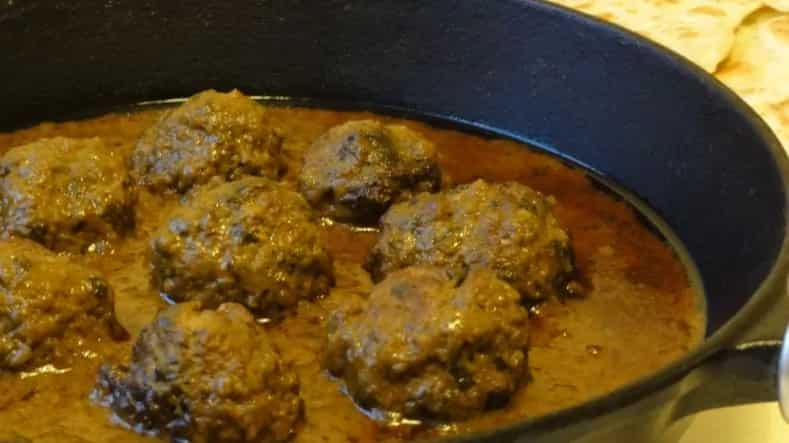
Mutton Kofta
Nutritional Value
1120
Calories
per serving
- Fat91 g
- Protein50 g
- Carbs26 g
- Fiber30 g
- Sodium0 g
- Others0 g
- Place of OriginPERSIA
- CuisinePersian
- Common Ingredients
- CourseMain Course
There are few dishes that have spurred as many culinary innovations around the world as the Mutton Kofta has. From Sweden to Turkey, countries have butted heads to claim ownership of this iconic meatball in gravy preparation.
Once you dunk your hands into a bowl of Mutton Kofta, it becomes fairly clear why the dish enjoys the kind of global fandom it does. This mouth-watering offering consists of soft, succulent balls of meat—beef, lamb, chicken or pork, what have you—cocooned in a rich, indulgent gravy of yoghurt and tomato. A myriad of aromatic spices, like red chilli powder, garam masala (Indian five-spice mix), black peppercorns, whole cardamom, cloves, mint leaves, fresh green chillies, coriander, ginger and garlic, are used in preparing this dish, adding complex layers to this savoury treat.
Food historians locate the epicentre of Mutton Kofta's origin in Persia. From Persia, it is likely to have travelled to the Indian subcontinent, Greece, Spain and North Africa. The first recipes for this minced meat dish appear in Arabian cookbooks, and the meat used for the preparation was lamb. As per these ancient recipes, the meat was first ground or minced, then rolled into balls and washed with an egg and saffron glaze thrice over.
In India, the dish was popularised by the Mughal court and then co-opted by the Kayasthas into their cuisines. Considered to be disciples of the Hindu deity Chitragupta, this strata of people served as scribes in the Mughal court. Their proximity to the royal court resulted in this Hindu community incorporating different forms of meat and royal cooking techniques like dum (steam-cooking), bhuna (slow-roasting) and dhungar (cooking with smoke) into their cuisine. Malai Kofta (meatballs in a yoghurt gravy) and Mutton Pulao are two such dishes that came out of Kayastha kitchens.
In his Oxford Companion to Food, writer Alan Davidson claims Nargisi Kofta, a dish featuring hard boiled eggs encased in a covering of minced meat, was a staple at the emperors’ dining table. Curiously, the famed English Scotch eggs may have been a British export to the island during colonial rule.
Nutritional Value
1120
Calories
per serving
- Fat91 g
- Protein50 g
- Carbs26 g
- Fiber30 g
- Sodium0 g
- Others0 g