


- Home
- Slurrp360
- Main Course
- Litti Chokha
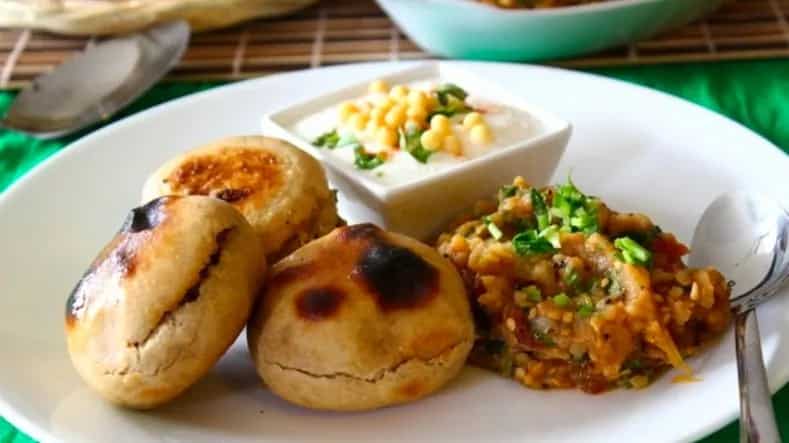
Litti Chokha
Nutritional Value
2719
Calories
per serving
- Fat19 g
- Protein100 g
- Carbs522 g
- Fiber59 g
- Sodium0 g
- Others0 g
- Place of OriginBIHAR
- CuisineAsian,Indian,North Indian,Bihari
- Common Ingredients
- CourseMain Course
A renowned culinary delicacy of Bihar, the Litti-Chokha is a combination dish which is a complete meal in itself. The dish is a true representation of the rugged, arid terrain of the state, symbolised by the thick and charred outer layer of Litti (round, baked balls of wheat flour stuffed with sattu or roasted gram flour).
The dish is culled from all local resources available to the state, which is why the baingan (brinjal) is heroed in this recipe. While Litti is the Indian bread, the vegetarian mash that goes with it, is called Chokha. Chokha is essentially a mix of potatoes, brinjal, tomatoes, chillies and ground spices. The ruggedness of the dish lies in its subtle preparatory customs. The Chokha, for example, is not cooked, but instead is just a mishmash of individually roasted vegetables, which are then hand blended with generous amounts of mustard oil (another staple of the region) and lots of finely chopped chillies.
The tradition of using one’s hands both while preparing and eating this dish is a crucial element of the Litti-Chokha. As a mark of groundedness and a hat-tip to the Indian ways of savouring foods, this dish calls upon the messy-but-soulful practice of dunking both hands in your food to enjoy it to the hilt. The main spices that go into the grilled brinjal in the Chokha are turmeric powder, coriander and cumin powder.
Historical references to the dish link it to the empire of erstwhile Magadha (that flourished at and around modern day Bihar). Tantia Tope and Rani Laxmibai were known to have favoured the dish a lot due to its hassle-free recipe. The scarcity of water in the region was yet another reason why Litti Chokha requires minimal amounts of water, an aspect that probably made the dish a beloved with Tope and Laxmibai. The Litti was also served during the Mughal period; the only difference was in the fact that it was consumed alongside Shorbas or Payas (types of meat stews).
Legacy aside, the dish also has immense health benefits. It is high in fibre content and aids in digestion. The sattu used has cooling properties as well as aids the body to remain energised through the day. Brinjals are a rich source of antioxidants and dietary fibres.
Nutritional Value
2719
Calories
per serving
- Fat19 g
- Protein100 g
- Carbs522 g
- Fiber59 g
- Sodium0 g
- Others0 g