


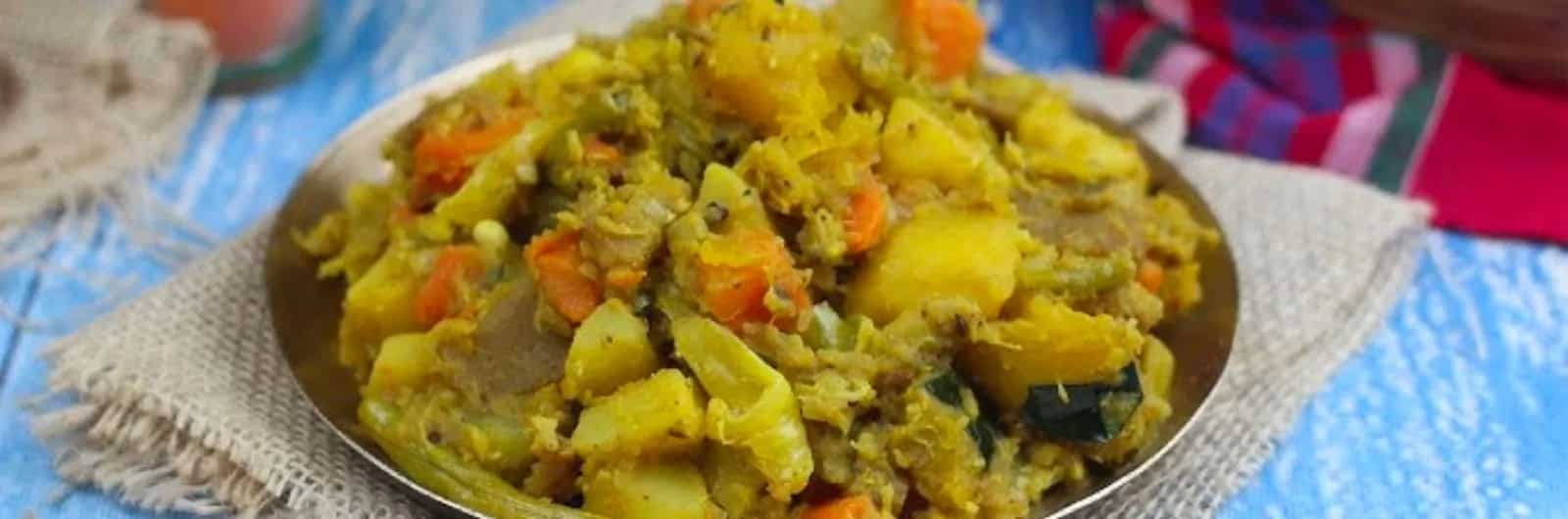
Labra
Nutritional Value
614
Calories
per serving
- Fat34 g
- Protein20 g
- Carbs54 g
- Fiber36 g
- Sodium0 g
- Others0 g
- Place of OriginBENGAL
- CuisineBengali
- Common Ingredients
- CourseSide Dish
I ndian festivals have always been a major influencer in terms of the country’s culinary history. From savoury items to sweetmeats, every eon gives rise to several new delicacies. One such delectable dish is the Bengali Labra, a mishmash of vegetables, specifically made as an offering to the Gods. Labra may also be referred to as an East Indian ratatouille, for easier reference.
Depending on the season and availability, the contents of Labra keep changing. The main spices that go into it are ginger, the ubiquitous Bengali spice paanch phoron (five spices), ginger and a hint of lime juice (this is optional, as many households prefer not to add it).
Labra is served typically as an accompaniment to the Bhog-er Khichuri (a rice dish offered during the festival). The fascinating thing about Labra, or any other vegetable dish like Ghonto or Chochchori that is prepared during holy rituals, is the fact that it was a marriage of all seasonal leafy and non-leafy vegetables that were served up as prasad so that it could then be compulsorily consumed by the people.
One of the first mentions of Labra appeared in Sri Chaitanya Charitamrita, where the dish is referred to as Lafra. Though Chochchori, Ghonto, Ghyat or Labra are essentially all vegetarian mish-mashes, the main difference between these dishes lies in the way the vegetables are chopped for each. For example, to prepare Labra, one needs to cut the vegetables in big square chunks, so that they may retain their texture even in the semi-gravy form. However, for Chochchori or Ghonto, they are diced into much smaller portions.
Nutritional Value
614
Calories
per serving
- Fat34 g
- Protein20 g
- Carbs54 g
- Fiber36 g
- Sodium0 g
- Others0 g