


- Home
- Slurrp360
- Main course
- Laal Maas
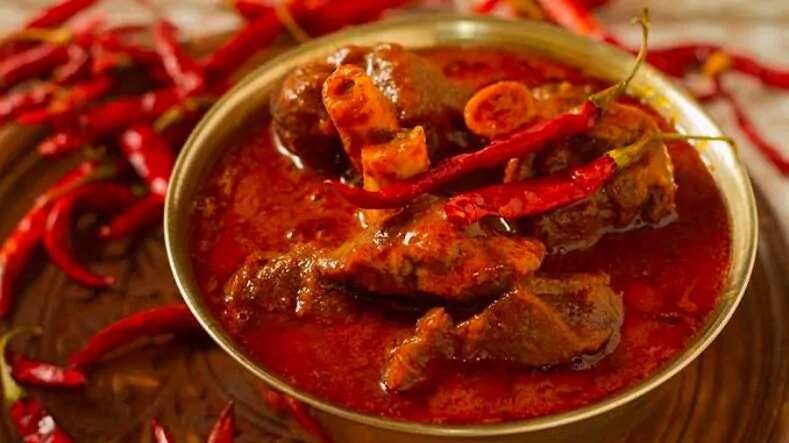
Laal Maas
Nutritional Value
480
Calories
per serving
- Fat8 g
- Protein26 g
- Carbs71 g
- Fiber67 g
- Sodium0 g
- Others0 g
- Place of OriginRAJASTHAN
- CuisineAsian,Indian,Rajasthani
- Common Ingredients
- CourseMain Course
Laal Maas or Red Spicy Meat transcends from the era of royal hunts in the North-West Indian subcontinent where the ‘khansama’ (royal cooks) entourage of the royal kitchen (accompanying the hunt party) used frugal, yet hot spicy ingredients to cook the game meat, which would usually be dear, wild boar or jungle fowls.
They would use the hot Mathania chillies (cultivated around the Indian state of Jodhpur and neighbouring districts), garlic and yoghurt as the marinade for the meat. Garlic was used to temper the meat, yoghurt to thicken the gravy and chillies to dampen the ‘gamey’ smell and liven up the taste buds. The Mathania chillies were hot, yet not numbing, and were a definite enhancer to the overall taste. It also gave the meat a bright red texture.
The Raja of Mewar (in Rajasthan) around the 10th century claimed credit for curating this special recipe, as he disliked the usual plain garlic yoghurt combination of marinade, and suggested to his khansamas to spruce up the meat platter with red hot chillies along with the existing marinade—thus was the advent of the popular ‘Lal Maas’. Originally a royal game or camp meat, the dish was cooked in earthenware on temporarily built wood fire stoves. The dish has over time found popularity in common households across North Western India. High-end restaurants have adapted the original spices as well as tweaked traditional recipes for modern renditions to suit varying taste profiles. However the main ingredients remain the Mathania Chillies, garlic and yoghurt. Today, the Laal Maas is a bright red, fiery, bony meat curry popular amongst meat lovers across the country. The meat used in Laal Maas now is mostly goat meat popularly known as Mutton.
The preparation of the Laal Maas in the earlier centuries was a purely masculine affair involving the activities of hunting and game meat that would be looked down upon by women. The household cooking paraphernalia stood in stark contrast to meat cooked with such frugal and fiery spices. Hence, such preparations were strictly outdoor dishes, so much so that the leftover meat was not allowed to enter homes. The women would not even allow the men to use household utensils while preparing these recipes. However, with the acceptability and gradual popularity of the dish today, it is the culinary pride of Rajasthan. Laal Maas has not only found its way into household kitchens but also gourmet restaurants across India and some parts of the world where Indian dishes are popular.
Nutritional Value
480
Calories
per serving
- Fat8 g
- Protein26 g
- Carbs71 g
- Fiber67 g
- Sodium0 g
- Others0 g