


- Home
- Slurrp360
- Main Course
- Kadhai Chicken
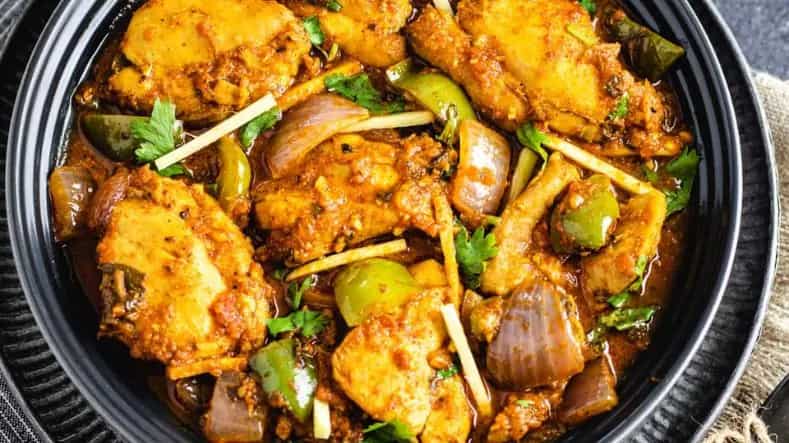
Kadhai Chicken
Nutritional Value
4772
Calories
per serving
- Fat404 g
- Protein205 g
- Carbs86 g
- Fiber39 g
- Sodium0 g
- Others0 g
- Place of OriginPAKISTAN
- CuisineAsian,Pakistani
- Common Ingredients
- CourseMain Course
The Pakistani and North Indian kitchens have long been repositories of age-old curry recipes, versions of which are being whipped up now in Michelin-star restaurants around the globe. Whether or not the watered-down, anglicised renditions of these preparations match up to their authentic taste is debatable, but Kadhai Chicken has remained a hallmark of South Asian cuisines for over a century now.
Kadhai Chicken simply adopts its name from the utensil used to prepare the dish. It is a vessel that closely resembles a wok, but is shallower, and has wooden handles for gripping when tossing the food inside it. The base of this dish is animal fat, and generous amounts of green chilli, tomatoes, garlic and green capsicums are stir-fried in it before adding diced pieces of meat to it. Because it is cooked inside a wok over high heat, the recipe could be recreated within just half an hour.
In her brilliantly insightful book Curry, A Tale of Cooks and Conquerors, Lizzie Collingham investigates the origin of this fiery, piquant curry made of chicken, goat or lamb meat. It is likely to have been born in Khyber Pakhtunkhwa, a rugged, mountainous terrain with extreme weather conditions. The local tribe, Pukhtuns, may have preferred meaty, hearty meals because such a diet would revitalise their bodies to survive in the region. Collingham states that meat was supposed to boost strength and vigour in human bodies. Pukhtuns believed an animal had all the nutrients that could be required by the body to heal and regenerate. In contrast, the communities from the plains had predominantly vegetarian dietary preferences, notes Collingham.
At the time, this rustic fare was only made with a handful of spices like salt and black pepper. It was referred to as Balti Chicken or Gosht in Pakistan since the wok was sometimes called balti (bucket) in the southern part of the country.
As the dish travelled southwards towards Punjab and other North Indian territories, it started to be cooked with an assortment of spices like cumin and coriander. The result was a spicy melange of deep, savoury flavours that would certainly enliven your taste buds.
Later, the dish became a staple on Lahore’s street corners. But this version was made as a snacking item and the tomatoey gravy was thus wholly dried out in the cooking vessel.
Nutritional Value
4772
Calories
per serving
- Fat404 g
- Protein205 g
- Carbs86 g
- Fiber39 g
- Sodium0 g
- Others0 g