


- Home
- Slurrp360
- Main course
- Coorg Pandi Curry
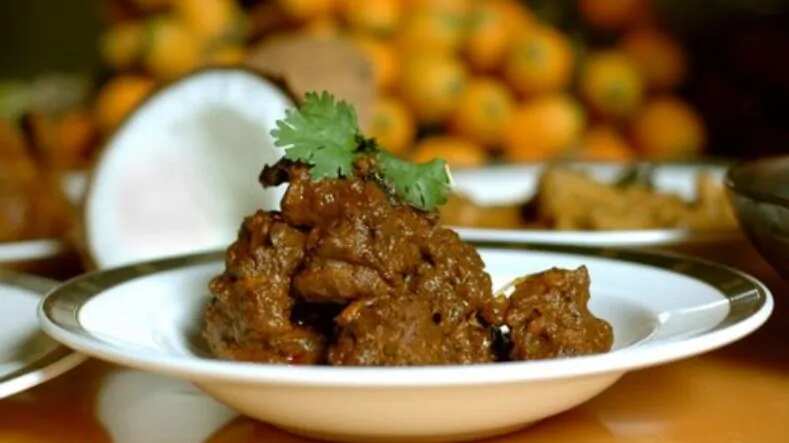
Coorg Pandi Curry
Nutritional Value
1718
Calories
per serving
- Fat81 g
- Protein140 g
- Carbs103 g
- Fiber23 g
- Sodium0 g
- Others0 g
- Place of OriginCOORG
- CuisineAsian,South Indian
- Common Ingredients
- CourseMain Course
Arguably one of the most coveted tourist destinations in India, Coorg is a coffee lover’s paradise. But this serene, picturesque valley, often known as the Scotland of India, is also home to some of the most delicious, albeit criminally underrated food in the country. And Pandi Curry, a spicy, sticky and sour pork dish, is the uncontested crown jewel of Coorg’s Kodava cuisine. While it developed in the kitchens of humble Kodavi homes, the indulgently meaty Pandi Curry is now a regular sight at festivals and wedding ceremonies.
Food is often the primary barometer to gauge a community’s livelihood. In the case of this insular community, Pandi Curry stands as an authentic representation of this unique cuisine, with dishes made with indigenous, locally produced and farmed ingredients. The Kodavas were historically a warrior clan, and the dense vegetation enveloping the Coorg valley provided them with a perfect ecosystem to develop a distinctively individualistic food habit. So once hunting was banned, the Kodavas switched from hunting wild boars and deer to farming pigs. Thus, pork is a favoured choice of meat in preparing many Kovadi dishes.
Pandi Curry uses a host of spices like whole peppercorns, chilli powder, turmeric, coriander and cumin to flavour the meat. What lends the dish its characteristic tartness and auburn colour is kachampuli, a special kind of vinegar made from an indigenous fruit named panna puli. The fattier pieces of meat are cooked down in dry roasted spices and a gravy made of caramelised onions. The oil from the fat cooks down the spices, onions and meat to a velvety consistency. It is cooked over a slow flame to help the meat tenderise until it falls off the bone, and is entirely infused in the spicy, vinegary, oniony paste.
The dish is usually served with a wide variety of rice preparations like Kodambuttu or rice balls, Akki Roti (flatbread made with rice), Neer Dosa (rice crepes) or Idlis (rice cakes). Rice used to be extensively grown in the region before the British Raj converted the estates into coffee and spices plantations. Yet, rice remains the staple grain of the region.
Nutritional Value
1718
Calories
per serving
- Fat81 g
- Protein140 g
- Carbs103 g
- Fiber23 g
- Sodium0 g
- Others0 g