


- Home
- Slurrp360
- Main course
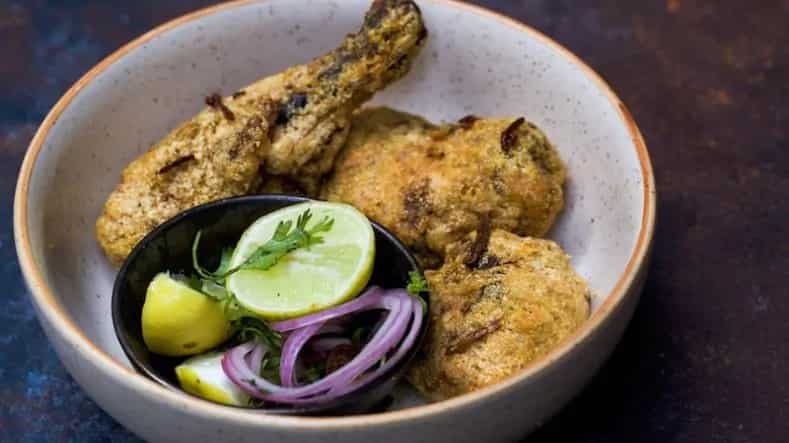
- Chicken Farcha
Chicken Farcha
Nutritional Value
444
Calories
per serving
- Fat25 g
- Protein22 g
- Carbs31 g
- Fiber7 g
- Sodium0 g
- Others0 g
- Place of OriginMAHARASHTRA
- CuisineAsian,Indian,Parsi,Maharashtrian
- Common Ingredients
- CourseStarter & Appetizer
Everybody (and their friends and families) loves fried chicken. There is nothing sinfully tastier than digging into a bucket of "finger licking" goodness. While not the healthiest teatime snack option out there, the combination of tender, succulent chicken enwrapped in a crunchy crust has been one of the favourite meals for Indians even before the American fried food giant KFC took the nation by storm. What’s more, the Indian versions of fried chicken are far punchier in flavour than their mellow American counterparts.
Among the staggering number of fried food items conceived in India—from Samosas, Vada Pav to Chicken 65 and Lahorey Charga—Chicken Farcha stands tall and proud. This delicacy from the Parsi kitchen, referred to as "Marghi na Farcha" by the community, is the perfect appetiser to awaken your palate for robust dishes to follow.
The Parsis, who are descendants of the Zoroastrian population in Iran, were forced to flee when the Arabs invaded their country. Around 18,000 Persians fled Iran during the 7th century and settled down in Gujarat, and later migrated to Maharashtra. Therefore, Persian ingredients like dry fruits, saffron, meat, and coastal produce like coconut and fish coalesced to constitute this vividly multiethnic cuisine.
Interestingly, there is no singular recipe to make Chicken Farcha. This is because the dishes were recreated and developed exclusively in Iranian households, which meant that each household had a distinct way of preparing its familial recipes. Hence, while some cooks prefer skinless, diced chicken pieces to make this dish, others prefer to use leg meat to make chicken drumstick fries. But the one technique that unifies all types of Farchas is the egg-fry coating instead of a more usual crust made of bread crumbs or maida.
The most familiar way of making Chicken Farcha is to marinate the chicken in a spice rub made of chilli powder, garam masala, pepper, ginger and garlic paste and salt. In order for the chicken to soak up the marinade effectively, the pieces are scoured with a knife and then left to rest overnight. The next day, the pieces are coated with semolina, breadcrumbs or maida, then swathed in an egg-wash coating, and fried on high heat. The high heat ensures the outer layer crispens up rather than becoming greasy or soggy. A side of mint chutney completes the dish.
Nutritional Value
444
Calories
per serving
- Fat25 g
- Protein22 g
- Carbs31 g
- Fiber7 g
- Sodium0 g
- Others0 g