


- Home
- Slurrp360
- Main course
- Chicken Chettinad
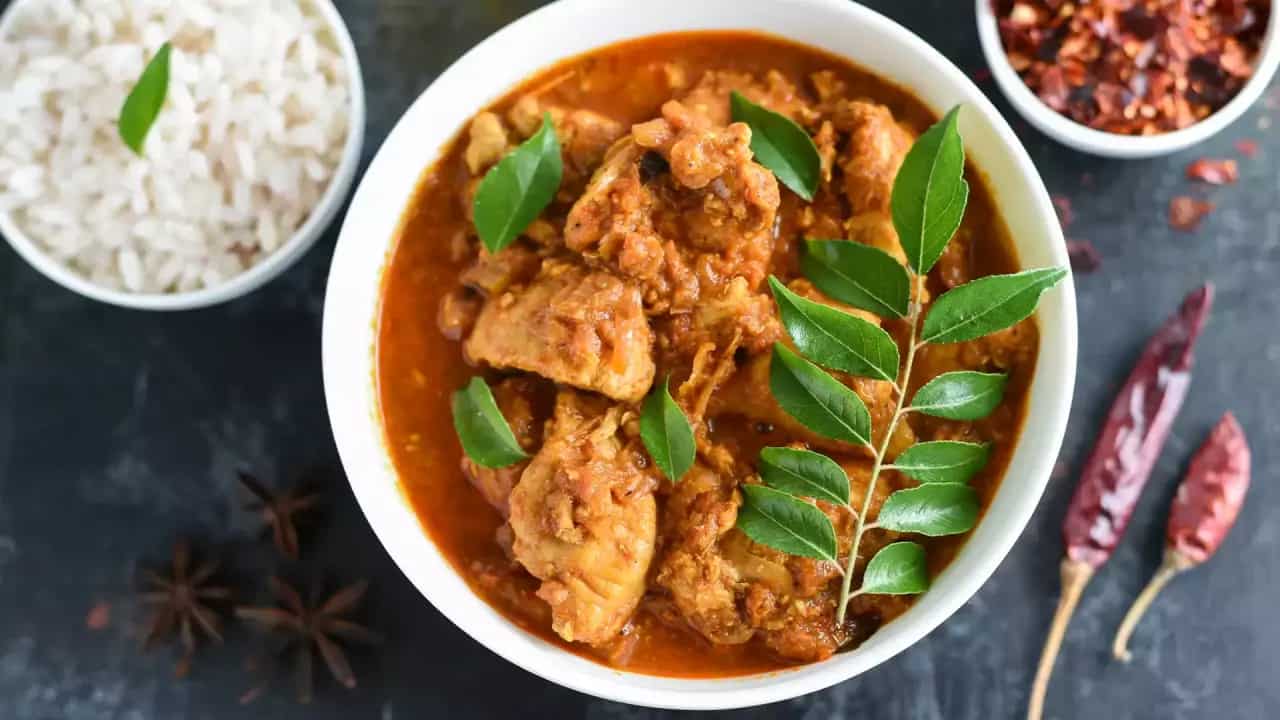
Chicken Chettinad
Nutritional Value
2690
Calories
per serving
- Fat190 g
- Protein200 g
- Carbs47 g
- Fiber50 g
- Sodium0 g
- Others0 g
- Place of OriginTAMIL,NADU
- CuisineAsian,Indian,South Indian,Tamil,Chettinad
- Common Ingredients
- CourseMain Course
Hailing from the Chettinad region of Tamil Nadu, Chicken Chettinad is one of the most popular dishes in India and arguably, the crown jewel of the exquisite Chettinad cuisine with a vibrant 3,000-year-old history. It is essentially a spicy curry of chicken marinated in freshly-ground spices unique to the Chettinad region and slow cooked in a gravy of yoghurt, tomato, ginger, onion and garlic. Over the course of culinary globalisation, the dish has earned the reputation of being one of the spiciest, even to the considerably tolerant Indian palate. But on closer inspection and mindful tasting, Chicken Chettinad emerges beyond its enticing spices to a complex yet well-blended mixture of exciting flavours and aromas, archetypical of this South Indian cuisine.
As is evident, Chicken Chettinad derives its name from the Chettinad region—home to the Nattukotai Chettiars, a traditionally mercantile Tamil caste. Historian S Muthiah believes that the Chettiars have, surprisingly, been vegetarians for a significant part of history. But trade opportunities often compelled them to extensively travel to peninsular India, amalgamating the non-vegetarian influences of the Malabar coast. The adoption of non-vegetarianism further accelerated in the 18th century as Chettiars established businesses in Ceylon, Burma, the Dutch East Indies, French Indo-China, and modern day Malaysia and Singapore, traversing extensive routes.
The custom of using sun-dried vegetables and meat had been prevalent in Tamil food even before the expansion of the Chola Kingdom as a way of preservation in the prolonged dry Deccan heat. Spices and herbs, in their magnanimous diversity, entered the cuisine as the Chettiars expanded their trade links. During their stay in Penang, or modern day Malaysia, the Chettiars developed a taste for Chinese piquancy. In Saigon, they imbibed Vietnamese herbs, and in Buddhist Ceylon, they started enjoying meat, including chicken.
The result of this unforeseen cultural and culinary blend was the Chettinad cuisine which transformed an idyllic agrarian temple community into a flourishing storehouse of global signatures—a locus of internationalised taste.
During the colonial period, Chicken Chettinad gained recognition as part of the larger enduring legacy of the curry, domesticated and popularised by East India Company officials and merchants, many of whom were so addicted to the new hybrid cuisine that they took their Indian cooks along with them to Britain.
Today, Chicken Chettinad is the omnipresent flag-bearer of authentic Chettinad cuisine all over the world and bears testimony to a culinary heritage that has remained mostly unchanged since its inception. So, the next time you dip your fingers into a plate of steaming rice and spicy Chicken Chettinad, remember that what lies in front of you is not just a random tangy curry but a 3,000-year-old piece of history and global discourse, served hot.
Nutritional Value
2690
Calories
per serving
- Fat190 g
- Protein200 g
- Carbs47 g
- Fiber50 g
- Sodium0 g
- Others0 g