


- Home
- Slurrp360
- Main course
- Biryani
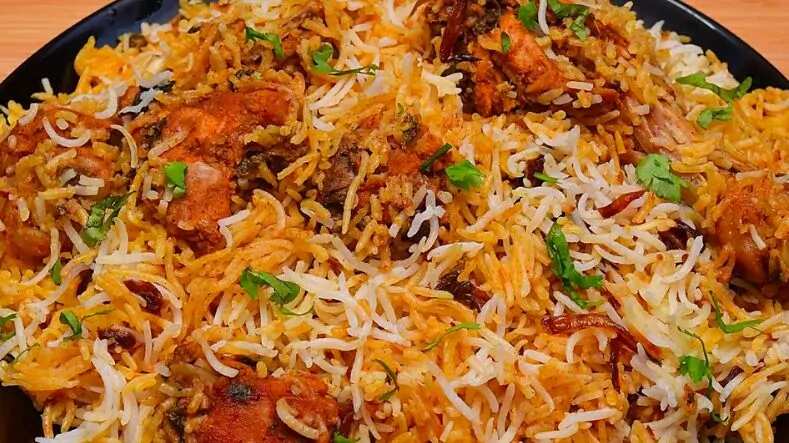
Biryani
Nutritional Value
3517
Calories
per serving
- Fat145 g
- Protein144 g
- Carbs409 g
- Fiber53 g
- Sodium0 g
- Others0 g
- Place of OriginIRAN
- CuisineIrani
- Common Ingredients
- CourseMain Course
Biryani (derived from the Persian term ‘birinj birian’, meaning something that is fried prior to cooking) has slowly but gradually earned the status of an unequivocal favourite among Indians.
Developed as part of the Mughlai cuisine, the rice dish first made its presence felt in India during the 15th century. Originally an Irani (earlier referred to as Persian) delicacy, Biryani found a strong footing in India. The Irani version of the dish was mainly cooked in clay pots on a slow heat (popularly known as ‘dum’) for the multiple spices to marry well with the succulent meats and rice, layered alternately and often garnished with fried onions. Some culinary pundits however claim that the original dish had little to do with rice. Large lamb chunks were often mixed with smaller meat pieces and fire-roasted with herbs on wide skillets. This prepared meat would then be gently stuffed into thin folds of bread.
Legend goes that Mumtaz Mahal (Mughal emperor Shah Jahan’s favourite queen) had walked into the royal army’s barracks and noticed how physically ill-equipped the soldiers were. Not only were they under-nourished but complained of poor food resources. On her prompt command then, the ‘shaahi khansama’ (royal cook) was ordered to make pots of rice with generous amounts of spices, meat and sometimes, even vegetables in it—a one-pot nutri-meal, if you will. The required balance of carbohydrates, proteins and fats was effortlessly achieved with this culinary wonder and the soldiers (they say) were well-fed, merry and raging to go to war.
Though there is sufficient evidence that various rice dishes, rich in meats, were already a part of Indian cuisine, the Persian variant transcends the concept to astronomical popularity. Even if it is often attributed to its Mughal roots, the advent of Biryani in India could also have been through travelling pilgrims and soldiers, especially south of the Vindhyas.
The popularity of this heady aromatic rice and meat dish is attested by the diversity of its interpretations across the subcontinent. A simple search on Google will inform you that there are more types of Biryanis in India than there are letters in the English alphabet.
For instance, the Kolkata Biryani has its roots in the royal state of Awadh (near present-day Agra). The recipe is said to have travelled eastwards in 1856 with exiled statesman Nawab Wajid Ali Shah and his favoured ‘khansama’. Some accounts indicate the addition of the sweet and succulent potato into the dish, something Kolkata residents will never fail to swear by. This oddity was often accredited to the nawab’s dwindling treasury, which allowed the humble potato to compensate for the expensive lamb meat.
Nutritional Value
3517
Calories
per serving
- Fat145 g
- Protein144 g
- Carbs409 g
- Fiber53 g
- Sodium0 g
- Others0 g