


- Home
- Slurrp360
- Main Course
- Bhendi Fry
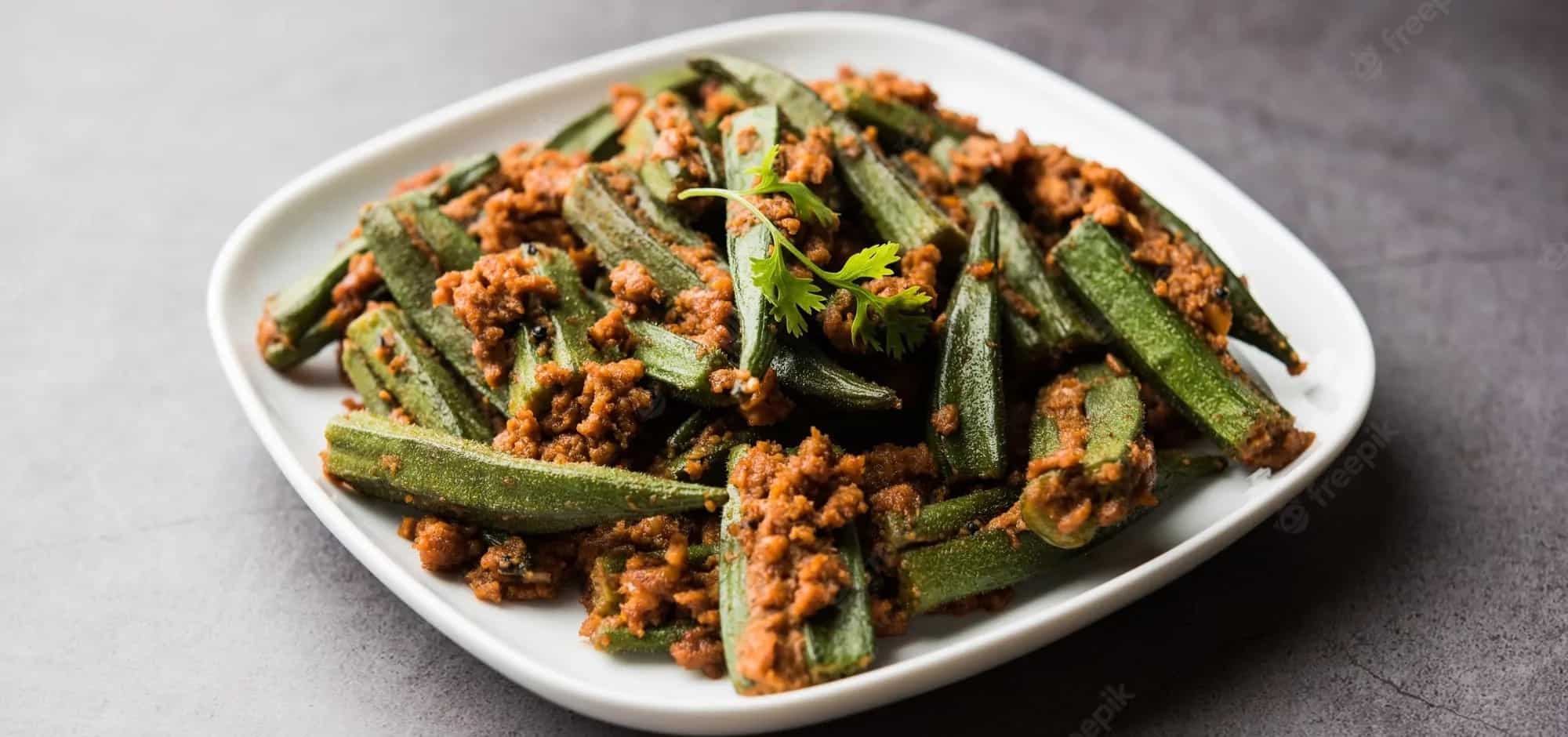
Bhendi Fry
Nutritional Value
165
Calories
per serving
- Fat12 g
- Protein5 g
- Carbs9 g
- Fiber11 g
- Sodium0 g
- Others0 g
- Place of OriginINDIA
- CuisineAsian,Indian
- Common Ingredients
- CourseStarter & Appetizer
A vegetable common to any Indian household which finds its way to the palates of many would be the humble bhendi, widely known as Okra or the Ladies’ Finger. Bhendi Fry or fried okras is probably the most frequently consumed okra recipe in India as it is easy to make and equally tasty. This readily available veggie is slit and stir-fried in oil with an array of spices which adds to its flavour. Served as a side, it can be paired with steamed rice and pulses or made into a dry masala curry to serve with Roti (Indian bread).
The term okra was probably derived from the Igbo word Okuru and it first appeared in 1679 in the Colony of Virginia. In certain parts, it is also known as the gumbo and widely as bhindi in India. The geographical origin of this vegetable has contesting views. Some opine Abyssinia to be the area of origin which consisted of the higher lands of Sudan, Eritrea and current Ethiopia. Its path from Eritrea to Egypt and eventually to India is still very vague. However, it is believed that the Okra was cultivated for a long time before it ended up in India.
Legend has it that the Bhendi arrived in India with the help of the Bantu tribe that moved from Egypt around 2000 BC and has since thrived in India and China. Mention of ‘bhandi’ (relating to ‘bhendi’) can be found during the rule of Bhulokamala Someshwara III (1126 – 1138 AD) of the Western Chalukyan Dynasty. It was in the text Manasollasa, where he first mentioned the recipe of Bhendi Masala using chopped okra, rubbed with turmeric and then fried in oil, ultimately served with whipped curd on top. Around fifteen centuries ago, mention of the bhandi was made by the famous scholar Charaka.
Nutritional Value
165
Calories
per serving
- Fat12 g
- Protein5 g
- Carbs9 g
- Fiber11 g
- Sodium0 g
- Others0 g