


- Home
- Slurrp360
- Main course
- Bheja Fry
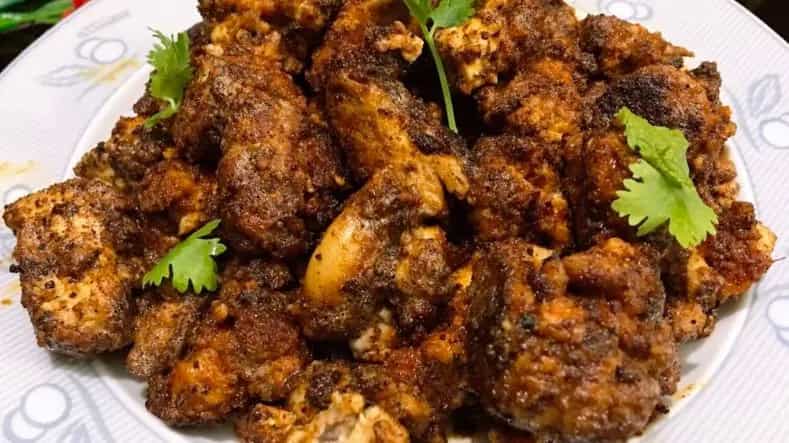
Bheja Fry
Nutritional Value
550
Calories
per serving
- Fat42 g
- Protein7 g
- Carbs37 g
- Fiber6 g
- Sodium0 g
- Others0 g
- Place of OriginHYDERABAD,,PAKISTAN,,BANGLADESH
- CuisineAsian,Indian,Pakistani,Hyderabadi
- Common Ingredients
- CourseMain Course
Religion and cultures across the world enjoin that no food be wasted. The leftovers too have to be consumed. The same philosophy, when translated to the slaughtering of whole animals, gave rise to dishes that used all parts of the carcass. Hence, not only was the delicate meat around the legs savoured, but trotters, udders, heads and consequently the brain were also eaten. Soup made from butchered animal heads has always been a delicacy. But a more delicate fare is when the brain of the animal is extracted, usually from the lamb, sheep, cow and goat head.
It is then curated with spices and oils to offer subtler versions of popular street food, accompanied with pao, rotis and other forms of roasted or pan fried bread. Goat meat, a regular ingredient of Bheja Fry, is popular in India as it is a leaner meat option over the sheep or lamb, which have more fat.
The origin of Bheja (brain) Fry is said to be from the medieval Islamic era particularly from the Hyderabad region of India. However, the entire subcontinent has different versions of the same. In Pakistan and Bangladesh, it is known as Magaj Bhuna (brain fry). Their use of ingredients and spices are also slightly different to suit the local palate.
In Hyderabad, the brain is extracted, cleaned and usually cut into two pieces. Oils and a mix of spices like onion, garlic paste, pepper, garam masala, red chillies, turmeric powder and tomatoes are sautéed, and a thick gravy is made in a pan. The brain pieces are then added and tossed with curry leaves till all the contents are cooked. The finished version of the Bheja Fry looks like a red hot zesty offering, full of aroma from the spices and curry leaves. The dish is then served up with the piping hot Roti, Naan, Pav or Parathas (variants of Indian bread).
As we travel up north, the use of spices changes a bit with the additional use of coriander and ghee, and lastly, a garnishing of chopped coriander leaves.
The texture of the brain is spongy and buttery and once sautéed in oil with hot spices, the aromatic softness of the fare livens the palate. With Roti, Naan and Parathas, it’s a heady burst of flavours.
The brain is a rich source of vitamins, particularly Vitamins A and B12, along with phosphorus, calcium, iron and fat. It is also a storehouse of other essential minerals that are believed to possess curative properties and are good for the eyes and the nervous system. Above all, the Bheja Fry is a popular street food alongside Biryani, Salaan, Haleem and Kebabs.
Nutritional Value
550
Calories
per serving
- Fat42 g
- Protein7 g
- Carbs37 g
- Fiber6 g
- Sodium0 g
- Others0 g