


- Home
- Slurrp360
- Main course
- Baingan Bharta
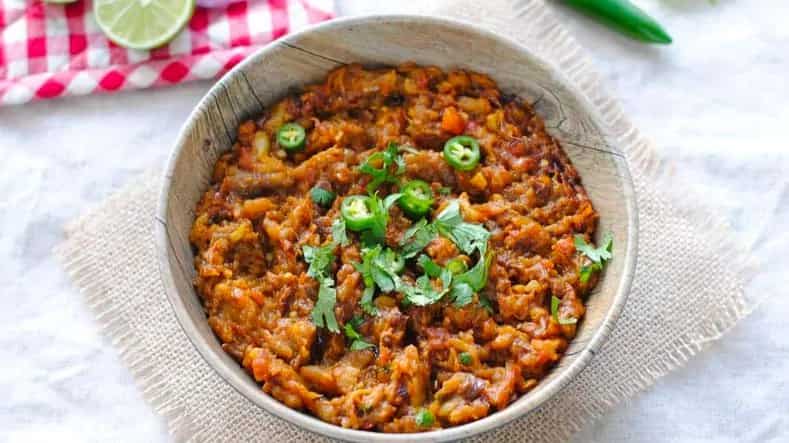
Baingan Bharta
Nutritional Value
215
Calories
per serving
- Fat18 g
- Protein4 g
- Carbs8 g
- Fiber8 g
- Sodium0 g
- Others0 g
- Place of OriginINDIA
- CuisineIndian
- Common Ingredients
- CourseMain Course
One of the most commonplace elements in any vegetarian household in India is the presence of baingan (brinjal) in daily meals. The humble brinjal is savoured in multiple ways, and sometimes, is even likened to the succulent textures of mutton or beef. Fried, steamed, baked or cooked in slow heat—baingan has always heroed dishes across north, east and west India. The Bharta essentially stands for a mash that is created with chopped onions, chillies, garlic, ginger, coriander, and tomato, all mixed with a dash of vegetable oil (mustard oil in Eastern India).
The speciality of Baingan Bharta is the way in which the brinjal is treated before mixing it with other ingredients. The raw brinjal is lightly coated with oil and then traditionally cooked on direct wood-fire till the outer skin gets completely charred. Following this, the black, outer skin is precariously peeled off leaving the inner steamed contents to be washed and later prepared into the mash. As a final touch, this mixture is sautéed on a hot pan and served with fresh Rotis, Parathas, Litti (in Bihar, Uttar Pradesh and Jharkhand) or even Luchi (Bengal).
The origins of this dish is often tied to the Turkish dish Imam Bayildi, which literally translates to “the Imam fainted.” Intriguing anecdotes try to conjure stories about this famous Mediterranean dish. While one account claims that the Imam was so overwhelmed with the dish that he simply fainted after consuming it, the other story states that the Imam’s wife ran out of olive oil and on knowing he would not be able to eat his favourite dish, the Imam fainted in anger. Yet another version of the tale narrates how the Imam took a nasty fall once he discovered the amount of olive oil that went into the Imam Bayildi. To consider the Baingan Bharta a successor to this dish is understandable, but not factually correct. Despite the Greeks and Turks using brinjals generously in their recipes, the baingan, as it turns out, was India’s gift to the world. The vegetable was cultivated first in the country and later found influence in other parts of the world.
Pakashastra, the ancient Indian cookbook (also claimed to be the first one in Indian history, dating back to the Mahabharata), mentions a baingan dish. This record predates any foreign culinary influence that the Indian subcontinent underwent through various invasions and trade relations.
Nutritional Value
215
Calories
per serving
- Fat18 g
- Protein4 g
- Carbs8 g
- Fiber8 g
- Sodium0 g
- Others0 g