


- Home
- Slurrp360
- Main course
- Aloo Gobi
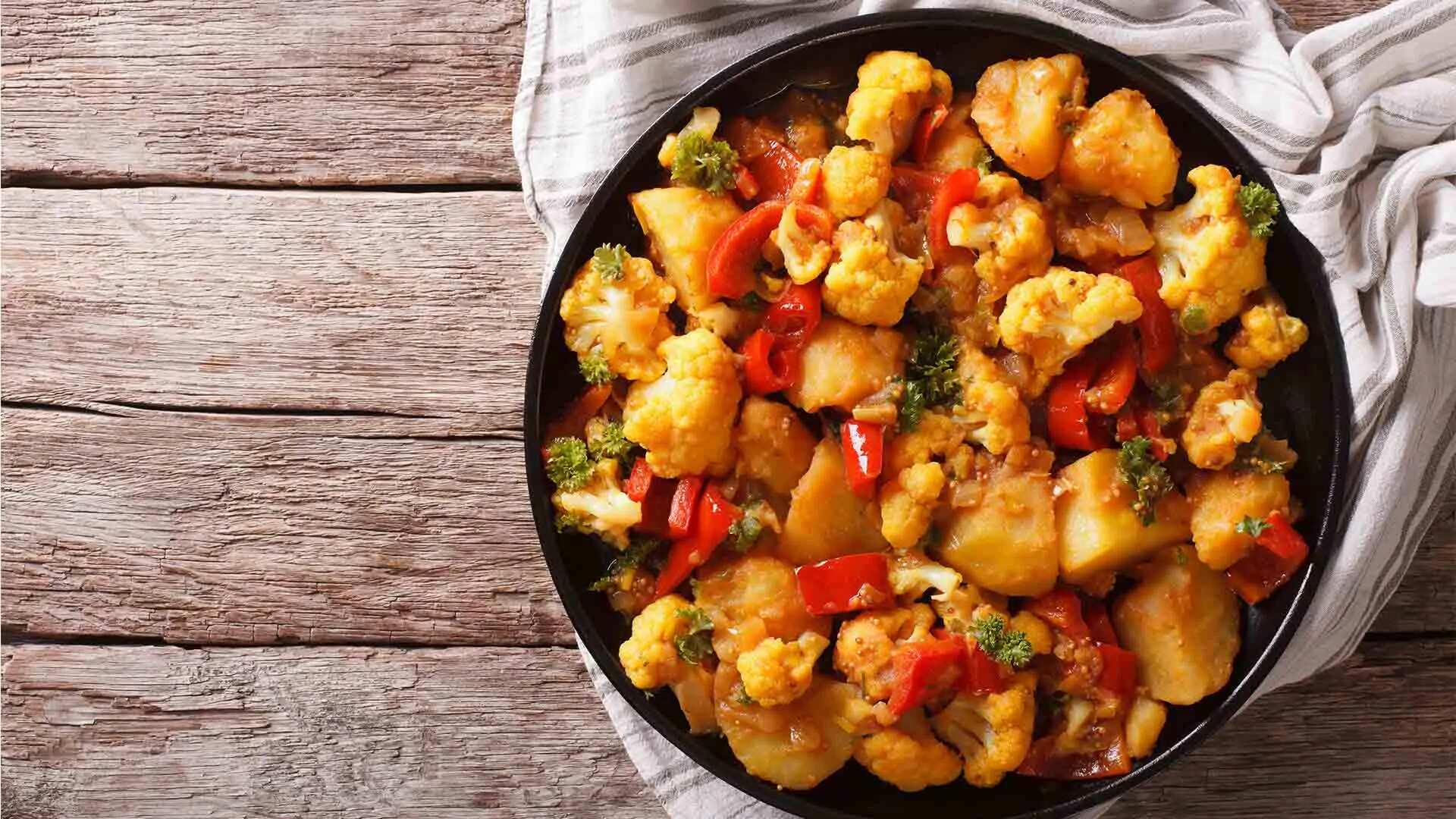
Aloo Gobi
Nutritional Value
307
Calories
per serving
- Fat5 g
- Protein10 g
- Carbs53 g
- Fiber20 g
- Sodium0 g
- Others0 g
- Place of OriginPUNJAB
- CuisineAsian,Indian,North Indian,Punjabi
- Common Ingredients
- CourseMain Course
In 1911, on the 50th birth anniversary of Rabindranath Tagore, the bard’s niece Pragyasundari Devi prepared a special sweet called ‘Kavi Sambardhana Barfi’. The dessert caught the attention of all guests, who, though astounded by its heavenly taste, could not decipher the main ingredient. It was later revealed that the underlying chief component of the sweet was rather surprisingly the cauliflower. Today, almost all Indian cuisines are just as enthusiastic as Tagore’s cosmopolitan Jorashanko kitchen in their unabashed celebration of this seasonal delicacy.
In the lively kitchens of Punjab, the humble cauliflower has achieved innumerable identities. Be it the Gobi Paratha (flat unleavened bread stuffed with grated cauliflower), Gobi Gajar (cauliflower and carrots tossed in North Indian spices) or the piquant Shalgam ka Achaar (pickle made with cauliflower, carrot, and turnip), the land of the five rivers truly does not hold back in their fondness for the vegetable. But the most famous dish involving cauliflower to come out of the Amritsari kitchen is undoubtedly the Aloo Gobi. The name literally translates to “potato and cauliflower”, and as the name suggests, these are the only two ingredients, cooked in a host of authentic North Indian spices.
The minimalist approach in cooking the Aloo Gobi is perhaps the reason behind the dish’s unmatched popularity across the nation’s culinary factions and the root cause of its wide range. In Uttar Pradesh, for instance, the Aloo Gobi has been transformed into a light Pulao (flavoured rice) called Tehri. In Tamil Nadu, the ingredients are slow-cooked for a longer duration to achieve a tangy and spicy vegetable sauce called the Poriyal. On the other hand, the Parsis prefer adding mutton to the dish, called Gobi ma Gosht.
Though the Aloo Gobi today is a culinary identity of the Indian vegetarian platter worldwide, and it seems like the dish has been around in the subcontinent for ages, it is hard to believe that the Aloo Gobi has originated in Punjab only 200 years ago and that none of the ingredients are endemic to the region. The cauliflower was cultivated first in Asia Minor (modern Turkey) 2000 years ago and slowly made its way through the bazaars (markets) of the Ottoman Empire, the ancient Campanian coastlines of Italy, the sumptuous feast of France’s Louis XIV, and Europe’s bustling global markets before being introduced in the subcontinent by the British in the 18th century, alongside its ubiquitous counterpart, the potato. In fact, a British botanist by the name of Dr Jemson, who oversaw the Company gardens in Saharanpur (in modern-day Uttar Pradesh) was the pioneer of importing the cauliflower to India. As for the spices indispensable to the dish, credit needs to be given to the Mughals whose transnational quests and politico-cultural exchanges made the condiments a regular sight in the markets of Sindh.
So, the Aloo Gobi, a rather simple yet flavourful delicacy, is a true testimony to the inconceivable extent of cultural amalgamation that the culinary history of the nation has undergone.
Nutritional Value
307
Calories
per serving
- Fat5 g
- Protein10 g
- Carbs53 g
- Fiber20 g
- Sodium0 g
- Others0 g