


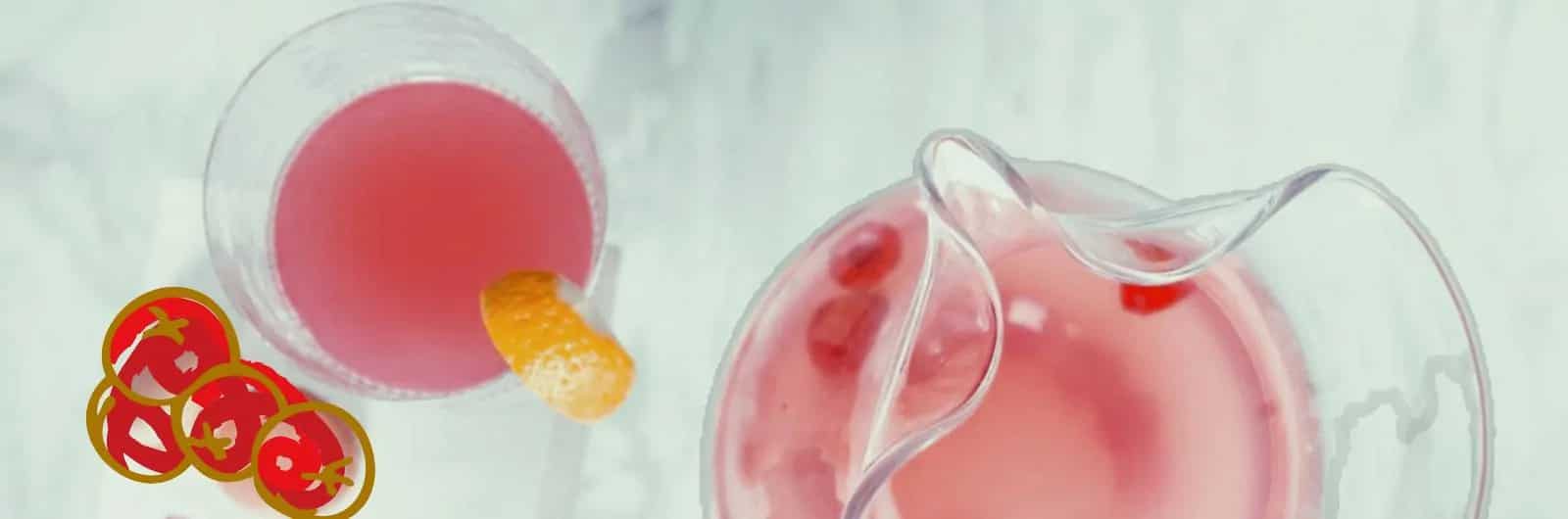
Spring Pink Lemonade
Nutritional Value
91
Calories
per serving
- Fat0 g
- Protein0 g
- Carbs4 g
- Fiber0 g
- Sodium0 g
- Others0 g
- Place of OriginUSA
- CuisineNorth American
- Common Ingredients
- CourseStarter & Appetizer
Q: What is pink lemonade made from? / What makes lemonade pink?
A: "Pink lemonade often gets its pink colour from red dye, cranberry juice, grenadine, or strawberries. You can also use fresh watermelon to give this lemonade its colour." (Courtesy: Celebrating Sweets.)
Q: What is pink lemonade really?
A: Like a regular lemonade, pink lemonade is made of lemon juice, sugar, and water most of the time. However, since lemons are naturally yellow and produce clear juice, a red or pink natural or artificial food colouring or dye is used to give the beverage a rosy tint. (Courtesy: Cooking Chew.)
Q. Are pink lemons genetically modified?
A: [No, they're not] a scary, genetically modified version of the regular lemons you've been turning into lemon water in the morning. Discovered growing on a wild lemon tree in California, pink lemons are rosy on the inside thanks to an antioxidant called lycopene, which also gives tomatoes their red hue. (Courtesy: Pure Wow.)
Q. How is pink lemonade different?
A: Lemonade is mostly sour, while pink lemonade is mostly sweet. Lemonade is made with just water, lemon, and sugar, while pink lemonade uses these for a base but also may include red dye or something like strawberry, raspberry, or cranberry juice. (Courtesy: Foods Guy.)
Q. Is pink lemonade good for you?
Because pink lemonade is lemonade with other juices and/or more sugar added, it can be just as sugary as soda drinks. But it still has lemon juice which contains vitamin C, Iron, B6, Magnesium and Calcium. And the same potential benefits for your heart, metabolism and digestive system. (Courtesy: Gambrick.)
As may be evident from the exchanges above, most folks have a lot of questions when it comes to Pink Lemonade. As the poser of FAQ # 2 indicates, part of it is an existential query: what is pink lemonade really? It[s lemonade that's pink. But why does it need to be pink? Does the pinkness make it more or less lemonadey? These Dear Reader, are not answers we have. All we know is that as impressionable children being brought up at our mother's knee, we watched The Sound of Music and saw the Baroness Schraeder being offered a glass of pink lemonade out of a pitcher of pink lemonade, by her chum Max Detweiler ("Uncle Max" to the Von Trapp kids), and we've been besotted ever since. What's good enough for the Baroness should be good enough for the rest of us indelicate, mere mortals.
Its starring role in the greatest musical of our times aside, Pink Lemonade has a very curious origin story. The late 19th century is possibly when it first came into being, and while there are two accounts of who made it, both 'inventors' could be called circus employees.
The Smithsonian notes of Pink Lemonade Inventor No. 1 in a treatise on the subject:
"Henry E Allott , a Chicago native and circus worker, 'invented' pink lemonade after accidentally dropping red-coloured cinnamon candies in a vat of traditional lemonade. Adhering to the old circus adage 'the show must go on,' Allott simply sold the pink-hued beverage as is."
Of Pink Lemonade Inventor No. 2, the Smithsonian finds:
"...Pete Conklin came up with pink lemonade in 1857 while selling lemonade at the circus. Conklin ran out of water and thinking on the fly, grabbed a tub of dirty water in which a performer had just finished wringing out her pink-coloured tights. In true circus form, Conklin didn't miss a beat. He marketed the drink as his new 'strawberry lemonade,' and a star was born."
If you don't have pink laundry water to come up with your own Pink Lemonade, you might try this recipe:
Take 3/4 cup sugar, zest from 2 lemons, 6 cups water (divided), 2-1/2 cups freshly squeezed lemon juice (about 12-15 lemons), 1/3 cup cranberry juice, a pinch of salt
In a saucepan, combine sugar, lemon zest, and 1/2 cup water. Bring the liquid to a boil over medium high heat until sugar is dissolved. Remove from heat and let cool. In a pitcher, combine 5-1/2 cups water with lemon juice, cranberry juice, and salt. Strain the syrup and add to lemonade. Stir to combine. Serve chilled.
The floor is now closed open for questions.
Nutritional Value
91
Calories
per serving
- Fat0 g
- Protein0 g
- Carbs4 g
- Fiber0 g
- Sodium0 g
- Others0 g