


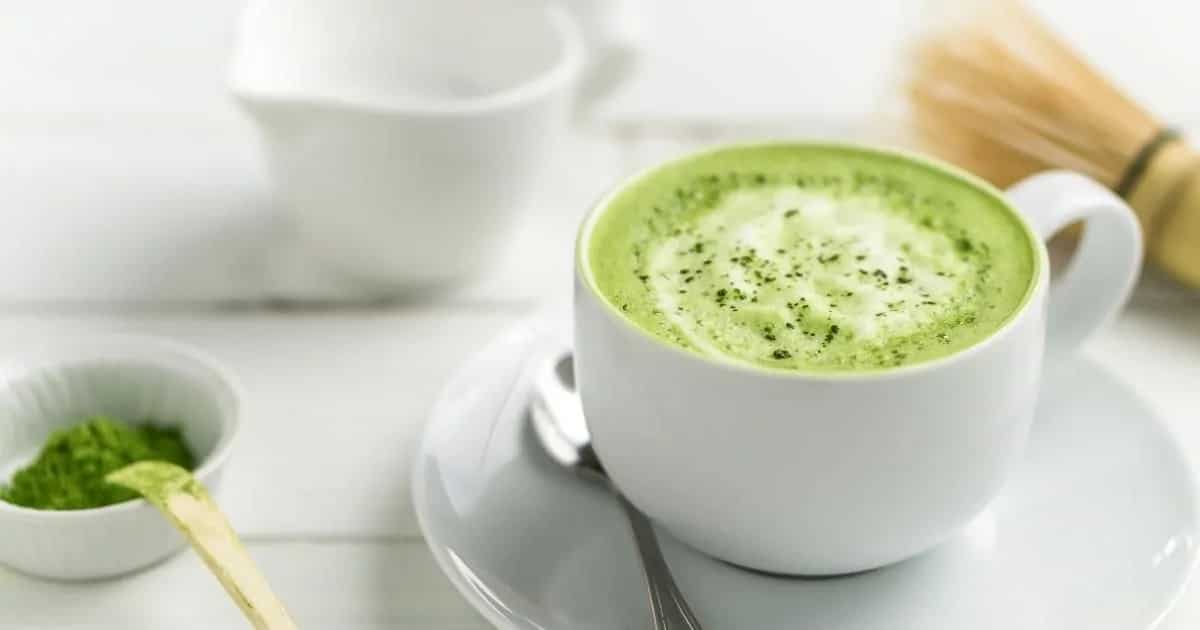
Matcha Green Tea Latte
Nutritional Value
674
Calories
per serving
- Fat31 g
- Protein5 g
- Carbs92 g
- Fiber3 g
- Sodium0 g
- Others0 g
- Place of OriginJAPAN
- CuisineAsian
- Common Ingredients
- CourseCondiment
Popular around much of the globe as one of those quintessential Starbucks drinks, the Matcha Green Tea Latte has a long and complex history. The green colour tea plant originated in China’s Tang Dynasty, which ruled from the seventh to 10th centuries. They would form bricks of the tea by roasting and pulverising the tea leaves, then adding water and salt to the resulting powder, which was convenient for trade.
Following them, during the Song Dynasty, which ruled from the 10th to the 13th centuries, matcha tea became widely popular. The Japanese Buddhist monk Eisai, who had spent several years studying in China, returned to Japan in 1191, taking the tea seeds with him. He planted these on the temple grounds, essentially bringing matcha tea to Japan.
It was several centuries later, in the 1500s, that Murata Juko, a Zen student, formulated the tea ritual that included its cultivation, consumption, and ceremony. Zen Master Sen-no-Rikyu popularised this ritual, and is today revered as a well-known figure of the Japanese Tea Ceremony, called Chado or Sado, which translates to The Way of Tea. He formed the Ceremony’s four basic principles:
Harmony, Respect, Purity, Tranquillity.
Ceremonially, the tea is prepared by adding one teaspoon of matcha powder into a strain, which then falls into a bowl or cup. One or two tablespoons of hot water is added and the concoction is mixed till the powder dissolves. Then the rest of the water is added to the cup, and the drink is whisked till it's light and frothy.
In more recent history, the Japanese food boom has resulted in matcha becoming popular all over the globe. Several people tout its health benefits, which include serving as an antioxidant, boosting brain function, and promoting heart health. Importantly, it also evidently helps with weight loss. Taken regularly, it promotes relaxation and helps focus better. Instead of straining the leaves out as in other traditional teas, matcha drinks are made by crushing and using the leaves, making all the benefits more pronounced and making the drinking experience a nutrient-rich one.
As matcha gained popularity and started appearing on the menus of various cafes, people started adding milk into the mix, creating the latte that’s so well loved today.
The versatility of matcha also means that the experiments continue, with matcha being used everywhere from puddings and cakes to stir fries.
Nutritional Value
674
Calories
per serving
- Fat31 g
- Protein5 g
- Carbs92 g
- Fiber3 g
- Sodium0 g
- Others0 g