


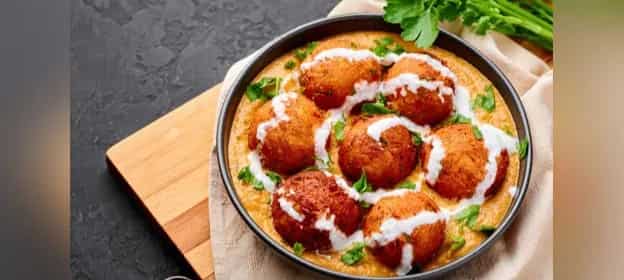
Chicken kofta
Nutritional Value
1755
Calories
per serving
- Fat124 g
- Protein109 g
- Carbs52 g
- Fiber17 g
- Sodium0 g
- Others0 g
- Place of OriginMIDDLE,EAST
- CuisineAsian,Middle Eastern,Persian
- Common Ingredients
- CourseMain Course,Side Dish
It is not uncommon in global cuisines to find regional adaptations of globe-trotting culinary classics and each such recreation adds its own unique combination of flavours. For instance, the essentially Middle Eastern Kofta, a conventional meatball recipe, found itself simmering in a hot curry of aromatic spices and puree in the Indian subcontinent, creating the Kofta curry reimagination that has caught the fascination of the locals for centuries now. Since the Kofta can be prepared with a wide variety of meat and even vegetables, Chicken Kofta happens to be one of the many distinctive ways of cooking this culturally and historically vibrant dish.
A serving of Indian Chicken Kofta starts by mixing minced chicken with breadcrumbs, lime juice, coriander, garam masala and other exquisite condiments to create golf-sized balls which are then sauteed in hot ghee (clarified butter) until golden. The fried meatballs are then dipped into a puree of onion-ginger-garlic and chilli paste, splashed with a platter of Indian spices, allowed to simmer for some time, and finally garnished with some more coriander. The flavourful curry and its tender meatballs can be consumed with a wide range of accompaniments, including tandoori naan, rumali roti, paratha, basmati rice, and pulao.
Kofta is a loanword borrowed from Persian ‘Koftah’ or ‘Kufte’ which finds its earliest mention in Mulla Nusrati’s 17th-century composition Ali Nama. Though the traditional method of preparing kofta involves lamb and other red meat, different variants like fish, raw banana, tomato, and chicken have also emerged with time. While some believe that Koftas are as old as the Assyrian empire, others contest that the origin of the modern Kofta is around 1200 years back. It is also believed that Koftas may have been influenced by 13thcentury Turkish dishes and are a product of the culmination of culinary devices practised in extent by the Ghaznavid, Sejulk, and Khwarazmian dynasties. Various historical anecdotes suggest that Koftas reached the zenith of popularity in the Ottoman empire during a time of meat shortage and the consequent exorbitant hike in meat prices. Stemming more from a crisis than a culinary reimagination, Koftas are therefore traditionally prepared by mixing meat with bulgur and rice to make the balls more filling. Many historians feel that Kofta arrived in the Indian subcontinent with the Mughals. Literary evidence indicates that Nargisi Kofta, named after the Nargis or narcissus flower and containing a hard-boiled egg in the minced meat mixture, was a regular delight at the Mughal court and the earliest form of Kofta popularised in the nation.
Nutritional Value
1755
Calories
per serving
- Fat124 g
- Protein109 g
- Carbs52 g
- Fiber17 g
- Sodium0 g
- Others0 g