


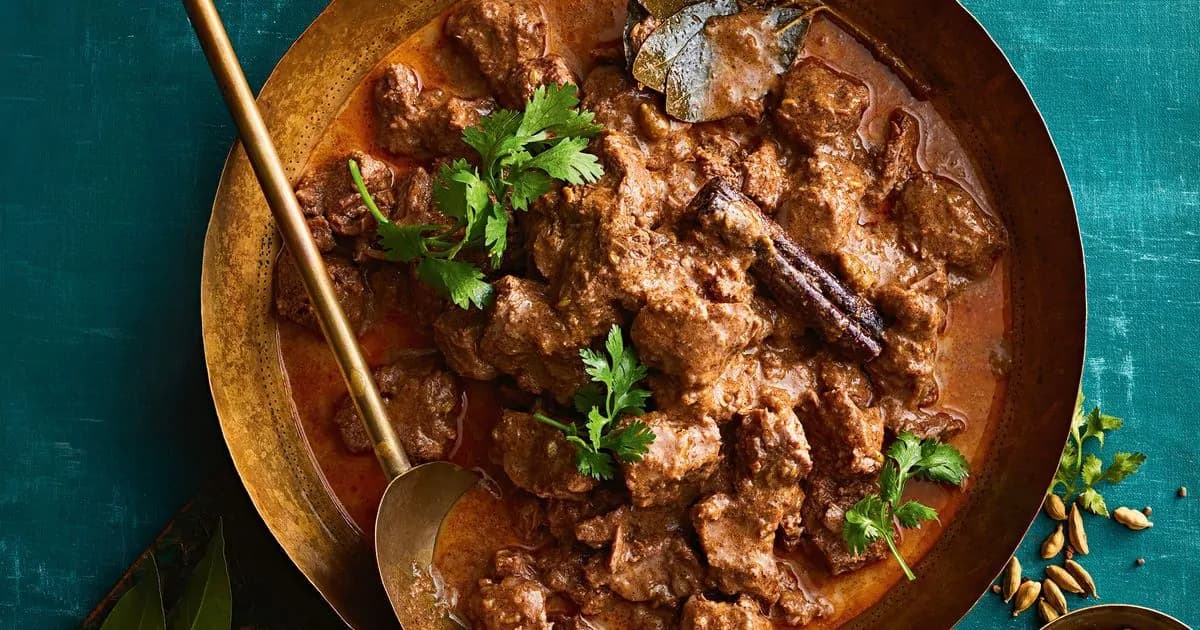
Rogan Josh
Nutritional Value
1565
Calories
per serving
- Fat67 g
- Protein122 g
- Carbs122 g
- Fiber37 g
- Sodium0 g
- Others0 g
- Place of OriginNORTH,INDIA
- CuisineIndian,Kashmiri
- Common Ingredients
- CourseMain Course
Kashmir is a syncretic culture with myriad socio-political influences. One of the most enduring legacies of the valley’s medieval past is its platter of unforgettable delicacies called the Wazwan. It is said that only seven dishes have the honour of a permanent position in this ceremonial palette, the most globally experimented of which is the Rogan Josh.
A Mughal favourite, the authentic Kashmiri Rogan Josh is an aromatic curry of supremely tender goat or lamb meat, cooked with a perfect blend of asafoetida, red chilli powder and hand-sorted garam masala. The name of the dish draws upon its Persian origin as "rogan" in Persian means clarified butter and "josh" means to boil, referring to the practice of simmering the butter-laden sauce on low flame for long durations till the meat becomes succulent enough to drip from the bones. A contesting opinion suggests that Rogan Josh derives its name from the exclusive red hue of the curry as "rogan" refers to red in Kashmiri.
Persia is said to be the birthplace of Rogan Josh and the cradle of most Indo-Persian delicacies. It is believed that the Kashmiri Wazwan developed in the 14th century with the arrival of Timur Lung, and along with him, a host of skilled cooks from Samarkand. The native Indian flavour profiles got enhanced with the Mughal advent, which introduced the Persian condiments of saffron and asafoetida to the subcontinent. Stories around transnational Mughal comestibles are ample in the Ain-E-Akbari, which also narrates the Mughal tradition of a summer and winter capital. Historical anecdotes suggest that Mughal emperors preferred the snow-clad and refreshing mountainous landscapes of Kashmir during summers to avoid the relentless heat of the mainland. This practice is the sole reason behind the multitude of Mughal gardens, grand mosques, and Indo-Persian dietary innovations in the valley. Though the elements were available for centuries, it was during these Mughal summer vacations that the incredible Rogan Josh was mastered to perfection.
Though Rogan Josh is synonymous with Kashmiri cuisine, there are variations within its local tradition itself. The Kashmiri Muslims use onion, garlic, and the dried cockscomb flower, which lends the curry its typical fiery red colour, and prefer a tender rib cut. The Kashmiri Pandits, however, choose a shoulder cut for the dish, avoid onion and garlic, and use fennel and asafoetida instead.
Nutritional Value
1565
Calories
per serving
- Fat67 g
- Protein122 g
- Carbs122 g
- Fiber37 g
- Sodium0 g
- Others0 g