


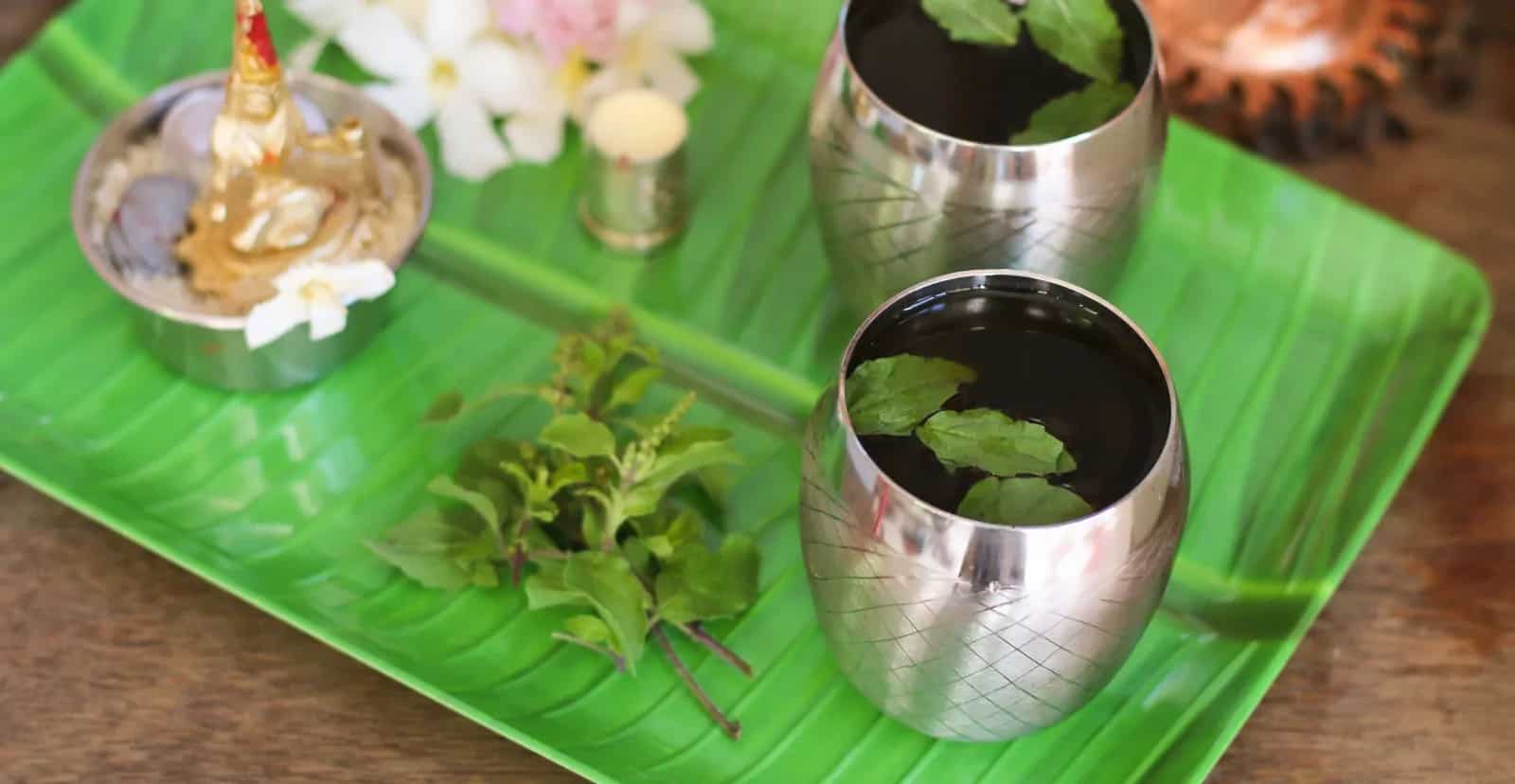
Panakam
Nutritional Value
856
Calories
per serving
- Fat2 g
- Protein6 g
- Carbs203 g
- Fiber6 g
- Sodium0 g
- Others0 g
- Place of OriginTAMIL,NADU,,ANDHRA,PRADESH,,KARNATAKA
- CuisineAsian,Karnataka,Tamil,Andhra
- Common Ingredients
- CourseStarter & Appetizer
Indian cuisine is replete with exquisite beverages, the majority of which are summer coolants, prepared traditionally to revitalise and recharge, but not compromising on the quotient of taste. One such delectable drink from the southern part of the country is the Panakam. Widely consumed in the states of Tamil Nadu, Andhra Pradesh, and Karnataka, the drink gets its name from the Sanskrit word Panakam which on transliterating yields ‘sweet drink’. Interestingly, the drink is called Panakam in Telugu, whereas in Kannada, it is called Panaka and in Tamil, Panagam.
The Panakam is an ancient sherbet made from jaggery and lime juice, flavoured with cardamom and slightly spiced with a hint of ginger and peppercorns. The therapeutic nature of each of the ingredients and the fact that the concoction can be prepared in a jiffy makes the Panakam the best possible solution for beating the tropical summer heat. While most summer coolants are ideally enjoyed when chilled, this jaggery lemonade tastes just as good even if served at room temperature.
It is widely believed that the Panakam was used as an archaic oral rehydration solution and has lived up to its reputation ever since. Beyond its cooling nature, the Panakam bears a distinguished cultural significance as a quintessential prasad (offering) during Narasimha Jayanti and more vividly, Ram Navami. In fact, the South Indian celebrations of Rama Navami on the ninth day of the month of Chaitra can never be complete without an offering of Panakam, Vadapappu (Moong Dal salad), and Chalimidi (rice flour sweet). In Karnataka, Vadapappu is replaced with Kosambari, a similar lentil dish.
In the temples of Andhra Pradesh, Rama Navami is associated with the Kalyanothsavam, a wedding ritual of Rama and Sita. During the rites, the Panakam is served as an offering to the bridegroom Rama, and going by the tradition, every Telegu wedding starts by serving Panakam to the groom.
Nutritional Value
856
Calories
per serving
- Fat2 g
- Protein6 g
- Carbs203 g
- Fiber6 g
- Sodium0 g
- Others0 g