


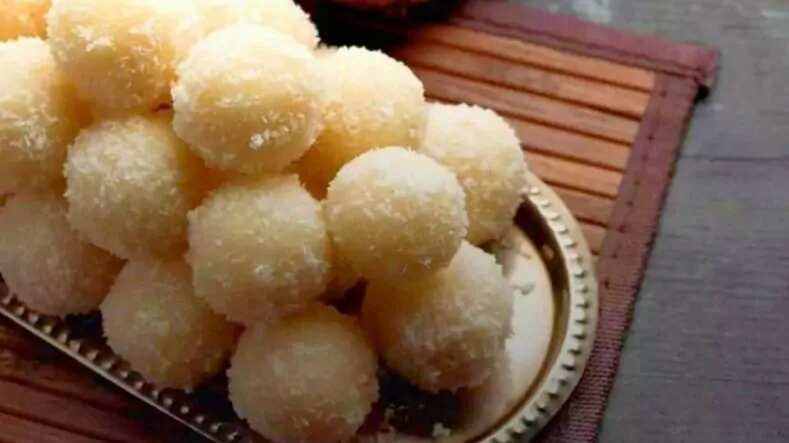
Nariyal ke Laddoo
Nutritional Value
1813
Calories
per serving
- Fat172 g
- Protein24 g
- Carbs46 g
- Fiber40 g
- Sodium0 g
- Others0 g
- Place of OriginINDIA
- CuisineAsian,Indian
- Common Ingredients
- CourseDessert
A sweet, refreshing sweet, Nariyal ke Laddoo (Coconut Laddoo) were traditionally made with coconut, jaggery, and cardamom powder. Today, inventions like condensed milk have altered the recipe, and several variations exist in the recipe. One such recipe calls for unsweetened coconut powder, condensed milk, cardamom powder, ghee, and desiccated coconut.
Coconut brings with it several health benefits. It's full of nutrients, improves the good cholesterol of the body, regulates blood pressure, improves skin, and may aid in weight loss.
The Nariyal Laddoo is just one of the varieties of Laddoos that Indians make and consume, many of which are staples for festivals and other special occasions in the country. Besides locally sourced ingredients, weather and diets also affect what Laddoos are consumed where. While Coconut Laddoo originates from the south, there’s the Motichur Laddoo in the north, and Til Laddoo in the east.
The versatile Laddoo is believed to have served as medicine in olden days. The 4th-century BC doctor Susruta used Laddoos as antiseptic. His Laddoos were a concoction of sesame seeds coated with honey, jaggery, and peanuts, close to the modern day Til Laddoo. Another story states that the Chola Empire’s soldiers would carry Laddoos with them when going to fight wars, since they were considered a symbol of good luck.
Fun fact: The Guinness World Record certified S Venkateswara Rao’s Sri Bhakta Anjaneya Sweets in Andhra Pradesh for creating the largest individual Laddoo. It weighed 8,369 kilograms and was certified in 2015.
Nutritional Value
1813
Calories
per serving
- Fat172 g
- Protein24 g
- Carbs46 g
- Fiber40 g
- Sodium0 g
- Others0 g