


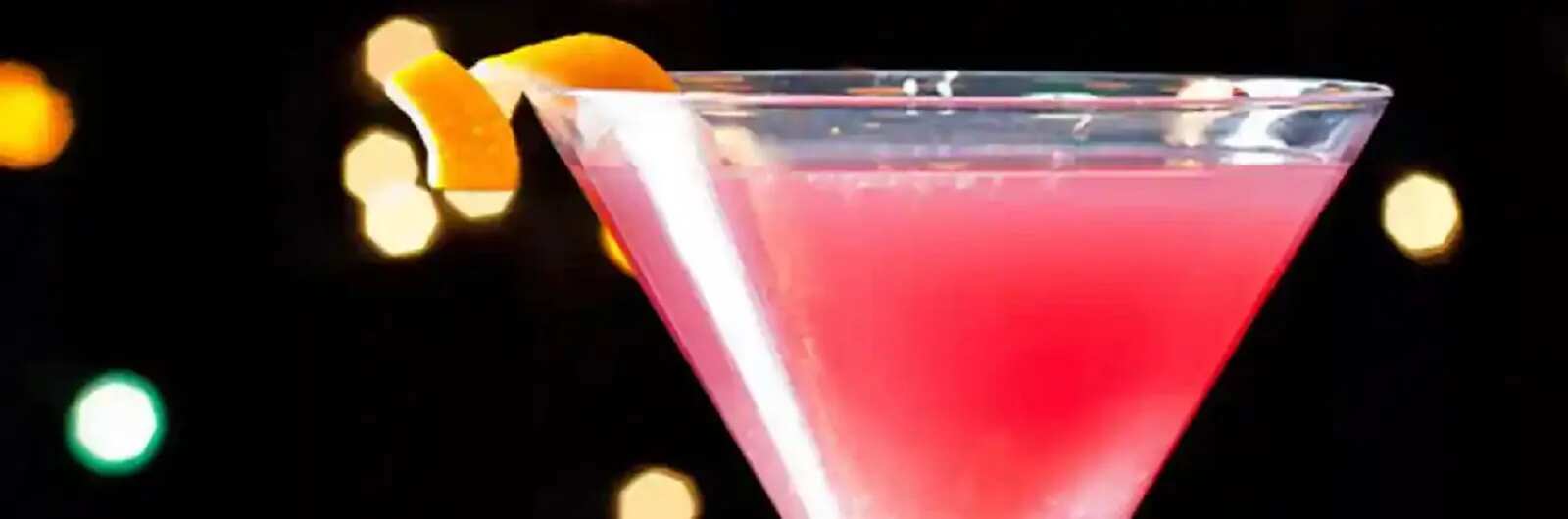
London Cosmo
Nutritional Value
648
Calories
per serving
- Fat0 g
- Protein0 g
- Carbs67 g
- Fiber2 g
- Sodium0 g
- Others0 g
- Place of OriginUSA
- CuisineNorth American
- Common Ingredients
- CourseStarter & Appetizer
In a paper on the "Prohibition-era Origins of the Modern Craft Cocktail Movement", Colorado State University professor Jeffrey Miller traces the incongruous origins of many of America's most popular cocktails.
Prohibition lasted in the US for nearly a decade-and-a-half; from 17 January 1920 to 5 December 1933, to be more precise. Its effects on American drinking culture, however, would be felt long after, argues Miller.
Since the only liquor available was industrial grade alcohol or "moonshine", bootleggers took to adding a host of dubious ingredients to make the drink more palatable. With industrial alcohol especially this was a must, since (anticipating just such illegal use) it was "denatured", i.e. deliberately made harsh and undrinkable by the addition of chemicals. Dead rats, rotten meat and creosote found their way into stills, as bootleggers got crafty about emulating the flavours and notes of true spirits. More salubrious additions included infusions of herbs like juniper and thyme, sweeteners and so on. And thus, "cocktails" were born.
In his paper, professor Miller writes that the modern craft cocktail movement in the US "probably dates to the reopening of the legendary Rainbow Room at New York’s Rockefeller Center in 1988. The new bartender, Dale Degroff, created a cocktail list filled with classics from the Prohibition era, along with new recipes based on timeless ingredients and techniques".
A more interesting mention pops up a little later: "Around the same time, across town at the Odeon, bar owner Toby Cecchini created “Sex and the City” favourite the Cosmopolitan – a vodka martini with cranberry juice, lime juice and triple sec," Miller records.
Miller doesn't make note of it in his paper, but there is some confusion over the actual creator of the Cosmopolitan. In 1986, for instance, Cheryl Cook who was associated with Florida's Strand Restaurant, is credited by some historians as the inventor. She used the Absolut Citron (then being tested in the Miami market, although it wouldn't become commercially available until much later) with triple sec and cranberry juice, serving it in a martini glass. An earlier claimant to the Cosmopolitan creator's title is Minneapolis-based bartender Neal Murray, who said that he added "a splash of cranberry juice to a Kamikaze" in 1975, and the first person who sampled it remarked: "How cosmopolitan!" hence leading to the naming of the cocktail. Meanwhile, a cocktail guide dating to the 1930s also mentions a drink recipe that would have been very similar to the modern-day Cosmo.
What is undisputed however, is that the Cosmopolitan has come to occupy a unique place in popular culture. In its contemporary avatar, the cocktail we know and love is frothy, bright and easy-on-the-eyes pink, served chilled in a martini glass with a lime slice for the garnish. Its standard ingredients include vodka, Cointreau, fresh lime juice and cranberry juice, all of which are mixed in an ice-filled cocktail shaker.
The London Cosmopolitan or London Cosmo is simply the original cocktail with a twist: the vodka is replaced with gin. The Difford's Guide recommends a shot each of dry gin and triple sec, half a shot of freshly squeezed lime juice and a shot-and-a-half of cranberry juice, for the perfect London Cosmo. The spirits and juices are shaken with ice then fine-strained into a chilled glass.
Nutritional Value
648
Calories
per serving
- Fat0 g
- Protein0 g
- Carbs67 g
- Fiber2 g
- Sodium0 g
- Others0 g