


Arancia Julius
Nutritional Value
230
Calories
per serving
- Fat2 g
- Protein3 g
- Carbs48 g
- Fiber6 g
- Sodium0 g
- Others0 g
- Place of OriginUSA
- CuisineNorth American
- Common Ingredients
- CourseCondiment
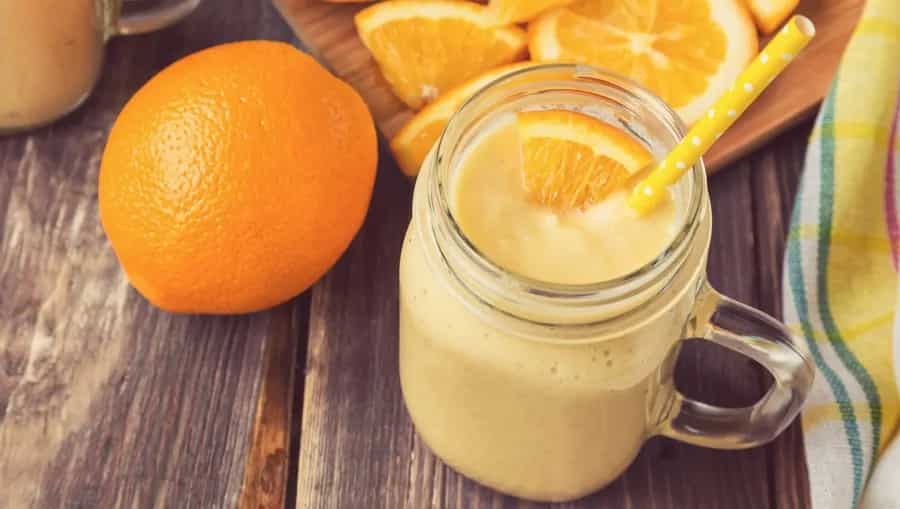
When we trace the origins of most modern-day beverages, the universal pattern observed is that a cocktail precedes a mocktail. However, there is one iconic beverage that is, in the truest sense of the word, an American cultural identity, and a rather pleasant recreation of a traditional mocktail – the Arancia Julius. Reminiscent of an expert bartender’s insatiable craving for flavour note exploration, the highly sorted cocktail is made from an equitable blend of Galliano Authentico or any vanilla anise liquor, Genever, pineapple and orange juice, sweet cream, and sparkling water. When served shaken and chilled on quintessential Collins glasses and topped with a gorgeous slice of orange, the drink truly stands for the artistic undertone of modern mixology.
Travelling back to the beginning of the Julius tale, we arrive at a humble orange juice stand in downtown Los Angeles in 1926. The shop was opened by a man claimed by many to have an unquenchable thirst for oranges, Julius Freed. But Julius was not alone in the endeavour. His friend and real estate agent, Willard ‘Bill’ Hamlin, was an equal part of the citrus mania, but believed to have a poor stomach, was in constant quest of an alternative to raw orange juice. Seeing that Julius’ sales were not satisfactory, Bill found his calling to attempt at creating something less acidic by mixing ice, fresh orange juice, milk, sweetener, and a secret blend of seven pure food powders that must have had vanilla flavouring in one of its constituents. The result was a runaway hit that soared in sales and production beyond imagination and established the Orange Julius as a cultural signature of contemporary America.
Half a century later, in a Los Angeles bar named the Blackwatch, bartender Donato ‘Duke’ Antonne gave the first modern twist to the yesteryear orange delight by adding vodka and Galliano to it, creating a strong alcoholic beverage that was served to a surfer by the name of Harvey. Legend has it that Harvey got so drunk having the cocktail that he started running into the bar’s walls, giving the dish its humorous title Harvey Wallbanger.
Fast forward to the 21st century, we again end up in Los Angeles, in one of the most gifted modern mixologists, Cari Hah’s reputed Big Bar. Inspired by her fond childhood memories of the Orange Julius smoothie, Cari tampered with the Wallbanger recipe a bit further by replacing vodka with the centuries-old Dutch gin Genever and adding pineapple juice. To name the delightful concoction, Cari borrowed the Italian word for orange, Arancia, and the first glass of Arancia Julius was born.
Nutritional Value
230
Calories
per serving
- Fat2 g
- Protein3 g
- Carbs48 g
- Fiber6 g
- Sodium0 g
- Others0 g