


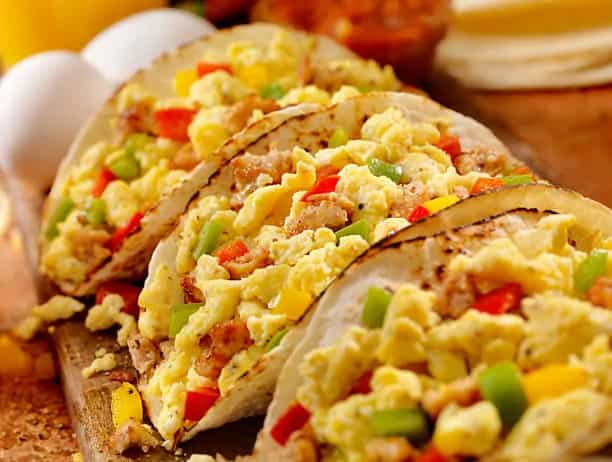
Bacon & Egg Breakfast Taco
Nutritional Value
636
Calories
per serving
- Fat38 g
- Protein48 g
- Carbs24 g
- Fiber8 g
- Sodium0 g
- Others0 g
- Place of OriginMEXICO
- CuisineNorth American,Mexican
- Common Ingredients
- CourseMain Course
Though there aren’t any official origins of the ‘taco’, it is widely believed that the concept arose from the word Taco, used extensively in Mexico in the 18th century. The term was a part of the vocabulary of mine workers who would refer to little charges used to mine ore. Tacos were essentially pieces of paper thinly wrapped around the gunpowder and inserter in certain crevices of mines in expectation of ore. These neatly placed paper ‘packages’ along the rock face looked fascinatingly similar to the modern-day Taco, a half-wrap that carries a variety of mix within it. This concept of wrapping things within such thin sheets of wheat flour or all purpose flour became extremely famous in the 20th and 21st century, especially since it provided a hassle-free manner in which food could be consumed on the go. The first reference of the dish in any sort of dictionary or textual archive dates back to the 19th century. In fact, the pioneer in tacos were called Tacos de Minero (Miner’s Tacos).
With mass migration from Mexico to neighbouring countries like the States or Canada meant that these easy, delicious and sumptuous recipes would surely make the journey too. Unsurprisingly, one of the fastest-selling products under the much-favoured Mexican cuisine are tacos. The Bacon and Egg Taco is of course a fusion food that marries two extremely popular dishes from two continents. Bacon and Eggs, the staple breakfast combination in any self-respecting British household, was quickly juxtaposed with the taco by simply wrapping it with a thin taco sheet (resembles the Indian Roti).
Though the sunny-side-ups or poached eggs is the traditional style for a Bacon and Egg breakfast combination, for the Taco, the eggs are often scrambled.
Nutritional Value
636
Calories
per serving
- Fat38 g
- Protein48 g
- Carbs24 g
- Fiber8 g
- Sodium0 g
- Others0 g