


 Share
Share

There is a particular kind of drinker who would have, not so very long ago, recoiled at the suggestion of putting mango into a glass of whisky. They knew the rules. Whisky was to be respected, poured neat, perhaps with a precise measure of water, consumed with quiet reverence. Fruit was for people who didn't know better. The amber liquid in the glass carried the weight of Scottish highlands, Kentucky barns, and centuries of tradition. It didn't need help.
That drinker still exists, of course. But they are, increasingly, sharing the bar counter with someone entirely different: curious, experience-led, unencumbered by inherited mythology, and genuinely excited by what happens when a ripe Alphonso and a glass of whisky find themselves in the same place at the same time. That collision, tropical, unlikely, and somehow inevitable , is the story of where whisky is going. And nowhere in the world is it being written more boldly than in India. This World Whisky Day we decided to unpack India's burgeoning relationship with experimental whisky cocktails and where our familiar favourite flavours are leading us.
The Numbers Behind The Revolution
The scale of India's relationship with whisky is, by any measure, staggering. India is currently the world's second-largest consumer and third-largest producer of whisky by volume, with domestic consumption recorded at approximately 307 million litres. The Indian whisky market was valued at around USD 19 billion in 2024, and analysts project it could reach USD 48 billion by 2030, growing at a compound annual growth rate of nearly 17%. In 2024 alone, Scotch whisky exports to India reached 192 million bottles , surpassing France to make India the world's leading market for Scotch whisky by volume.
These are not the figures of a nation that merely tolerates whisky. They are the figures of a country that has made it its own. And having done that, India is now doing something even more interesting: it is beginning to reimagine what "its own" actually means.
The market is experiencing a clear premiumisation shift. With 93% of traded whisky historically falling into the value segment, the headroom for premiumisation is enormous , evidenced by a 17% increase in market value over recent years, and the average whisky price in India nearly doubling over the last decade to USD 7.18 per litre. Younger, urban consumers are driving this upward movement, seeking not just a better pour but a more layered, more personal, more experiential one. Which is precisely how mango enters the conversation.
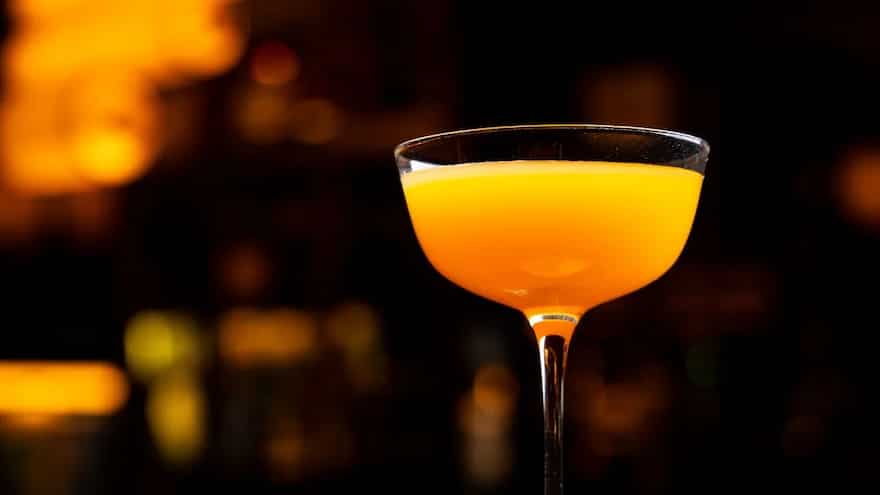 Golden Remedy - Monkey Bar
Unpacking The Sacrilege
The resistance to mixing fruit with whisky was never really about taste. It was about authority , specifically, about who got to decide what was correct.
Mukesh Patwal, mixologist at Oju, is candid about where this came from: "The so-called sacrilege was never really about taste, it was about who got to define good taste. For decades, whisky culture was shaped by a very specific kind of authority: Western, traditional, and deeply resistant to anything that felt unfamiliar. Fruit was seen as something you added to mask a bad whisky, not celebrate a good one."
That authority has been steadily eroding. Ajinkya Jadhav, mixologist at Torii in Khar, frames the shift in terms of who is now arriving at the bar: "What shifted is the drinker. For the longest time, whisky came wrapped in mythology , the dim light, the neat pour, the unspoken rule that you don't mess with it. That mythology was largely inherited, and it kept people out of the category more than it brought them in. The drinking generation now came to whisky on their own terms, through highballs, through cocktail bars, through curiosity rather than tradition. They're not carrying the baggage."
Manish Thapa, Bar Manager at Monkey Bar in Bangalore, puts it plainly: "I think people have stopped drinking 'by the rules.' Earlier, whisky had this very rigid image around it, but now there's a younger audience that's constantly exploring bold flavour combinations and unexpected pairings. That shift has made fruit-forward whisky cocktails feel exciting instead of unconventional."
At Le Bar Diamantaire in Sofitel Mumbai BKC, Bar Manager Akshay Lokrey has watched this change unfold from behind the counter over recent years: "Earlier, whisky was mostly appreciated in traditional serves, but today's consumers are seeking immersive and flavour-driven experiences. Guests are more open to experimentation, storytelling, presentation, and cocktails that connect emotionally with them."
The shift is visible not just in dedicated cocktail bars but in the restaurant world too. Chef Jatin Mallick and Chef Julia Desa, co-owners of Dos by Tres, observe that the purist mindset has given way to something more ingredient-led, "Whisky culture has become far less rigid than it used to be. Earlier, there was almost a purist mindset around whisky where the spirit itself was expected to remain untouched and cocktails were often seen as secondary. Today, people are far more interested in flavour, texture and balance than rules."
This generational unlocking is well documented. Millennials have shown a pronounced tendency to experiment with whisky-based mixology, according to IWSR data - they are the cohort that made the whisky highball fashionable again, that embraced flavoured Scotch serves, and that began treating whisky as a cocktail ingredient rather than a temple object. More recently, the Bacardi Cocktail Trends Report for 2026 noted that Gen Z are "not drinking less, they are just drinking differently," with younger drinkers increasingly favouring cocktails over beer and wine. The cocktail occasion, with its emphasis on flavour, creativity, and occasion-drinking, has become the dominant lens through which spirits are now encountered for the first time. IWSR identifies India as one of the key global markets driving this cocktail culture, alongside Mexico, South Africa, Brazil, and the US.
For whisky, that changes everything.
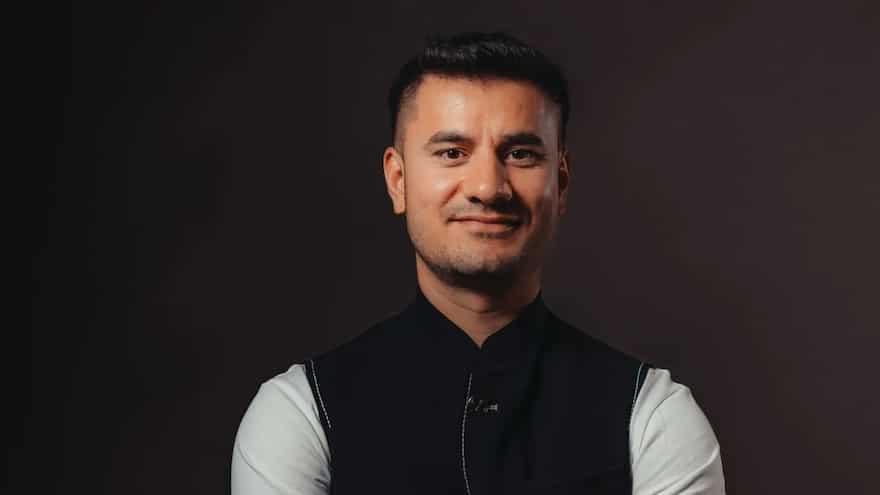 Siddharth Tomar - Brand Ambassador, Diageo India
Why Mango, Of All Things, Works
Mango is not a simple fruit. It is one of the most compositionally complex fruits available , and this is perhaps what makes it such a fascinating foil for whisky rather than a straightforward sweetener.
Depending on variety and ripeness, mango carries bright citric acidity, deep tropical sweetness, floral and jasmine-like aromatic compounds, a dense creamy texture, and , particularly in certain varieties, or at the edge of over-ripeness , an almost fermented, winey quality that can read as savoury. It is, in its own way, as layered as a whisky.
Michael D'Souza, Master Distiller at Paul John Distilleries, is well placed to articulate the technical relationship: "Mango is an incredibly layered fruit. Depending on the variety, it can carry ripe sweetness, citrus-like acidity, floral perfume, creamy texture, and even slight fermented notes. To pair well with it, the whisky needs both depth and structure without overwhelming the fruit."
The bar team at Late Checkout echoes this: "Mango works because it's not just sweet; it brings acidity, texture, perfume, and tropical depth. Modern whisky drinkers are also much more familiar with cocktails, food pairings, and cross-cultural flavour combinations, so the question has changed from 'Is this allowed?' to 'Does this taste good?'"
There is also, as Jadhav observes, something important to understand about whisky's own flavour DNA before you even begin: "Mango works with whisky because whisky is already a fruit conversation. The esters in a good Scotch, the orchard notes in something like the Singleton, they're already halfway there."
Mallick and Desa bring a chef's precision to the question of why the interaction works as well as it does adding, "What makes mango particularly interesting with whisky is that it interacts with the spirit on multiple levels rather than just adding sweetness. Riper mangoes contain creamy, stone fruit notes that naturally echo the vanilla, caramel and oak characteristics, especially in bourbon cask matured styles. At the same time, the fruit's acidity helps lift heavier whisky profiles, making them feel brighter. Even the texture of mango softens the sharper alcoholic edges of whisky without flattening its complexity." It is a description that reframes mango not as a flavouring agent but as a structural one - something that actively improves the architecture of the drink rather than simply sweetening it.
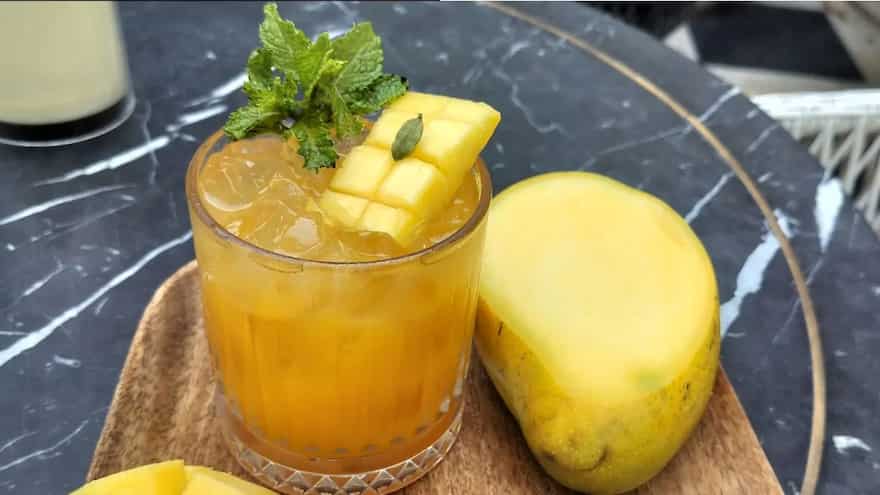 Whisky Mangonada - Dos by Tres
But the construction matters enormously. Patwal breaks it down with the precision of someone who has spent considerable time thinking about where pairings fall apart: "A ripe Alphonso is actually doing three things simultaneously. There's a floral, almost jasmine-like quality in the first moment. Then a dense, creamy richness that coats the palate. And underneath it all, a quiet acidity , sometimes almost winey , that lingers on the finish. A whisky needs to speak to all three layers, not just the most obvious one."
Not every whisky does. Heavily tannic, red-wine-cask expressions tend to conflict with mango's acidity rather than complement it, resulting in muddiness rather than complexity. Jadhav has arrived at similar conclusions through experimentation: "What doesn't work is anything too heavily tannic out of the gate , the mango fights back and it gets muddy."
What works, broadly, are whiskies with fruit-forward and honeyed character. Ex-bourbon cask matured whiskies , carrying vanilla, caramel, coconut, and tropical notes , run naturally parallel to mango rather than over it. Fruity Speyside-style whiskies with orchard fruit and honey character complement the softer, sweeter varieties beautifully. Lightly peated expressions, counterintuitively, can be some of the most effective partners: the smoke introduces a tension that makes both elements more vivid, more alive, rather than diminishing either. Jadhav's formulation is one of the more elegant descriptions of this dynamic: "A lightly peated Speyside, where the smoke is a whisper rather than a statement, gives mango's sweetness a tension that makes both things more alive."
Siddharth Tomar, Brand Ambassador at Diageo India, points to the specific alchemy of Johnnie Walker Black Label in this context: "The smoky richness of the whisky contrasts beautifully with the tropical fruit character, creating a cocktail that feels layered, balanced and exciting." His signature recommendation , the Mango Inferno, combining Johnnie Walker Black Label with mango, olive brine, and spiced mango jelly , is a serve built around that tension, where smoke, ripe fruit, and subtle brine create something that no single ingredient could accomplish alone. Thapa's Golden Remedy at Monkey Bar takes a warmer, more approachable route: adding ginger and honey alongside the mango to create what he describes as "familiar, but with a twist people don't usually expect from whisky."
 Image Credits: Canva
The Indian Single Malt Advantage
There is a dimension to this conversation that goes beyond cocktail technique. Indian single malts , still a relatively young category globally, but one gaining rapid prestige , carry a natural affinity with tropical pairings that has less to do with recipe development than with climate.
India's distilleries, particularly those in Goa, mature whisky in conditions dramatically different from those of Scotland or Kentucky. The heat accelerates the interaction between spirit and wood, and the result is whiskies that develop tropical fruit character - honey, mango, papaya, vanilla - far earlier in the maturation cycle than their European counterparts.
D'Souza understands this at a molecular level: "The tropical maturation conditions in Goa create whiskies with naturally expressive notes of honey, vanilla, fruit, spice, cocoa, and soft smoke , profiles that resonate strongly with the Indian palate and its love for bold yet balanced flavours."
This is not incidental to the mango conversation. When Patwal notes that Indian single malts perform almost uncannily well alongside an Alphonso , "the result feels almost intentional, like it was designed for this pairing, even though nobody planned it that way" , he is describing the convergence of climate, terroir, and fruit. The mango and the whisky are, in a sense, products of the same geography. Their compatibility is not a bartender's invention. It is something older and more elemental.
Paul John Nirvana, with its honeycomb bourbon character and lingering vanilla finish, creates a pairing that D'Souza describes as "indulgent yet balanced" alongside tropical fruit. For those drawn towards the lighter and more refined end of the spectrum, Glenmorangie 10-Year-Old was chosen by the bar team at JW Marriott Mumbai Sahar for their El Gold cocktail precisely because its bright citrus notes, soft vanilla sweetness, and elegant floral profile give the mango room to perform. Their reasoning is straightforward: "Its light, refined character allows the fruit to shine while citrus and gentle spice keep the whisky present through the finish."
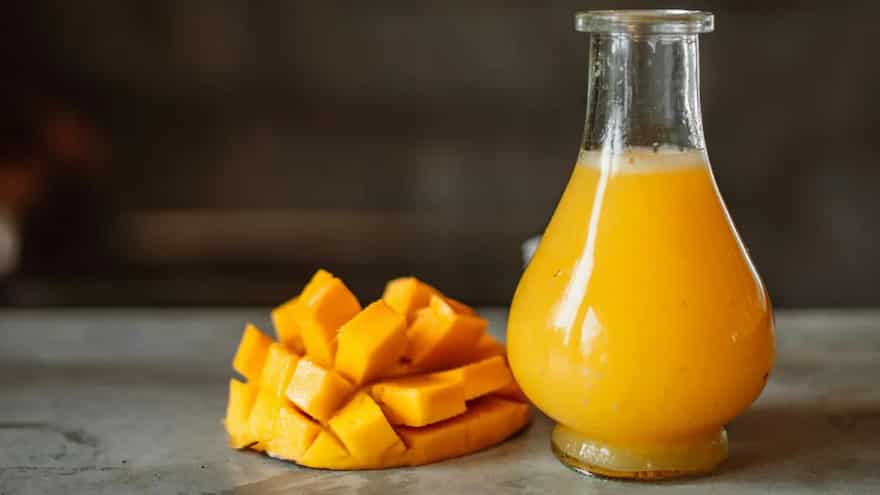 Image Credits: Canva
The Indian Palate As Creative Infrastructure
It would be tempting to describe India's growing influence on whisky culture as adventurous or experimental , a market trying new things. That framing, while well-intentioned, misses something important.
"I'd gently push back on 'ahead of the curve', because that framing still positions Western whisky culture as the reference point,” Patwal explains, “I think India is doing something more significant than being early to someone else's trend. Indian cuisine has spent centuries developing a precise vocabulary for complexity. The way a single dish balances heat, acidity, sweetness, and depth , that's not instinct, that's an inherited and deeply refined system of thinking about flavour. When an Indian drinker pairs whisky with mango, they're not being adventurous. They're applying a logic they already grew up with at the table."
Thapa makes the same point from the perspective of a working bar adding, "Indian palates are already used to complexity , spice, sweetness, heat, acidity, sometimes all in the same bite. So experimenting with whisky in cocktails feels very natural here. We're not afraid of bold flavours, and that openness makes India a really exciting space for whisky innovation."
"What is exciting is that India is no longer just following global whisky trends, it is starting to shape them through local ingredients, storytelling and modern cocktail culture,” says Tomar, adding commercial and cultural dimension. “Bartenders today are confidently using ingredients like mango, jaggery, kokum, spices and regional fruits to create whisky experiences that feel globally premium but deeply Indian in identity."
D'Souza is even more direct about the broader implications: "India isn't just participating in the global whisky conversation anymore, it's actively shaping it. Indian consumers understand layered flavour intuitively, and that gives them a very modern, fearless approach to whisky appreciation."
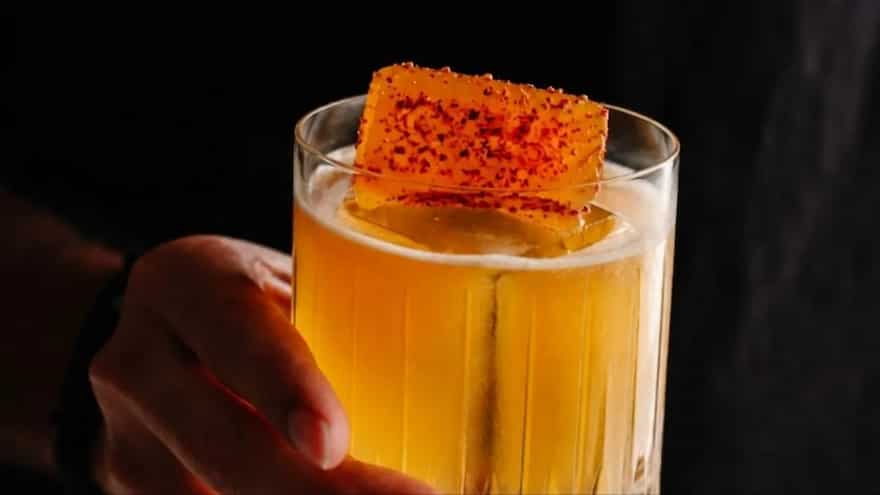 Mango Inferno - Johnnie Walker Black Label
Where This Is All Going
The bartenders and distillers gathered around this conversation are not operating in a vacuum. India's whisky market is projected to reach over half a billion cases in volume by 2035. Scotch whisky imports already surpass those of France. A new generation of drinkers is arriving at the bar with different questions, different reference points, and a different idea of what an evening with whisky can look like.
Premiumisation is accelerating across every segment. The on-trade , bars, restaurants, cocktail venues , is growing as social drinking occasions evolve beyond the after-dinner pour. Late Checkout's bar team put it well: "India is approaching whisky less as a museum piece and more as a living cultural product. Younger consumers are comfortable experimenting with serves, local ingredients, regional fruits, spices, teas, and even culinary techniques. That openness is helping redefine whisky occasions beyond the traditional after-dinner pour."
And Indian whisky producers are gaining the global credibility that makes domestic experimentation feel validated rather than eccentric. Paul John, Amrut, and others are now winning major international awards and attracting serious critical attention. The benchmark is no longer solely Scotland. Patwal's observation carries the weight of a slow but significant reversal: "For a long time, the benchmark was always Scotland. I think we're approaching a moment where that quietly reverses , where the world starts understanding its whisky in relation to ours. We're not there yet. But you can taste that we're close."
Thapa speaks for a generation of bartenders when he says that "a lot of bartenders and drinkers here are rethinking whisky beyond the traditional serve, and that's leading to some very creative combinations." Jadhav is characteristically direct about what this means for Mumbai specifically: "Mumbai has a drinking culture that's deeply curious. Guests aren't just ordering, they're engaging, asking questions, comparing notes at the table. That appetite is what makes this city such fertile ground. The next interesting chapter in whisky cocktail culture gets written here. We're just getting started."
The glass in front of you, if the bartenders and distillers at these establishments have their way, holds a ripe mango serve of one kind or another, perhaps a silky clarified punch lit with peach and matcha, perhaps a Mango Inferno dusted with spice and cut with olive brine, perhaps a jalapeño-spiked hotel bar creation finished smooth and gold, perhaps a fig-and-bourbon cocktail arriving inside a little post-box, carrying its own small story. Whatever it is, it smells of the season. And it carries, unmistakably, the character of the spirit beneath. The old rules said you were not supposed to do this. But the old rules were made somewhere else, for someone else, and the thing about great whisky is that it has always had more to say than its gatekeepers allowed. The fruit, it turns out, knew that all along.




