


 Share
Share

For many people, Vishwakarma Puja brings pictures of decorated machines, factory floors, colourful pandals and kites filling the sky. But in parts of Bengal, the festival also has a unique connection with food and the household kitchen. Around this time, some Bengali families observe Ranna Puja, a tradition built around making a generous spread of home-cooked dishes for the following day.
The menu can vary from everyday staples to seasonal vegetables, fish and sweets, turning a familiar family meal into an essential part of the festivities. It is an interesting contrast to the lively workplace celebrations linked with Vishwakarma Puja, where tools and machines take centre stage. In Bengali homes, food brings another layer to the day, connecting the festival with seasonal crops and family customs.
When Is Vishwakarma Puja 2026 And Why Is It Celebrated?
Vishwakarma Puja will be celebrated on September 17, 2026. Lord Vishwakarma is considered in Hindu tradition as the divine architect and craftsman, which makes the festival especially important for artisans, engineers, mechanics, factory workers and others whose livelihoods rely on tools and machinery.
The celebration is particularly famous in West Bengal, Bihar, Jharkhand, Odisha, Assam and parts of eastern as well as northern India, with factories, workshops, garages and other workplaces decorating and worshipping their everyday equipment.
(Credits: Pexels)
What Is The Bengali Ranna Puja Tradition?
Ranna Puja, also called Arandhan, is a Bengali household practice linked especially with the rural Bengal region. Its defining rule is simple: no fresh food is cooked on the day of the festival. Families cook a large selection of dishes a day before, and the food is eaten the following day.
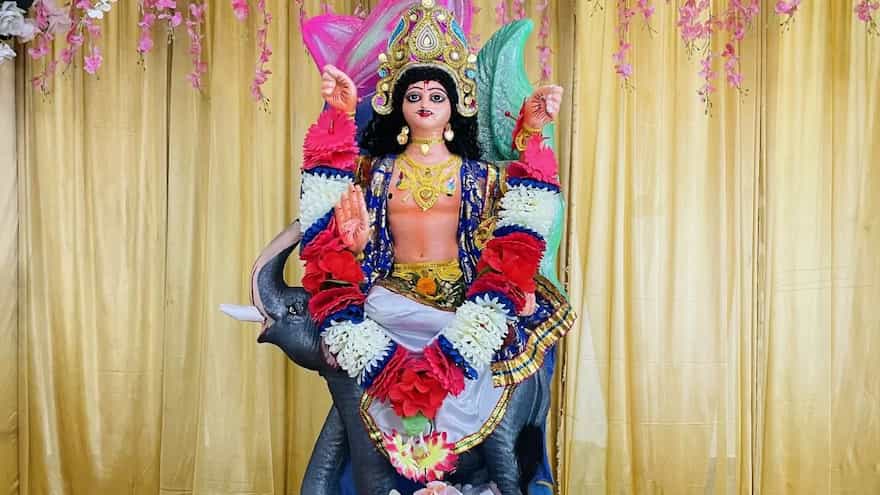
The tradition is closely knit with Manasa Puja, the worship of the snake goddess. In many households, the kitchen place itself is treated with great ritual significance.
Manasa ghat, or ritual pot representing the goddess, is placed in the kitchen along with branches or plants that are related to the worship, such as shaluk and fanimanasa. The cooking is completed before the ritual, after which the hearth is not used to make fresh food on the following day. This gives the food preparation a religious purpose: the kitchen becomes part of the observance, and the meal eaten afterwards is linked to the household ritual rather than being an everyday cooking.
How Are Ranna Puja and Vishwakarma Puja Related?
Vishwakarma Puja is basically a day of worshipping craftsmen, artists, working people and machinery. From factories to garages, shops and various tools that are linked with work are worshipped on this day. As a result, it is considered in many places that just as machinery is given rest on the day of Puja, so too will the hearth (or cooking place) be given rest.
However, Ranna Puja is not only related to Vishwakarma Puja. Deep within it lies the folklore of Goddess Manasa. In Bengali mythology, Manasa Devi is primarily worshipped as the goddess who protects against the fear of serpents and serpent bites. The presence of snakes in rural Bengal used to grow when the monsoon season was towards its end. Therefore, people considered this time, the end of Bhadra and the start of the Ashwin month, a special point.
It is believed that the practice of worshipping Goddess Manasa on the day of Ranna Puja originated from this belief.
(Credits: Pexels)
What Food Is Made For Ranna Puja?
This is where the tradition gets quite interesting. The menu is prepared around foods that can be made in advance and eaten the following day.
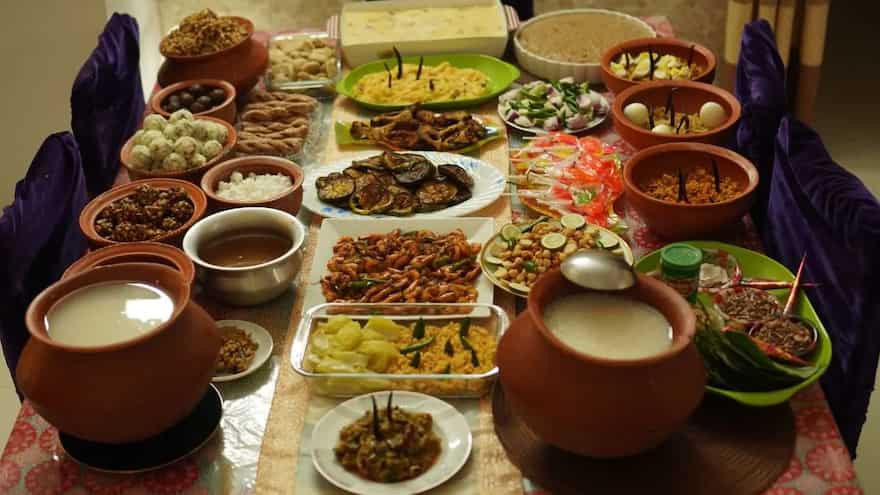
Panta bhat, or fermented rice soaked in water, is one of the best-known foods linked with the tradition. The spread also includes dal, begun bhaja, alu bhaja, potol bhaja and kumro bhaja, along with some leafy greens, chalkumro dishes (ash gourd preparations), chaltar tok and seasonal fish, which includes ilish in non-vegetarian households. Sweet preparations such as taler bora and malpua also find a place on the festive spread.
The menu naturally differs from household to household and region to region. Vegetarian families make an entirely vegetarian spread, while non-vegetarian homes may include fish alongside vegetables, dal and leafy greens.
Why Does Ranna Puja Remain Popular?
Ranna Puja is interesting because the food is not meant to be served fresh and hot on the day. The meal is planned around dishes that can hold their taste and texture after being cooked in advance, which is why fried vegetables, dal, leafy greens, tangy preparations and some sweets work particularly well.
The tradition also showcases the way Bengali households have historically cooked around the seasons. The menu is not fixed to one detailed recipe; families use what is available at the time, which includes rice, dal, seasonal leafy greens, pumpkin, ash gourd, pointed gourd and fish. Chaltar tok, for example, brings a sharp sour note to a meal that has mild and fried preparations, whereas sweets such as taler bora make the best use of seasonal palmyra fruit.
What makes Ranna Puja especially distinctive is that the food follows a calendar-based ritual rather than a traditional festive menu. The practice is linked with the end of the Bengali month of Bhadra and the start of Ashwin. The menu consequently showcases the seasonal Bengali kitchen, with practices chosen from what would traditionally be available at that time of year.
When the machinery rests for Vishwakarma Puja, the hearth oven also shares that rest. And by worshipping Goddess Manasa, Bengali households remember the ancient folk beliefs of nature, the transition of seasons, and the well-being of the home and family.




