


 Share
Share

Valentine’s Day and roses are closely linked because the flower has long symbolised love, admiration, as well as emotional expression across cultures. In ancient Rome, roses were connected to Venus, the goddess of love, and over centuries they became a visual shorthand for romance. By the time it became widely celebrated, gifting roses felt natural because the flower already carried meaning. Its colour, fragrance and softness reinforced the idea of affection alongside care.
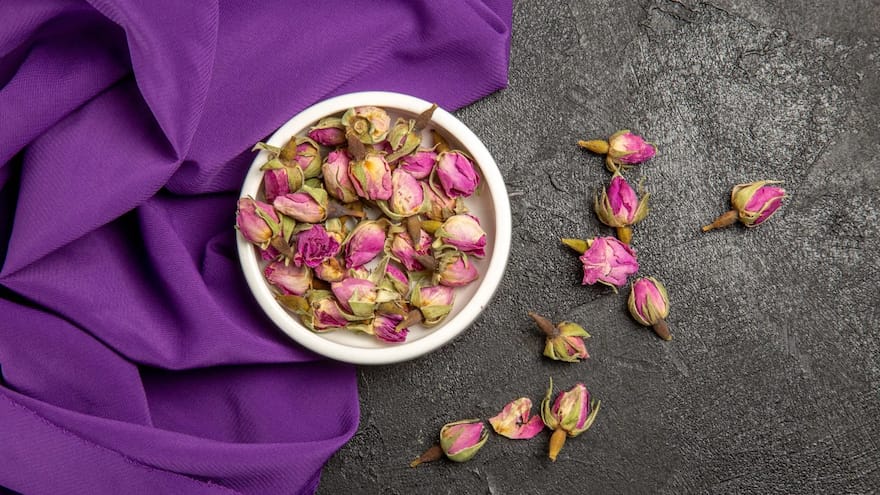
However, using rose petals in cooking is not a modern trend. Rose has been part of culinary traditions for centuries in Middle Eastern, Persian, Turkish, and South Asian cuisines. Rose water from petals flavours sweets like gulab jamun and kheer, while dried petals appear in teas as well as spice blends. The floral note is subtle when used carefully, adding aroma rather than overpowering taste. Long before Valentine’s branding, the rose was valued for fragrance and its edible qualities. The association with romance may be popular today, but rose petals in food reflect tradition rather than novelty.
Unique Culinary Uses Of Rose Petals For Valentine’s Day
1. Rose Petal Butter for Romantic Breakfasts
Rose petal butter is a subtle yet striking way to use edible petals without overwhelming flavour. Finely chop fresh, pesticide-free rose petals and fold them into softened unsalted butter along with a touch of honey.
Let the mixture rest in the refrigerator for a few hours so the aroma develops gently. When spread over warm toast, pancakes or scones, the butter melts and releases a light floral fragrance. The petals add faint texture and colour without making the dish taste perfumed.
2. Rose Petal Syrup for Light Desserts
Rose petal syrup can be made by simmering edible petals with sugar alongside water until the colour deepens and fragrance intensifies. Strain the mixture carefully to remove solids and store the syrup in a clean glass bottle.
This syrup works beautifully over vanilla ice cream, yoghurt, or fresh fruit. Unlike rose essence, which can taste sharp, homemade syrup carries a softer, more balanced note. A small drizzle is enough to perfume an entire dish. For Valentine’s Day desserts, it adds both colour and aroma without heavy decoration.
3. Rose Petal Rice Infusion
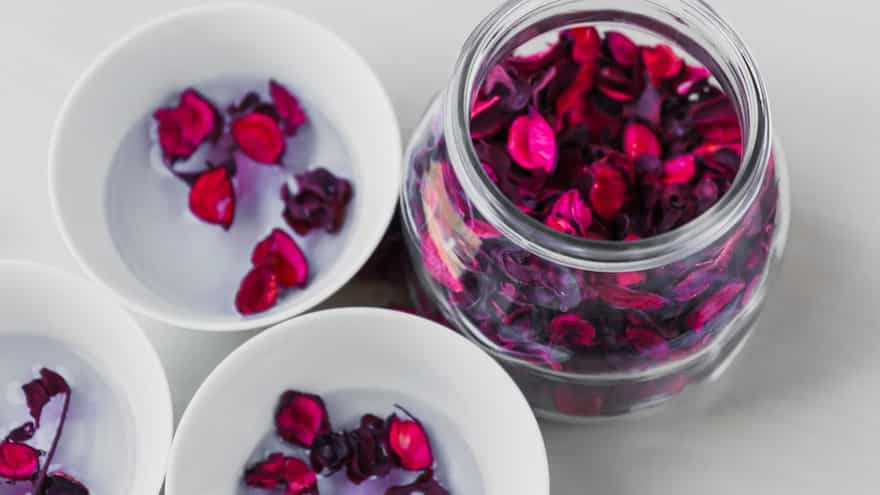
Rose petals can be added to basmati rice during steaming to create a delicate floral undertone. Tie a small handful of clean petals in a muslin cloth and place it in the pot while the rice cooks. Remove before serving.
The heat releases a gentle fragrance without changing the taste dramatically. This method adds elegance to savoury meals rather than turning them sweet. The aroma complements mild dishes like paneer or vegetable curries.
4. Rose Petal Chocolate Bark
Melt dark or white chocolate gently and spread it thinly on parchment paper. Scatter dried rose petals over the surface before the chocolate sets. The petals add colour contrast and a faint floral lift that pairs well with cocoa bitterness. Once hardened, break into uneven shards for serving. This preparation feels artisanal and visually romantic.
The rose flavour remains subtle because it sits on the surface rather than being mixed deeply. The bitterness of chocolate balances the floral sweetness naturally. Rose chocolate bark is simple to prepare yet looks refined, making it perfect for gifting on Valentine’s Day.
5. Rose Petal Whipped Cream
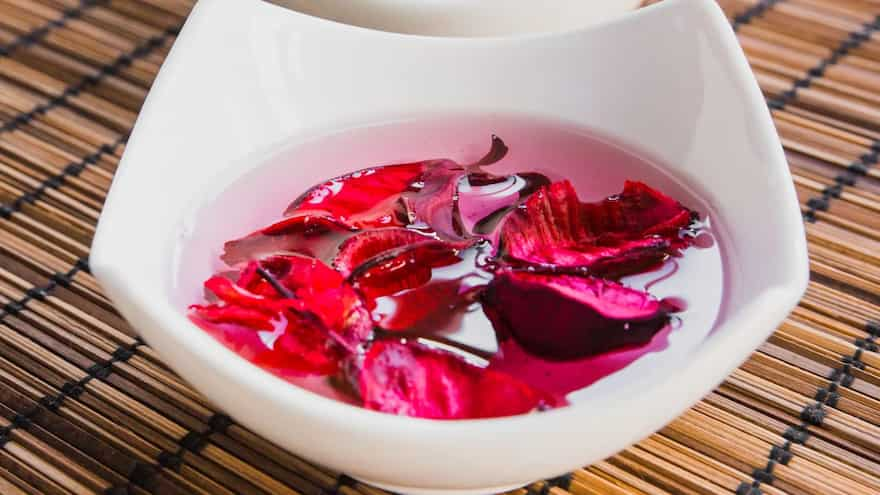
Finely crush dried rose petals and fold them into freshly whipped cream along with a small amount of powdered sugar. Let the mixture chill briefly so the flavour settles. This cream can top cakes, fruit bowls, or warm beverages.
The rose note stays gentle because it blends into the airy texture rather than standing out sharply. It adds fragrance without heaviness. For Valentine’s Day, rose whipped cream transforms ordinary desserts into something more personal.




