


 Share
Share

Shalgam gained popularity in India because it grows well in winter soil, cooks quickly, and absorbs spices far better than many other root vegetables. Markets across North India showcase it as a seasonal staple, as well as households value it for being inexpensive, filling, and versatile. The taste shifts from earthy and slightly sharp when raw to mellow and sweet once cooked, which makes it suitable for slow-cooked dishes as well as quick stir-fries.
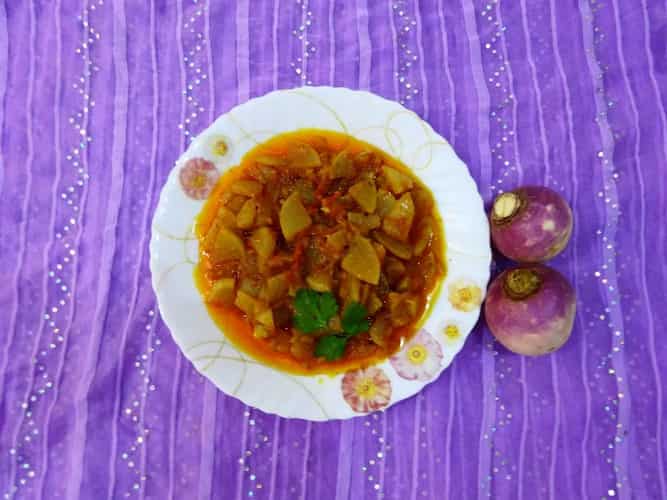
In North Indian homes, shalgam often goes into masala sabzis where the vegetable is sautéed first to remove its raw edge, then simmered until it turns soft enough to take on the flavour of whole spices.
Among many tribal communities, shalgam is cooked with minimal seasoning. The vegetable is usually boiled or roasted over direct heat, allowing its natural sweetness to come forward. This technique highlights simplicity and the vegetable’s original flavour.
(Image Credits: WikiCommons)
In Bengali households, shalgam appears in light curries and mixed vegetable dishes. The vegetable is simmered gently to maintain its structure, and the focus stays on balance rather than bold spice. This gives the curry a softer, comforting profile. Across regions, the methods differ, but the core attraction remains the same: shalgam adapts to any cooking style while keeping its winter flavour consistent.
5 Traditional Shalgam Dishes To Make From Indian Households
1. Tribal Shalgam Muli Bhujia
Tribal Shalgam Muli Bhujia comes from the rural forest belts of Jharkhand where communities rely on seasonal roots for daily cooking. The dish emerged from the need to create a nourishing meal using turnip and radish, which grow easily in rocky, mineral-rich soil. Traditionally, families slice both vegetables into thin strips so they cook quickly on a wood-fired chulha. The heat allows the vegetables to soften while staying firm at the edges, which gives the bhujia its signature bite. The vegetables are slow-cooked until the natural sweetness of shalgam meets the earthy sharpness of muli. A shallow clay pan is usually preferred as it helps the moisture evaporate at an even pace, which keeps the texture dry and light.
2. Shalgam Meat
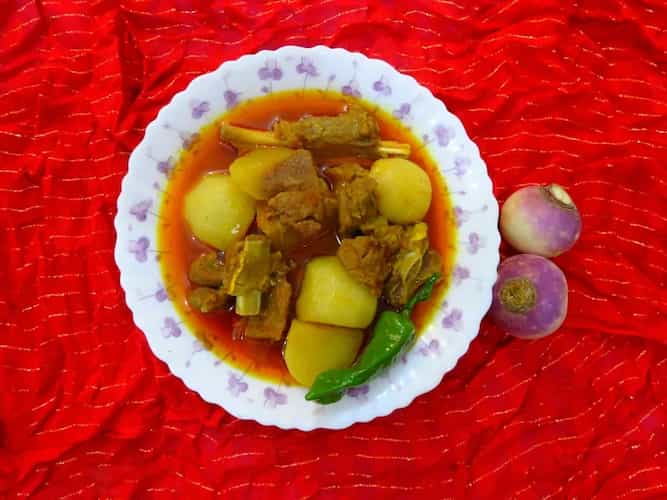
Shalgam Meat is a traditional winter dish seen in Punjabi, Kashmiri, and some Uttar Pradesh homes. It pairs turnips with meat, creating a hearty curry suited for cold weather. The technique often begins with browning the meat, then adding shalgam pieces, which absorb the richness of the gravy as they cook. The vegetable softens slowly, taking on the flavours of whole spices, yoghurt, or onion-based masalas, depending on the regional variation. Kashmir’s version tends to be milder and aromatic, while Punjabi households cook it with a deeper, spicier gravy.
(Image Credits: WikiCommons)
3. Shalgam Ka Bharta
Shalgam ka Bharta is a simple, rustic preparation found in North Indian and certain Himalayan households. The dish relies on soft-cooked or steamed turnips that are mashed and then tempered with spices. Some families roast the shalgam first to enhance its sweetness and reduce its raw bite. The mash is then combined with onions, chillies, a basic tadka, creating a dish that tastes earthy, mellow, and slightly sweet. This approach highlights the natural flavour of shalgam rather than masking it with heavy seasoning. Bharta-style cooking has long roots in regions where vegetables needed to be stretched into filling meals using minimal ingredients. The texture is soft, and the flavour profile is homely. It is often paired with rotis or millet-based breads during winter.

(Image Credits: WikiCommons)
4. Shalgam Matar
Shalgam Matar is a winter curry made across West Bengal, Jharkhand, as well as Chhattisgarh. It combines turnips and green peas, both of which appear in markets at the same time. The preparation usually begins with sautéing shalgam cubes to mellow their sharpness, then cooking them alongside peas in a tomato-onion gravy. The peas bring sweetness as well as texture contrast, while the shalgam softens and absorbs the seasoning evenly. This pairing works well in colder months and suits mild to moderate spice levels. The dish tastes balanced, slightly sweet, and comforting, making it suitable for everyday meals.
5. Gajar Gobi Shalgam Pickle
Gajar Gobi Shalgam Pickle is a well-known North Indian winter achar made with carrots, cauliflower, and turnips. It is especially popular in Punjab and Haryana, where households prepare large batches during peak winter. The vegetables are cut into uniform pieces, blanched lightly, then coated in a mixture of spices, mustard oil, and salt. Sun-drying helps the vegetables absorb flavour while maintaining a firm texture. The turnip adds a mild sweetness that balances the tang and heat from the spice mix. This pickle evolved from seasonal preservation practices, allowing families to store winter vegetables for months. The taste is sharp, tangy, and robust, ideal for pairing with parathas, dal-rice, or simple winter meals.




