


 Share
Share

India's spice routes stretch back through millennia, weaving tales of flavour and culinary wealth that have shaped dishes across every state and beyond into the Middle East. This heritage, with its endless possibilities, is what Niketa Sharma's newest venture understands in a city that's forgotten how to slow down. Suma isn't chasing Instagram fame with molecular foams and tweezered microgreens. Instead, it's doing something far braver: it's asking you to feel something. In an era where restaurants are designed for the algorithm first and the diner second, where a viral moment matters more than a memorable one, Suma's ambition is almost radical in its simplicity. It wants to tell you a story. It wants you to care where your food comes from. It wants you to leave thinking about something other than which filter made your photo look best.
The Space
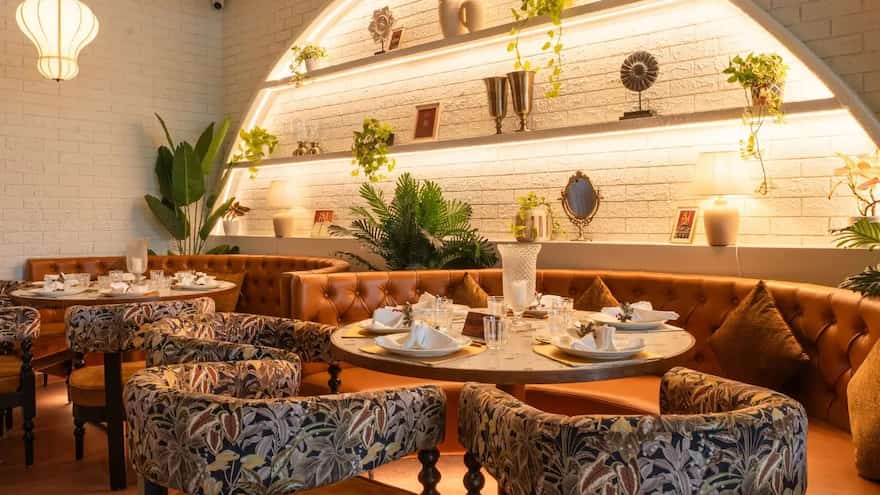
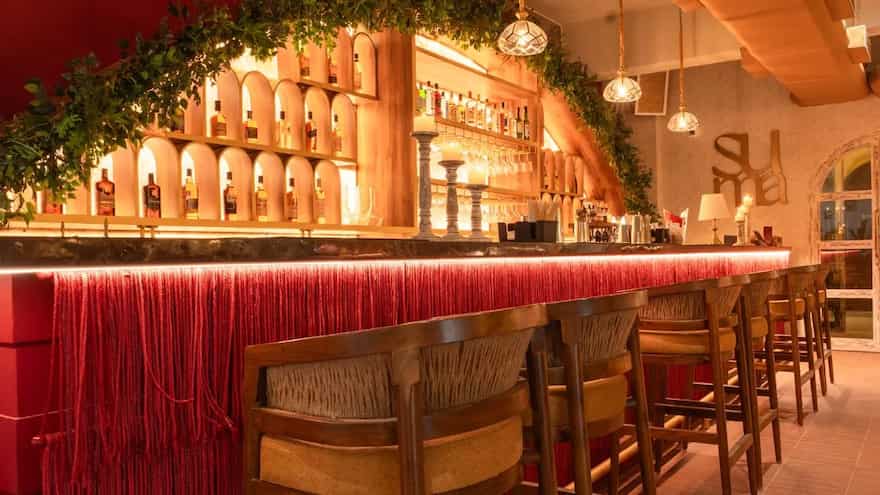
The place itself whispers rather than shouts. Designer Ankita Sharma of Design Alma spent 45 days conceptualising before a single wall was painted, and it shows. Maroon tones and olive accents create warmth without weight. Arched doorways and brass details nod to the Grand Trunk Road's architectural legacy without feeling like a museum. The customised fabric lights, sourced from Rajasthan, Gujarat, and the Konkan coast, not plucked from a catalogue, cast the kind of glow that makes everyone look like the best version of themselves. This is design with intention, not decoration with ego.
What strikes you is how the space adapts. It works for the intimate couple marking an anniversary in the corner booth. It accommodates the extended family celebrating a 60th birthday with equal grace. There's a flexibility here, a lack of pretension that makes premium feel approachable rather than alienating. "Our intention with Suma was to create a space that feels warm, expressive, and deeply connected to its food philosophy," says Ankita Sharma of Design Alma. "We used arches, maroon tones, brass accents, and layered lighting to build a space that flows like a journey. Suma is designed to feel rooted and contemporary at the same time." You're never made to feel like you're in the wrong place, wearing the wrong thing, or ordering the wrong dish. That kind of democratic hospitality is rarer than it should be.
But it's the cultural programming that sets Suma apart from every other fine-dining establishment trying to crack the Mumbai market. Every second and fourth Saturday, folk artists from across India transform the dining room into a mehfil. It's not background music piped through speakers whilst you Instagram your starter. It's living, breathing art happening in front of you. The kind that makes you pause mid-conversation, that demands your attention without asking for it, that reminds you why music and food have always belonged together in Indian culture.
These aren't polished performers doing sanitised versions of traditional music. These are the real artists, the ones who've spent lifetimes perfecting their craft in villages and small towns, now being given a platform in a Thane restaurant that believes cultural preservation matters as much as culinary innovation. Sharma talks about wanting to promote artists who might be performing in Mumbai for the first time, and there's something quietly revolutionary about that. In a dining landscape obsessed with celebrity chef collaborations and high-profile partnerships, Suma is investing in artists you've likely never heard of but absolutely should.
The Menu
The restaurant's upcoming series, Suma Ki Baatein, promises to delve into the history of individual dishes. It's the kind of content strategy that could easily feel gimmicky, another brand trying to manufacture authenticity, but given everything else happening here, you believe in it. Chef Rahul speaks about food with the passion of someone who's genuinely obsessed, not someone who's memorised talking points. When he explains that there's a village in Uttarakhand known as the paneer capital of the region, a place where every household is involved in paneer production, where you can walk into any roadside stall and find piles of fresh paneer waiting to be turned into parathas, you lean in. This is the kind of detail that changes how you think about food.
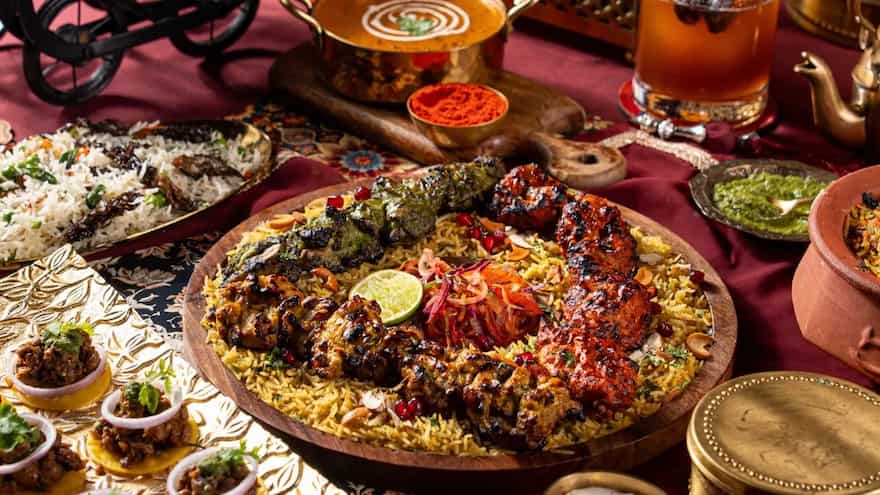
His approach to the menu reveals a chef comfortable in his own skin. "We wanted to explore a culinary journey that connects India and Arabia through flavour, technique, and memory," Chef Rahul explains. "The menu is built on slow-cooked traditions, coal-roasted depth, and ingredient-led storytelling. Every kebab, dip, and biryani carries a piece of the Grand Trunk Road and the warmth of Middle Eastern kitchens."
There are no ten variations of hummus trying to prove innovation. Instead, there's fatteh hummus, a dish that respects the ingredient's Arabic roots whilst creating something with genuine flavour complexity. "We don't need to add pesto to it to make it delicious," Chef Rahul says, explaining why Suma avoids the beetroot and edamame hummus trend. "All these countries, Iraq, Lebanon, Jordan, Syria, Turkey, all have their own variations. We don't need to add pesto to it to make it delicious." The result is something that honours tradition whilst feeling entirely contemporary.
The dal Muradabadi uses just two ingredients yet delivers extraordinary depth, proving that restraint can be more impressive than excess. This is a chef who's travelled, who's studied, who could absolutely do the molecular gastronomy thing if he wanted to, but who's chosen a different path.
The Cocktails
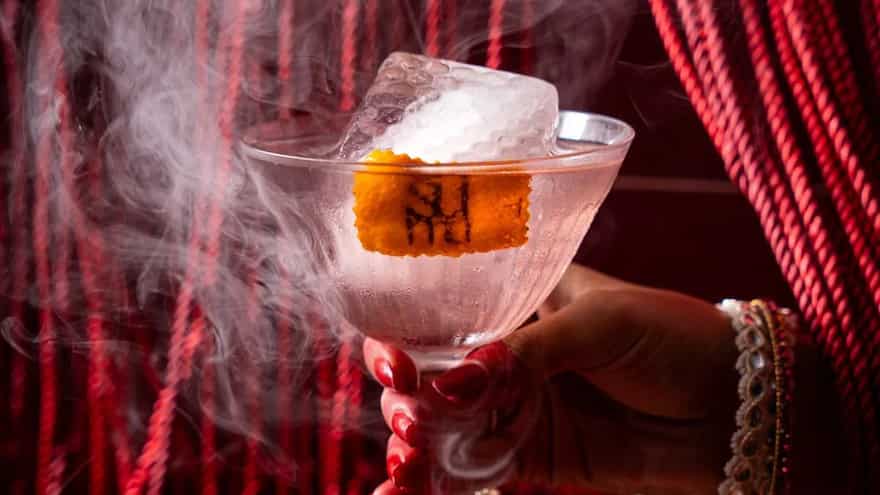
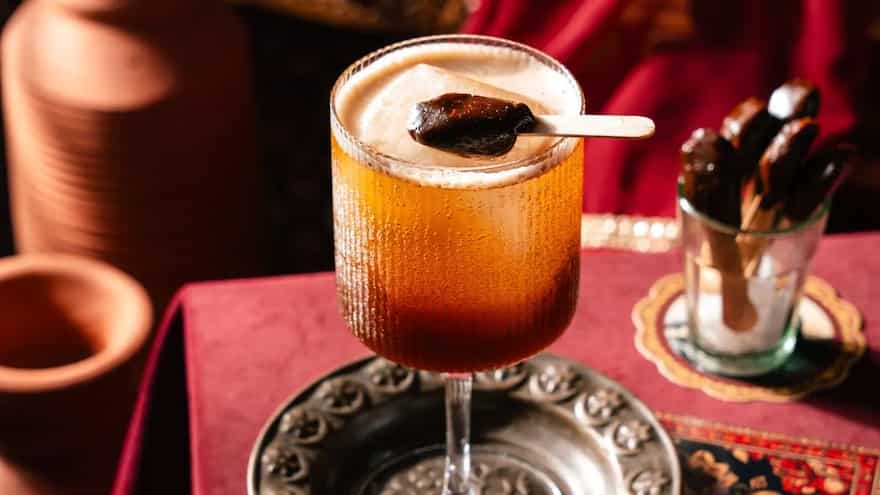
The cocktail programme, Madhushala, follows the same philosophy. Named after Harivansh Rai Bachchan's iconic poem, it's a love letter to Indian ingredients and emotions. These aren't drinks designed to look pretty on your feed; they're liquid narratives drawing from India's classical rasas and regional flavours. The Navras cocktail, inspired by the nine classical emotions, arrives with a silky cashew foam that's playful without being gimmicky. There's chai, there's aam papad, there's a clear intention to use ingredients that spark recognition and nostalgia rather than confusion.
Credit goes to mixologist Shivam for understanding what Sharma was trying to achieve. Creating an Indian-focused cocktail menu sounds straightforward until you try to execute it without falling into cliché or worse, creating drinks that taste like novelty acts. Madhushala manages to feel both innovative and grounded, contemporary and rooted. It's the rare bar programme that could stand on its own merits whilst also complementing the food philosophy perfectly.
The Food: Stories You Can Taste
What strikes you about Suma's menu isn't what's there, but what isn't. There's no attempt to shock, no desperate reach for virality. Instead, there's a confident simplicity that speaks to Chef Rahul's understanding of what actually matters.
The palak patta chaat arrives light and airy, the spinach leaves encased in a carbonated tempura batter that stays crispy long after you've started eating. It's the kind of technical detail that matters, you're not racing against time to finish before everything goes soggy. But the technique serves the taste, not the other way around.
Then there's the dal Muradabadi, a dish so simple it almost feels confrontational. "When you're adding ten different things, it's very easy to bring out flavours," Chef Rahul explains. "But when you are adding only two things and you still serve it in a restaurant and be like, okay, wow, this is great." There's poetry in that restraint, the gentle warmth of ghee, the careful tempering, the crispy sev and papdi that transform it into something between a dal and a chaat. It's not trying to be clever. It's just trying to be good.
The butter chicken deserves its own paragraph because it challenges everything you think you know about the dish. Chef Rahul's version draws from Uttar Pradesh rather than Delhi or Punjab, resulting in something closer to a pulao, a thin, fragrant curry heavy on kewra (screwpine essence) that most butter chicken recipes wouldn't dare touch. "I'm genuinely done with this taste of which city does a better job," he says. It's familiar enough that you recognise it, different enough that you're paying attention.

The fatteh hummus becomes a study in how to honour tradition whilst creating something new. Rather than dumping random flavours into hummus to create novelty, Chef Rahul builds on its Arabic foundation, boiled chickpeas, toasted pita, pomegranate molasses, tahina sauce. "It's hummus, but at the same time, there is a lot to experience, it's like a flavour bomb in your mouth," he says. Even someone who claims not to be adventurous will find comfort here.
And then there's the avocado jhalmuri, a dish that sounds wrong on paper but a winner in person, Bengali street food meets Mexican fruit, until you taste the mustard-heavy marinade and realise Chef Rahul's brought Calcutta to your plate. "It's like Calcutta in your mouth at that point in time," he says, and he's right. It's one of those combinations that shouldn't work but does, brilliantly.
What unites all these dishes isn't a flavour profile or a technique, it's intention. Every plate carries the weight of research, of conversations with vendors from Gujarat to Rajasthan, of sourcing roots and botanicals and shrubs that aren't readily available. "All these things are not very easy to source," Chef Rahul admits. "We wouldn't have our signature touch to it. So we had to go to the local APMC market, talk to all these guys and ask them that, okay, even if you don't have these things, can you source it for us?"
This is food that asks you to slow down, to notice, to care. In a city that's forgotten how to do all three, that might be Suma's greatest achievement.
What makes Suma work, truly work, is that it doesn't feel precious about itself. The prices are designed to make it your regular haunt, not your once-a-year splurge. "Suma wants to be your everyday cup of tea, wants to become your everyday go-to place," Sharma explains. "We want to give experiences, and if you have to go to expensive restaurants, it's not everybody's cup of tea." The accessibility is intentional, from middle-class families to high-flyers; everyone should feel welcome. The staff don't hover with forced formality. The experience is premium without being exclusionary, culturally rooted without being stuffy. You can come for lunch on a Tuesday or book it for your roka ceremony, and it adapts accordingly.
This is S.P. Motles' sixth outlet, and the team's experience shows in how confidently Suma occupies its identity. There's none of the overcompensation that plagues new restaurants trying to be everything to everyone. "Suma is my love letter to the journeys that shaped our food culture," Sharma says. "From the Grand Trunk Road to the Arabian sands, I wanted to create a space where flavours, stories, music, and memories come together effortlessly. Suma is not just a place to dine, it is a place to experience."
In a dining landscape increasingly dominated by concepts that prioritise style over substance, where restaurateurs study Instagram analytics more closely than customer feedback, Suma offers something we've been missing: authenticity that doesn't require a trust fund or a willingness to overlook disappointing food for the sake of good lighting. It's the rare restaurant that wants to be part of your life rather than an event in it. In a city that moves too fast, that's forgotten how to pause, Suma is a gentle reminder of what we've been missing.
Address: First Floor, The Thane Club, Opposite Raheja Garden Wagle Estate, Thane West, Thane
Timings: 12.00 OM - 12.30 AM, Monday - Sunday
For reservations, contact: +9173049 86758




