


 Share
Share

There is a particular kind of chef who cooks not to impress but to connect. And Suryansh Singh Kanwar is very much that kind of chef.
Before he helmed the kitchen at the newly opened TheySee in Hyderabad - an audacious new venture with co-founders Niharika Gollapalli and Darshan Ramchandani - he spent years moving quietly through some of India's most private dining rooms, cooking for celebrities, travelling across eleven IPL cities and six countries, and accumulating something far more valuable than technique: an understanding of how deeply personal food really is. That journey gave him a rare kind of fluency.
He knows how nostalgia works, how memory opens people up before a dish even arrives at the table, and how the most powerful thing a plate can do is feel simultaneously familiar and entirely new. At TheySee, all of that learning has found a home. The Hyderabad destination has been drawing attention for all the right reasons, is unapologetically Indian, visually and conceptually deliberate, and built around the conviction that dining begins long before the first bite. What lands on the plate is simply the final sentence in a much longer conversation that the space has already started.
To better understand the madness behind the method, Slurrp say down with Chef Suryansh to learn more about his journey and how he shaped the menu at TheySee.
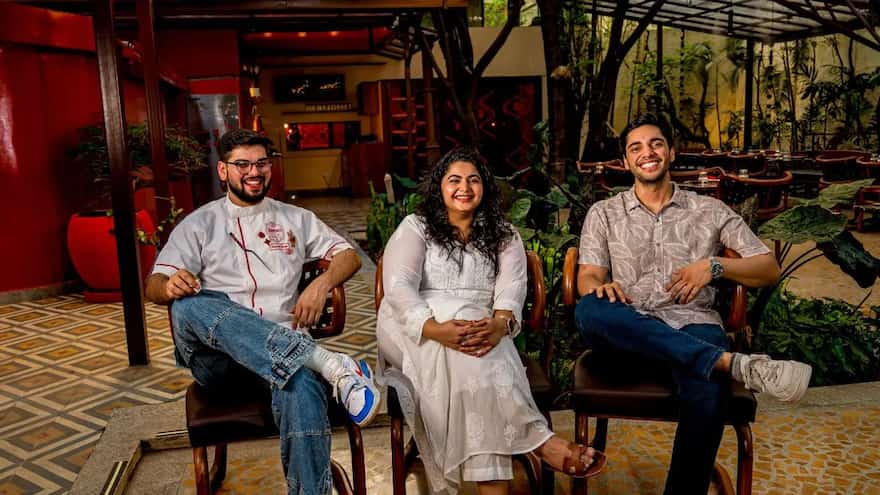 Suryansh Singh Kanwar, Niharika Gollapalli, and Darshan Ramchandani
1. TheySee is built around the idea that sight comes before taste. How does that actually translate to what lands on the plate?
TheySee is a place that begins speaking to you long before you take your first bite. The moment you step in, everything around you, the art installations, the landscape, the architecture, the way light moves through the space is already doing the work of setting an intention. None of that is accidental. It's all part of a deliberate language we're trying to build that TheySee is unapologetically indian and the food is simply the final sentence in that conversation.
That philosophy translates onto the plate in a very specific way. I want the food to feel immediately familiar, not foreign, not intimidating because familiarity is what opens people up. When you see something on the plate that you recognise, something that connects to memory or comfort, your guard drops. And that's exactly the moment the dish starts doing something more. Take our Oh So Corny, its a simple dish plated differently, its a warm corn custard at the base, a cold and buttery corn mousse at the centre, corn flakes on top for crunch with some color added from the beetroot, carrot and radish, its simple with a twist and the philosophy we are trying to achieve.
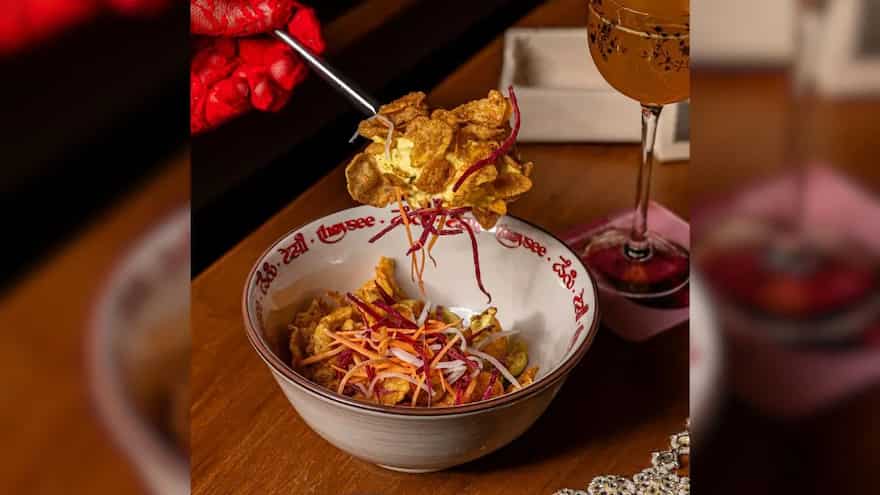 Oh So Corny
2. Several dishes on the menu carry someone else's name or memory. How do you go about creating a signature dish and at what point do you feel like it becomes something with your personal stamp of approval?
For me, food has always been about the person eating it, not the person making it. When I approach a new dish, I'm never thinking about how it reflects my identity as a chef, I'm thinking about who's going to eat it and what I want them to feel in that moment.
Take Sunil Shetty's chicken, for example. That dish didn't start with a technique or a flavour profile I wanted to showcase. It started with understanding him and his palate, his nostalgia, what comfort means to him personally. The dish became his because it carries his memory. Same with Hardik's butter chicken. Butter chicken is one of the most cooked dishes in this country, so the question was never "how do I make my version of it?" It was "what does this dish need to be for him when he is playing across countries?" That shift in intention changes everything about how you cook.
A dish earns my stamp of approval when a guest comes back asking for it, or when they describe it to someone else using their own words. That's when I know something real has happened. The dish has left my hands and become theirs.
3. You spent years cooking privately for some of India's most recognised names. What did that world teach you that a conventional restaurant career couldn't have?
Working in private kitchens gave me a perspective on hospitality that a conventional restaurant kitchen simply cannot. When you're cooking for someone in their home, for their family, for their table, the margin for imprecision disappears completely. There's no brigade to fall back on, no fixed menu to anchor you. It's just you, the guest, and what they need that day to keep their mood stable and that kind of accountability sharpens you in ways that are hard to replicate elsewhere. Cooking across multiple cuisines for such a range of people reinforced one truth I keep coming back to: food is deeply personal. What also stayed with me was the resilience that came from working across countries. Stepping into a new continent and city, not knowing the language, unfamiliar with the local produce, no established network to lean on, that's genuinely disorienting. But I found that I thrived in it. The discomfort pushed me to observe more carefully, ask better questions, and develop an understanding of a new market far quicker than I might have otherwise. You learn to improvise without compromising, to work with what's in front of you and still deliver something that feels considered and complete. That ability to think on your feet is something I carry into every kitchen I work in.
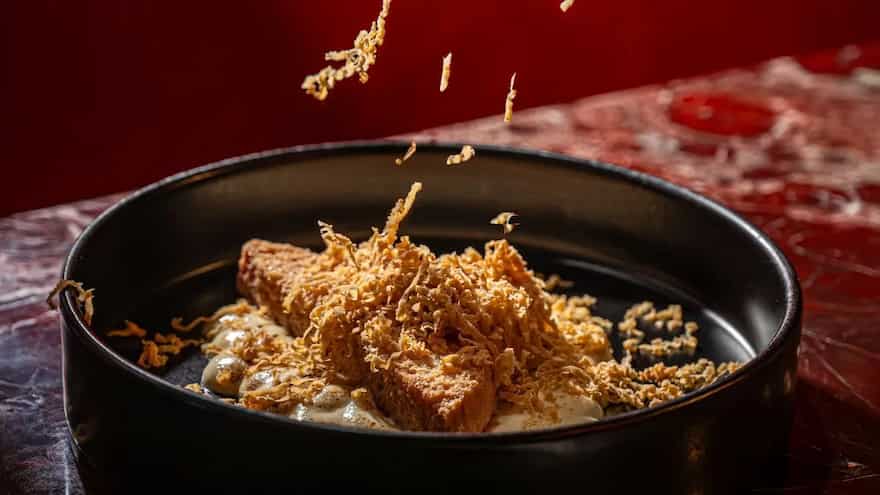 Not So Chilli Cheese Toast
4. Travelling through eleven IPL cities and six countries, you've said every city taught you something about how India eats. What's the single most surprising thing you learned?
What surprised me the most was the sheer depth and diversity of Indian culture. There is an incredible verticality to it, from bold, layered flavours to complex techniques and a wide range of meats and ingredients. At the same time, some of the most memorable food experiences came from small local spots that are doing truly exceptional work.
If I had to pick one thing, it's how fiercely local India's food identity really is. From the outside, it's easy to think of Indian cuisine as a single unified thing but the moment you start travelling through it, that idea falls apart completely.
The example that stays with me most is curd rice. I'd eaten it before, I understood it conceptually but it wasn't until I was in Chennai that I understood what it actually means to people there. It's not a side dish, it's not an afterthought at the end of a meal. It's almost ceremonial.
What extended that lesson even further was travelling across countries and watching how the Indian diaspora eats. That's where things get really fascinating. Indians abroad don't eat the way India eats, they eat the way they remember India. In the UK, you'll find Punjabi flavours that are more intense, more saturated than what you will find in Punjab today. In Southeast Asia, Indian food has quietly absorbed local produce and technique over generations, so you get these hybrid preparations that feel completely natural to the people cooking them but would be unrecognisable back in the origin city. What that taught me is that Indian food is never static, it's always a reflection of circumstance. At home, it's shaped by region and ritual. Abroad, it's shaped by memory and longing. And both versions are entirely valid, entirely real.
5. When dealing with Modern Indian cuisine, where's the line between reinterpretation and losing what made something worth reinterpreting in the first place?
Its a very interesting question, so for us, being unapologetically Indian doesn’t mean we hold back from experimenting. We take familiar flavours from across the country and present them in a more contemporary, new-age way, while still respecting their roots. It’s not about replacing tradition, but evolving it in a way that feels exciting today. Take our not so chili cheese toast which is centric to Hyderabad but we have married it to a shahi tukda which gives it new life.
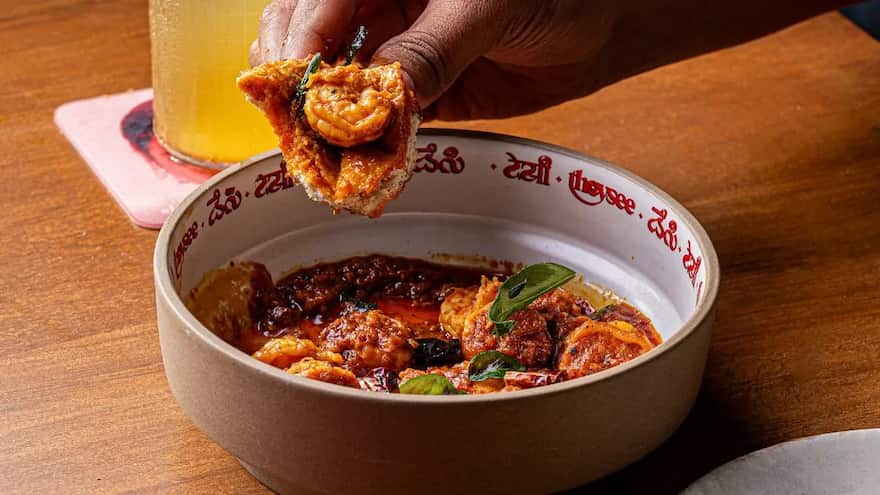 Dish Got Personality
6. You trained at The Bombay Canteen, one of the restaurants that shifted how a generation thought about Indian food. How much of that philosophy lives in TheySee, and how much are you deliberately breaking from it?
Training at The Bombay Canteen was genuinely formative. It's where I first understood that Indian cuisine could be a serious creative language that you could work with indigenous ingredients, regional traditions, and deep-rooted stories and present them in a way that felt completely contemporary without losing what made them meaningful in the first place. That kind of thinking became part of how I approach food at a foundational level.
But TheySee isn't an extension of that template, and it was never meant to be. The Bombay Canteen operates within a very specific context, urban, metropolitan, a certain kind of diner who comes in already engaged with the idea of modern Indian food. Hyderabad is a different conversation entirely. The people here eat differently, socialise differently, and what they want from a dining experience is different, they are conservative but need to be pushed to experiment. So what we've built at TheySee is something more instinctive. The approach is playful, spontaneous, and rooted in the local community we're actually a part of. We're reinterpreting Indian food, yes but through the lens of where we are and who we're cooking for.
7. You've cooked the same ingredients dozens of times for private clients. How do you take something that is familiar and make it feel like it's worth ordering in a restaurant?
Butter chicken, seekh, or corn already come with strong emotional connections, and that comfort is exactly why people keep ordering them but at Theysee, the focus is on keeping that familiarity intact while adding more depth, texture, and exotic ingredients, like using a Kaali Miri - Belper Knolle Cheese in the Seekh. It starts with understanding what people associate with a dish, whether that is richness, smokiness, spice, or nostalgia, and then thoughtfully elevating those elements through technique, better ingredients, layering, or presentation. Today’s diners are also looking for something beyond comfort. They want a sense of surprise and something memorable enough to return for. The idea is to serve flavours that feel instantly recognisable, but reveal something new the longer you engage with them.
8. How do you keep a menu like this that’s built on personal memory, from becoming too rooted in nostalgia?
Nostalgia only becomes a problem when you treat it as the destination rather than the starting point. Memory is one of the most powerful tools I have as a cook, it's the fastest way to create an emotional connection with a guest, because food that feels familiar doesn't need to be explained. It lands immediately. But if you stop there, if the goal is simply to recreate something exactly as people remember it, then you're not really cooking anymore. You're just preserving.
The way I think about it at TheySee is that the memory gives you the brief, and then the real work begins. Take something like butter chicken or chaat or even Maggi, these aren't just dishes, they're loaded with personal history for almost everyone who grew up in India. The question I keep asking is: what does that memory actually feel like, and how do I translate that feeling for the way people eat and experience food today? Sometimes that means updating a technique. Sometimes it's about finding an ingredient pairing that gives a familiar flavour a new context. Sometimes it's purely about presentation, changing the way something looks so that it surprises you before it comforts you.
What keeps the menu from tipping into nostalgia is that we're always asking what's next, not just what was. Dining culture is shifting faster than it ever has and guests today are more well-travelled, more reference-rich, and far less patient with food that simply reminds them of something without offering them anything new. They want to feel at home, but they also want to feel something they haven't felt before. Holding both of those things in tension, that's the real challenge, and honestly, that's what makes the process interesting.
The emotional familiarity is the invitation. Everything after that has to earn its place.
Address: Plot No. 8-2, 293/82/A/161, Rd Number 13, Jubilee Hills, Hyderabad, Telangana 500033
Timings: Mon to Thu and Sunday: 12:00 PM – 3:00 PM, 7:00 PM – 11:30 PM |
Fri and Sat: 12:00 PM – 3:00 PM, 7:00 PM – 12:30 AM




