Share


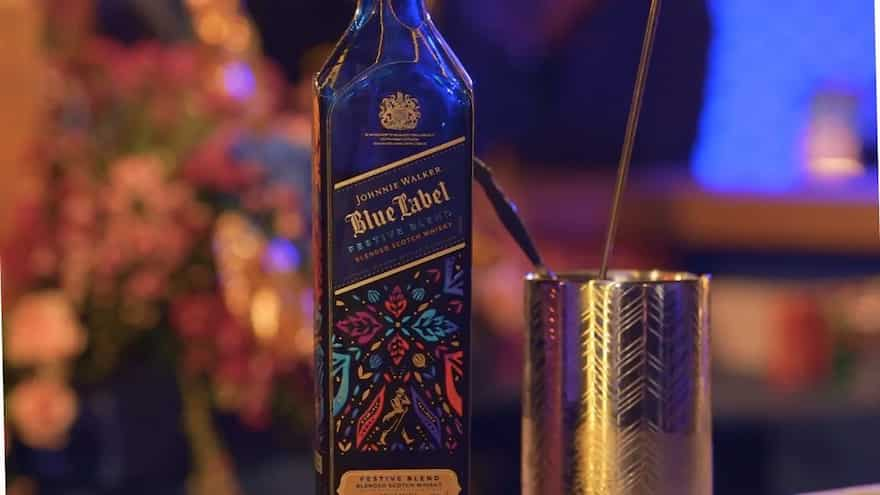
Dr Emma Walker's job comes with a rule that sounds simple but has some deceptively tricky caveats. Use only whisky to showcase flavours, nothing more, nothing less. Where a top chef has aisles worth of spices and seasonings to choose from Dr Walker has only the nuances of barrels and blends. So when she was asked to make a Blue Label that tasted like an Indian festive table, every flavour had to be reverse-engineered in casks sitting in Scotland. The result? The Johnnie Walker Blue Label Festive Blend, the first Blue Label limited edition inspired by India.
What Does Diwali Taste Like? A Scotch Master Blender Asks India
Dr. Walker grew up in Scotland and England, and India reached her the way it reaches a lot of British children - through books, films, school friends and the local curry house. "If you grow up in Scotland, I'm pretty sure it's contractually obligated that you have to enjoy Indian food," she laughs. So for her, spices were familiar friends, but the meaning behind them was something she had yet to discover.
The collaboration on the new blend marked Walker's second visit to India, but the food had already won her over. While very different from the ‘Indian food’ she grew up with in Scotland, places like The Bombay Canteen opened up a much wider world of Indian cuisine. "I could eat there every day," she says before confessing, "I would still miss having chips with my curry. There's no logic to it. Potatoes are at the core of all of our hearts."
Much of what she understood about Indian flavour came from the food she sampled on her visits. But a blend inspired by Indian food is one thing; one inspired by Indian festivals is quite another. So before going anywhere near the inventory, she went to Diageo’s whisky makers in Bengaluru with a single question - what does Diwali taste like? She wanted the flavours of childhood, of festivals, of family. The answers came quickly, drawn from everything from mithai boxes to family recipes and the emotion of togetherness - sweetness, saffron, fruit, cinnamon, cloves and, above all, warmth. One note came up more than any other. “The one that everyone talks about is cardamom,” she says. “It became the backbone of my inspiration.”
And what festival is complete without mithai? She ate her way through as much of it as she could, then flew back to Scotland with suitcases of the stuff so her blending team could taste the flavours they were trying to capture. “We got to have a very interesting expenses bill that month,” she adds.
From Kaju Katli To Cask: Building The Blue Label Festive Blend
Then came the hard part: searching 11 million casks of maturing whisky for flavours that matched. "Only one in 10,000 of those casks has the flavour style we’re looking for,” Walker explains. “Believe it or not, these are flavours that we find in Scotch whisky. They come from how a spirit is distilled and how it matures.”
The big change from classic Blue Label is Blair Athol, a Highland malt whose spirit she describes as full of "chopped nuts, cashews, almonds" along with pepper, a little chilli, cardamom and cinnamon. Anyone who has worked through a box of kaju katli will recognise it. She also swapped Blue Label's usual big, powerful smoke for a drier, spicier, more aromatic one, so it sits with the spice rather than over it. In the glass, you get cardamom, saffron, rosewater and citrus, with honey, chocolate-dipped fruit and a faint wisp of smoke.
There was also one very practical part of the brief, the whisky had to work with butter chicken. So does she prefer butter chicken or biryani with a dram? "Oh, can you not have both?" she laughs.
What India Taught A Scotch Blender
Ask her what India's signature flavour is and her answer is "bold and complex". Then she adds the part that matters - "but nuanced at the same time." That balance, she says, is what she will take home. Indian chefs layer strong spice without letting any one note shout, and working with their flavours has changed how she thinks about building spice into whisky in the future.
That curiosity isn’t new, she argues. India drinks more whisky than any other country on earth, yet in the global imagination the story of Scotch still runs one way, out of Scotland and into the world. Walker sees it differently. Look back across Johnnie Walker’s 200-year history, she says, and influence has always travelled in both directions, starting with the flavours and aromas that would have filled John Walker’s grocery shop in Kilmarnock. “It’s always been a two-way conversation,” she says. “Not only did we send our whiskies out around the world, we got tales coming back from the ship’s captains, and then our ambassadors, of how people were enjoying it.”
That curiosity about who was drinking the whisky, and how, shaped the house styles that became Red Label and Black Label. It also makes a project rooted in a single country feel less like a departure than a return to form. Looking at India this way, she explains, lets the team see the Scotch they know so well from a different angle, and unlock more of the inventory than they otherwise might. “In the UK, we are a magpie nation,” she says. “We take inspiration from everywhere.”
Whisky: Where Do We Go From Here?
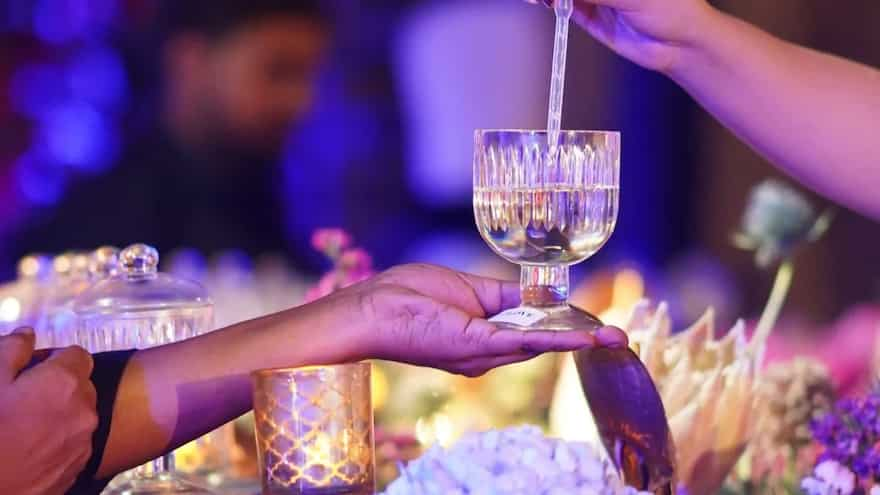
While this blend is the first of its kind for the brand, it’s safe to say that the landscape of whisky drinking is undergoing a much larger cultural shift. Whisky is turning up on cocktail menus and in younger hands, and the old idea of it as a man’s drink is overdue for retirement. A myth Dr Walker is only too happy to dispel. True, she is the first woman to hold the Master Blender role in Johnnie Walker’s more than 200-year history, taking over from Dr Jim Beveridge on 1 January 2022. Even so, she is quick to point out that the “boys’ club” image has never matched the industry she actually worked in.
From the day she joined Diageo in 2008, women were part of every team she worked in. Under Beveridge, she learned blending alongside Maureen Robinson and Caroline Martin. When she moved into production, women were there too, in distilleries and the quality labs at Cameronbridge. "There's always been women involved," she says. To her, the old image comes from the outside, from the men who used to front whisky brands, and from the way films and pop culture depict the people who drink it.
But she didn’t want the job to be read as a gesture. “I didn’t want to be a ‘woman master blender’, just a master blender. I wanted to be thought of as having got the job because I was good at it and nothing else.” Still, one moment has stayed with her. A colleague from the Caribbean told her he had cried when he heard the news, because he could go home and tell his daughters that the new head of Johnnie Walker was a woman.
So while much has stayed the same, so much about whisky has changed and seeing an Indian inspired blend in a market to which it has contributed so much through the years is just another milestone in the journey. But when Dr Walker talks about her legacy, she hopes people will remember her as widening the world of Scotch with more flavours, and more people who feel whisky is for them. A festive Blue Label that grew out of a Bengaluru mithai box and a love for butter chicken brief is a good start.