


 Share
Share

There's a moment at every good whisky tasting when the room goes quiet. At A Salute to the Royal Heritage - an evening hosted by Rampur Distillery against a backdrop borrowed from the royal courts of Uttar Pradesh- that moment arrived somewhere between the Double Cask and the newly unveiled Rampur 1943 Virasat, the distillery's most prestigious expression yet, marking over eight decades of distilling history. Guests leaned in over a menu built around the culinary traditions of the Nawabs, and for a few sips, nobody in the room was thinking about Scotland at all.
That, in a glass, is where Indian single malt whisky finds itself in 2026. No longer shying away from being a cocktail spirit or trying to 'out-Scotch' Scotch, but building something that only makes sense here.
The Basics: What Is A Single Malt?
If whisky talk usually makes your eyes glaze over somewhere around "cask strength," here's the short version. A blended whisky is usually at least one grain and one malt whisky married together by a blender to hit a consistent house style. Think of it as an assembled sound, several instruments layered to make one song.
A single malt, on the other hand, comes from one distillery, made entirely from malted barley. Nothing is borrowed in from elsewhere. What you're tasting is that distillery's particular fingerprint, its stills, its water, its house character, undiluted by anyone else's recipe. It's a smaller, more personal category, which is exactly why it's become the stage on which India's whisky story is now being told.
The Recognition Is Real. The Reach? Maybe Not
Ask whisky educator, founder of the Single Malt Amateur Club and industry expert Hemanth Rao, where India stands today, and he doesn't hesitate to say that the world has noticed. "The great trailblazers have been Amrut, Paul John, Rampur and Piccadilly, the big four so to say," he says, "and Godawan has joined it recently, in terms of building that footprint of Indian whisky in that single malt segment." A newer wave of labels is filling out the shelf behind them, widening what "Indian single malt" can even mean.
But recognition inside the whisky world isn't the same as recognition outside it. "If you look at the broader community, consumers who are not passionate about whisky, that recognition of Indian whisky as a segment is still not there," Rao points out. "Maybe an Amrut, maybe a Paul John, but not to the extent where they recognise Scotch, Irish, Bourbon from the US."
He puts it in perspective with a timeline. Scotch and Irish whisky have had centuries to build their reputations; Japan took roughly a hundred years to be taken seriously as a whisky-producing nation. India's own single malt story had a timeline in the early 1950's to late 60's and a resurgence around 25 years ago, when Amrut made its first international mark. Rao emphasises that, in comparison, our timeline is very, very short, which makes the ground already covered look rather more impressive than it first appears.
The Great Terroir Debacle
Ask any wine drinker, and they'll tell you terroir, the idea that soil, climate and geography shape flavour, is gospel. Whisky brands, keen to borrow a bit of that romance, have started reaching for the same language - this whisky tastes of these mountains, that whisky of that coastline. But what does that mean to a casual or commercial audience?
Rao isn't convinced the word earns its keep in whisky anymore. "The entire premise of terroir comes when you're using ingredients and a process which is unique to a certain place," he explains. "But today, the barley is coming from somewhere else, a common source that everyone buys from. Everyone's using pretty much the same distillation process, the same yeast strains, the same oak." Strip all that away, he argues, and there isn't much left for geography to claim credit for, bar one genuine exception - maturation. A cask ageing through Kerala's tropical humidity will behave very differently to one resting through a Kashmiri winter, and that much is real.
Instead, Rao borrows a phrase from whisky writer Dave Broom, author of The World Atlas of Whisky, saying that the more apt description is "a sense of place", a term coined in his other book, 'A Sense of Place: A Journey Around Scotland’s Whisky'. It's a subtler idea, that what actually separates one whisky from another isn't the ground it sits on so much as the people making it, their instincts, their choices, the little bits of themselves they fold into the process. His favourite proof of this lives in Scotland, oddly enough where Ardbeg, Lagavulin and Laphroaig sit barely half a kilometre apart on Islay, drawing from more or less the same landscape, yet nobody would ever mistake one for another. "What's making that change?" Rao posits. "I think that is more relevant today in the whisky industry rather than terroir."
The True Indian Identity Is Not In The Distilling
If geography's influence is modest, cask experimentation is where Indian distilleries are genuinely making their mark, and it's here that Rampur's approach comes into its own. Rao is careful to draw a line between the two. "Cask is an engineered influence. The way that you mature the whisky can either hide, enhance or supplement your distillery character. That's cask influence, and it's got little to do with terroir."
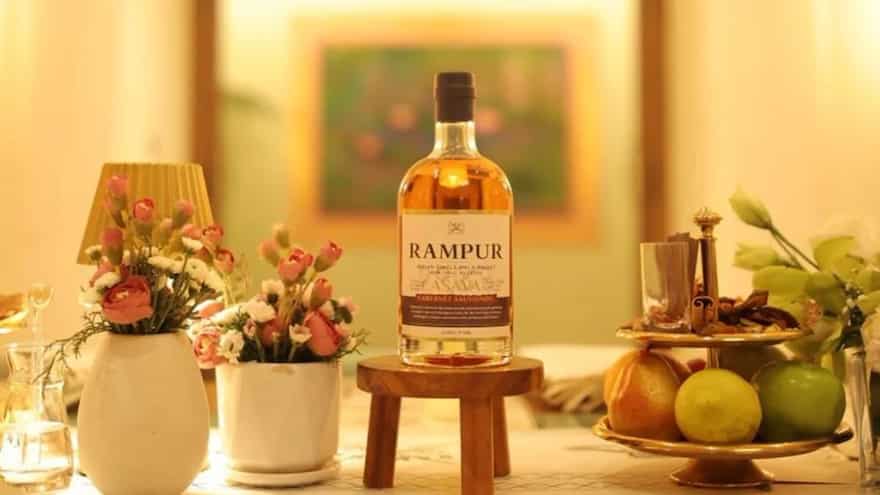
Rampur's range makes the point neatly. Whether it's the Double Cask, the sherry-driven Asava, or newer expressions finished in Cabernet Sauvignon and Port wine barrels, the ambition isn't to chase a different location with every bottle; it's to keep a consistent distillery character running underneath, then let the cask add its own layer on top. "When I taste a Rampur Double Cask or a Double Cask, there should be some identifiable character that I get from both, though the casks have been very different," Rao says. "They want to showcase their core, the pillar, the platform on which they build the whisky, ehich is called the distillate character of a whisky." Though maybe not as flashy as a narrative about native ingredients, it's a distinction that matters. It’s not a case of "this cask makes us Indian," it's "this cask lets our Indian character speak a little louder."

What’s In A Whisky Name?
Perhaps the clearest sign of the industry's confidence is sitting right there on the label. For decades, Indian whiskies borrowed Scotch-sounding names, a quiet apology for where they came from. Rao doesn't mince words about it, "Can you think of any whisky that did not sound like a Scotch whisky? It was all geared to sound more like Scotch, even if it wasn't."
That's changed. Rampur's own portfolio, Asava, Virasat, sits alongside names like Indri and Godawan that make no attempt to sound like anything other than what they are. "This is a fantastic thing for Indian whisky history," Rao says. "No longer are we trying to replicate. Each one brings its own thing." He does add a note of caution: lean too hard into unfamiliar names and international drinkers may hesitate to ask for something they can't pronounce, so the trick, in his view, is keeping the Indian identity confident without making it a barrier. It's a needle Rampur's naming has threaded rather well, heritage-rich, unmistakably Indian, but never a mouthful.
Why Indian Whisky Sales Speak For Themselves
We’ve all probably seen the headlines. Indian single malts outselling Scotch. Sounds like a win, but Rao delivers a useful reality check. "The statistics don't take into consideration how many imports came in from Scotland over the last two or three years," he explains. Import duties kept a long list of international labels off Indian shelves altogether, brands quite simply weren't there to compete. With duties easing from mid-July, he expects the gap to close fast. "Scotch will potentially overtake Indian single malts in the sales numbers next year, because now the prices may be lower." The takeaway isn't that Indian whisky's momentum is fake, it's that the real test of how far it has come is still ahead, once the competition is back on the shelf in full force.
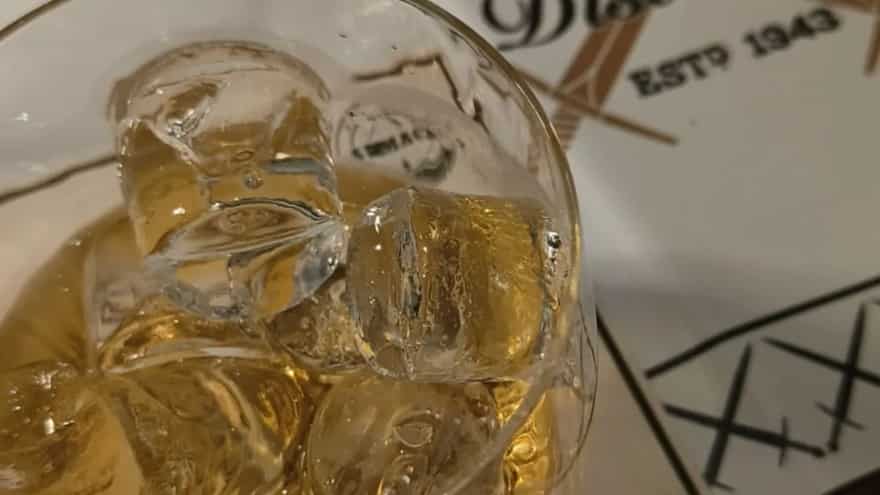 Whisky neat or on the rocks?
How To Drink An Indian Single Malt Whisky
Whisky purists may swear by a neat pour to coax out all the true notes of the whisky, but we’re steadily moving away from that era. Nowadays it’s equally common to see a whisky cocktail as a gin or vodka option. And in that context, some of the old hard and fast ‘rules’ are giving way to a more relaxed whisky experience
For example, Rao is refreshingly unbothered about whisky snobbery. Neat, with a couple of drops of water, is how he'd taste something to properly evaluate it. But enjoying it is an entirely different exercise, and India's climate has its own opinion on the matter. "In summers in India, it's not a place where you can have neat whisky and enjoy it," he laughs. "Don't listen to people saying you can't drink it like that. It's your whisky at the end of the day, you should like it as it feels to you."
Which, in a roundabout way, is the whole story of Indian single malt right now. For years, the category measured itself against someone else's yardstick. Now, from Rampur's Nawabi-inspired tastings to the cask experiments quietly building each distillery's own signature, it's writing its own rules, pronunciation, provenance and ice cubes included.




