Share


Langar is easy to describe and hard to explain. To put it simply, it is prepared by volunteers in a community kitchen and is served as prasad to anyone who sits down. As per the scriptures, Guru Nanak Dev Ji started the practice of spending money meant for trade to feed hungry holy men. Guru Amar Das Ji later made everyone sit and eat in a single line, regardless of anyone’s background.
The essence of bringing everyone together is perfectly captured by the expression “Pehle Pangat, Phir Sangat.” To date, more than five centuries later, the community kitchens in Gurudwaras still run on a few staples like flour, lentils, rice, and vegetables. To get a deeper insight into how the system looks from the inside and how the menu changes when Gurupurab brings a crowd, read these exclusive interviews with sevadars.
Giani Aatma Singh
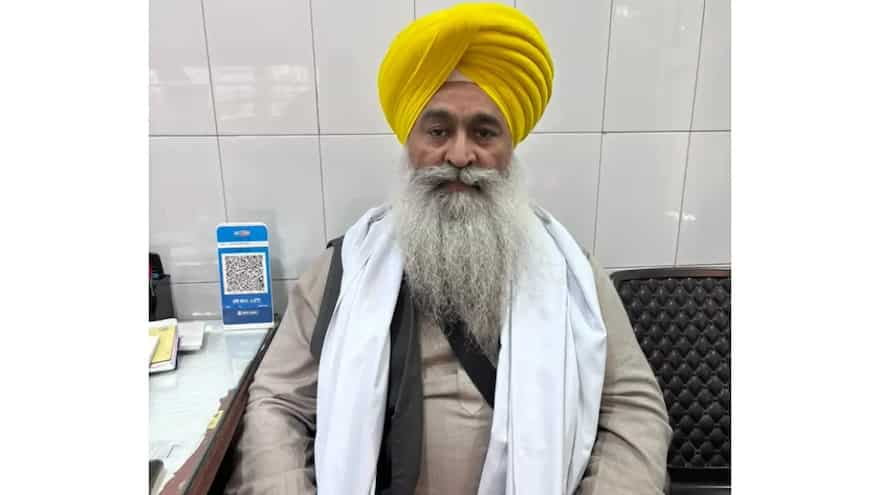 Image Credit: Garima Johar
Giani Aatma Singh is 58 years old. He is the head granthi and a sevadar at Sadh Sangat Gurudwara in Gurgaon. When asked about the nitty-gritty of who makes the food for langar every day, who sources the ingredients, etc., he plainly replied, “The community kitchen at a Gurudwara works exactly like a kitchen at your home.”
“Just the way everyone comes together to prepare meals at home, the sevadars take care of the chores amongst themselves,” he says. “The only difference is the size of the family at the table. On an ordinary day, the typical thali at langar consists of phulke, dal, chawal, a sabzi, salad, and something sweet. While the menu is more or less the same, on a Gurupurab, the sabzis are fancier, and there could be two desserts instead of one, or sometimes a snack before the langar.
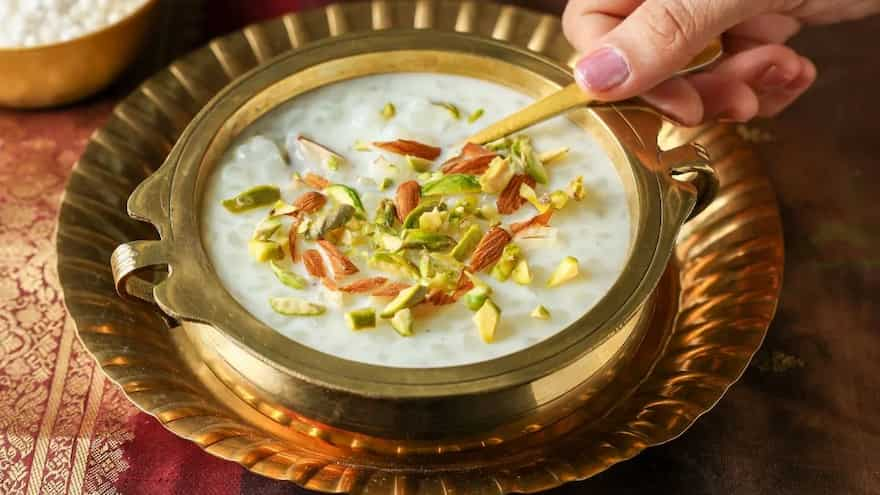
Image Credit: Adobe Stock
By his count, more than 20,000 people eat langar on the festival, from 7 to 10:30 PM. His sangat is a mix of all religions and communities. Asked who pays for it, he gives a one-line answer: one-tenth. Sikh families are taught to set aside a tenth of what they earn for the Guru's kitchen and for seva. That is dasvandh, and it is how langar is funded.
Chef Manjot Singh
Chef Manjot Singh was born and brought up in Patiala and cooks for a living. On every Gurpurab, he goes back to the Guru's kitchen. His mother and grandmother taught him to see food as care, and a sardar family in Punjab teaches seva as a habit, he says, whether or not it is Gurpurab. While in a restaurant kitchen, he cooks to create an experience; in Guru Ka Langar, he cooks expecting nothing back.
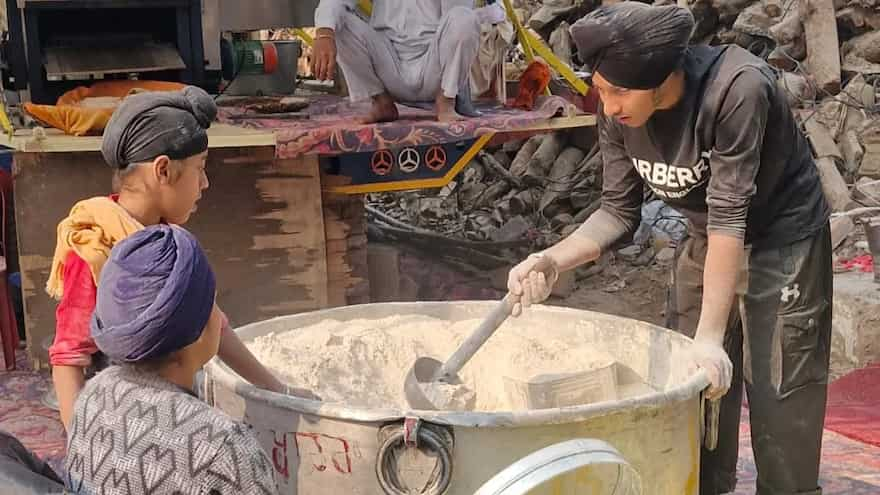
Image Credit: Chef Manjot Singh
“Three teachings of Guru Nanak Dev Ji guide me: kirat karo, naam japo, vand chhako. Work honestly, remember God, share with others,” he notes. “On an ordinary day, every sevadar helps out in the kitchen, from washing the lentils to kneading the dough to finally washing the dishes. And no honest task is beneath anyone.” He humbly notes that while restaurants follow a hierarchy, the Guru’s kitchen does not. "In my restaurant people may know me as a chef. In the Guru's kitchen I am simply a sevadar," Manjot adds.
“Not every Gurupurab is the same,” he marks. “Prakash Gurpurab celebrates a birth, such as that of Guru Nanak Dev Ji or Guru Gobind Singh Ji, with kirtan, seva and langar. Shaheedi Gurpurab remembers martyrdom. On either kind of day, more of the sangat arrives, so the kitchen has more to do.”
Image Credit: Wikimedia Commons
To cater to a larger crowd, the planning starts a week ahead. Sourcing ingredients, meal preparation, cooking, and cleaning all happen in a rhythm to ensure no devotee goes home on an empty stomach. Manjot also talks about how an outsider might expect a festival to show; however, the menu pretty much has dal, sabzi, roti, rice, kheer, and of course, karah prasad.
He also describes community langar at its widest. Each December, Fatehgarh Sahib hosts the Shaheedi Jor Mel to remember Sahibzada Zorawar Singh Ji, Sahibzada Fateh Singh Ji, and Mata Gujri Ji. One village offers kinnu da juice, another makki di roti and sarson da saag, and elsewhere sevadars serve ganne da ras, kheer, dal and tea.
The food changes from stall to stall, but the spirit is the same, and nothing is sold. "We are not merely feeding visitors," he says. "Through food, we are teaching the next generation why the Sahibzade, Mata Gujri Ji and the sacrifices of the Guru's family must never be forgotten." Asked about a moment that stays with him, he returns to pangat. "The sight of people from different walks of life sitting together in pangat always moves me. Even the most elaborate luxury meal cannot replace the meaning of that simple shared meal."
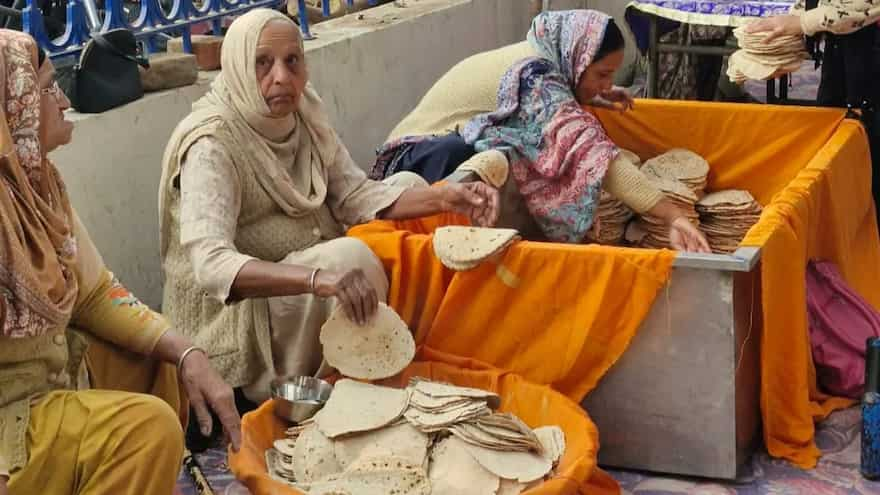
Image Credit: Chef Manjot Singh
Sarabjit Kaur
(The name has been changed as the sevadar chose to share the story anonymously)
“I don't remember deciding to come. One week I was dropping my mother-in-law at the gate. The next I had a chunni tied over my hair and a mountain of atta in front of me,” she reminisces about her first day as a sevadar.
“At home I cook for people who notice. If the dal is salty, I hear about it. Here no one says my name at all. The roti leaves my hands and lands in someone else's, and I will never see who eats it. I thought I would mind,” she says. “Instead, it feels like the only cooking I have ever done without waiting to be thanked.”
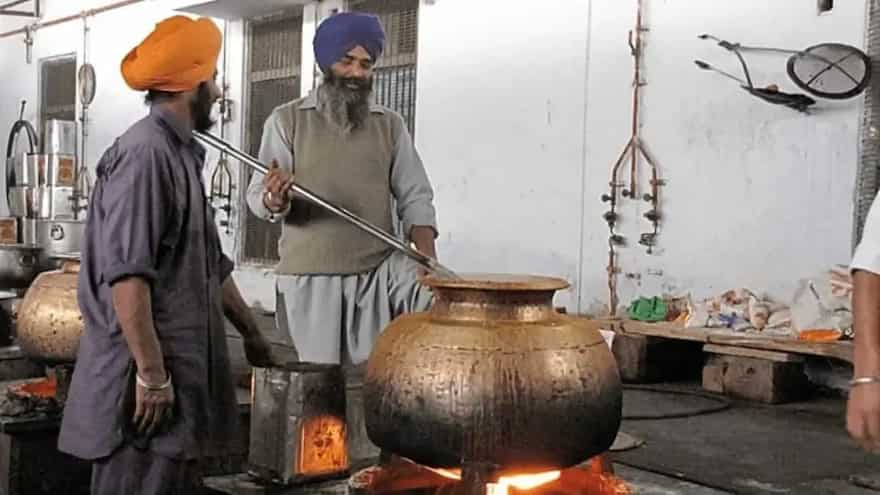
Image Credit: Wikimedia Commons
As per her decades of seva, the langar thalis look the same year-round. On Gurupurab, the kitchen, for sure, gets louder. “Sometimes, you spend hours standing in the kitchen, and by the time you finish, your feet hurt. Then I step out and see the pangat, a long line of people on the floor, a child eating beside a stranger three times his age, and the ache stops mattering,” she beautifully narrates. “You feel that the effort was worth it. You don't think about how tired you are."
“People speak of Mata Khivi Ji and the langar she served. I think of all the women who came before her and after her, whose names nobody wrote down. We are the same hands, I think. We just kept going. I tell my daughter the cooking is the small part. The big part is learning to feed someone you will never meet,” the sevadar concludes.