


 Share
Share

In a kitchen in Vellore, smoke curls lazily from a brass uruli. The mutton inside simmers in gingelly oil and shallots, releasing a fragrance of pepper, coconut, and time. A woman in a cotton madisar sari stirs without measuring. Her eyes, not her spoons, decide the recipe. The scent — deep, dark, decisive — belongs not just to lunch but to lineage.
“Meat, for the Mudaliars, was not rebellion but ritual.”
This is the world of the Mudaliars — landowners, cultivators, and connoisseurs of Tamil Nadu’s northern plains — whose cuisine is as layered as the soil that birthed it.
To outsiders, “Mudaliar food” might mean little. Tamil cuisine is often simplified into clichés: the dosa, the idli, the Chettinad curry. But behind those familiar exports lies a constellation of micro-traditions, each rooted in a specific geography, soil, and caste history. Mudaliar cuisine, born from the Vellore plains, is one such inheritance — a cuisine where land meets lineage, and where vegetarian restraint coexists with a near-spiritual devotion to meat.
The People Of The Land
The word Mudaliar derives from mudal, meaning “first” or “principal.” In medieval Tamil inscriptions, it referred to landowners, temple patrons, and village heads — those who held both wealth and responsibility. They were vellalars, agricultural elites who commanded respect not only for tilling the soil but for managing it. Prosperity bred sophistication. And sophistication, inevitably, demanded expression at the table.
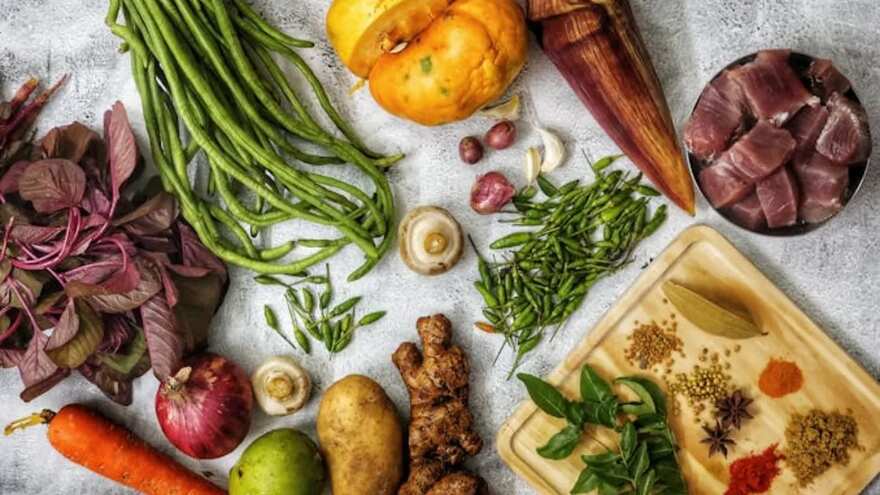
The earliest Mudaliar households, scattered across northern Tamil Nadu — Vellore, Ranipet, Arcot, Tiruvannamalai — built their diets from what their land yielded. Greens and gourds ruled the kitchen before goats and chickens ever did. Vendhiya keerai perattal — fenugreek leaves sautéed with urad dal and tempered in mustard — carried the bitterness of good soil and the fragrance of home. Vazhaipoo thattai vadai, made from banana blossom and Bengal gram, was both food and patience test: cleaning each purple petal of its stamens could take an afternoon.
There was chow-chow kootu, a stew of chayote and lentils, its mild sweetness balanced by green chillies. Kathirikai chops, small brinjals cooked with onion, tomato, and coconut, made brinjal almost aristocratic. Even the humblest dish was layered with technique — grinding on a stone ammi, double-tempering in cast-iron, cooking slow enough to coax the last flavour out of the last leaf.
If Chettinad cuisine is a shout of heat, Mudaliar vegetarian cooking is a hum — complex, precise, inward-looking. The dishes are neither ostentatious nor ascetic. They are practical, elegant, and deeply local — shaped by the rhythm of the monsoon and the logic of the field.
When Landowners Began to Feast
But affluence changes appetite. As agrarian prosperity deepened through the late 19th and early 20th centuries, Mudaliar kitchens widened their range. With wealth came livestock, with livestock came slaughter, and with slaughter came ritual.
In oral memory, meat arrived not as rebellion but as celebration. Festivals, harvests, and temple chariot processions all demanded community feasts. The cooking of meat — especially mutton — became a mark of generosity, not greed. A family’s social grace was measured by how well they fed their guests.
And so, the Mudaliar relationship with flesh took shape: intimate, unapologetic, ceremonial. The Pangti Korumbu became the crown jewel — “mutton for the row of guests.” It was not mere curry but spectacle. The ritual began at dawn: marinating meat in black pepper, fennel, ginger, and garlic; sweating it over slow heat so the fat released its own oil; then layering it with shallots and a coarse coconut paste ground by hand. There were no shortcuts. The final tempering — mustard, curry leaves, and fenugreek — gave it both perfume and authority.
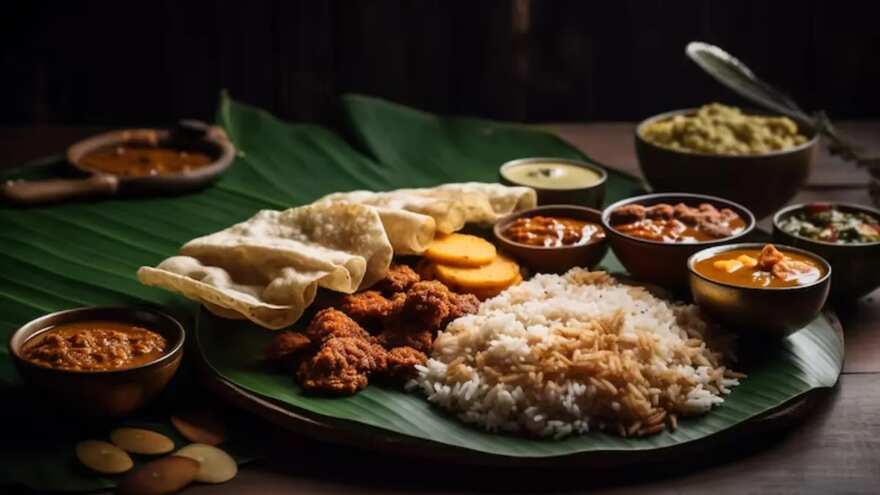
Image Credit: Freepik
Served on banana leaves, Pangti Korumbu wasn’t just food; it was theatre. The host would stand watching as guests tore into the rice soaked with its gravy.
To cook badly was humiliation. To cook well was honour.
Seafood, too, entered this inland cuisine by route of trade and aspiration. River prawns from the Palar, crabs from the Bay of Bengal, and dried fish from Cuddalore began to appear in Mudaliar markets. Raal Varuval — prawns seared in gingelly oil, dusted with pepper and garlic — was the elegant outcome. The dish is deceptive in its simplicity: prawns cooked only till they blush, with curry leaves crisped to a crackle. Each bite tastes of precision.
If vegetarian dishes reflected intimacy with the soil, meat revealed mastery over indulgence. The Mudaliar cook’s skill lay in balance — never letting spice drown the ingredient. Unlike the red-oil bravado of Chettinad cooking, Mudaliar gravies are mellowed with shallots and rounded by coconut. Their heat is cerebral, not chaotic.
The Alchemy Of Spice
Every cuisine is a form of climate technology. In the humid plains of Tamil Nadu, spices served as both preservative and medicine. The Mudaliars perfected this into what they called panch thadavu — the fivefold base: mustard, cumin, fenugreek, pepper, and fennel. Each played a role — mustard to awaken digestion, cumin to cool, fenugreek to temper heat, pepper to stimulate, fennel to sweeten.
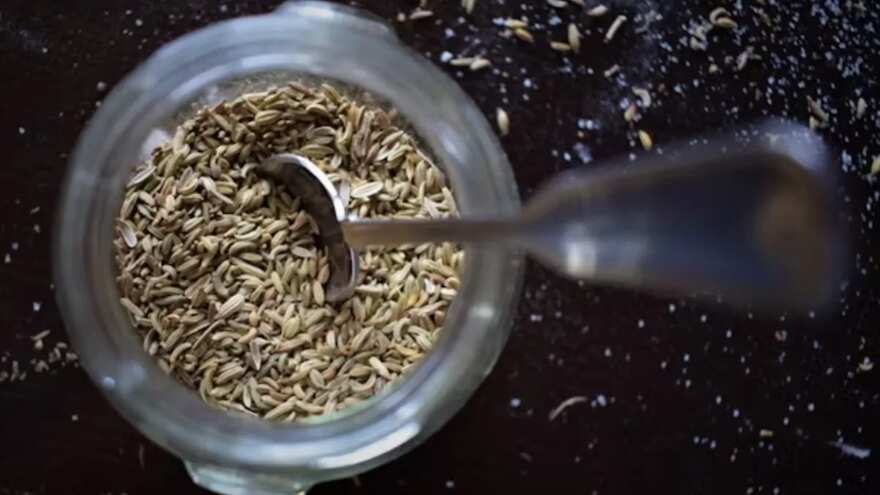
During monsoon months, women rolled ground spice into small balls — urundai — dried them in the sun, and stored them in glass jars. These spice balls, crumbled into curries when rain dampened firewood, ensured the household never lacked flavour. Theirs was a cuisine born not of abundance alone, but of foresight.
This balance between excess and restraint, indulgence and sustainability, defines the Mudaliar plate. Where some cuisines display conquest, this one displays continuity. Its recipes whisper of women who measured oil by sight, salt by memory, and time by scent.
Between The Hearth And The Heirloom
It is this legacy that Kanchana Mala’s Mudaliar Jambam: Pride of Tamil Cuisine seeks to preserve. Published quietly, the book might have slipped under the radar of urban food media, yet among cultural historians it has become a point of reference. Its tone is intimate — not academic, not performative — but quietly reverential.
The title itself is layered. Jambam in Tamil refers to the traditional brass plate on which feasts were served — heavy, gleaming, a symbol of both hospitality and heritage. To name a book after the plate, not the food, is to suggest that vessel and culture are inseparable.
“Every vanished recipe is a chapter of history gone missing.”
Within its pages are recipes that would vanish without documentation: Mutton Chops Uruli, Kozhi Varuval, Nandu Thokku, Erachi Korma. There are also tender asides — a grandmother’s trick to soften yam, the precise ratio of pepper to fennel for monsoon days, the way coconut milk must never boil twice lest it curdle into shame.
What sets the book apart is its refusal to gentrify. There is no sanitised gloss, no attempt to “modernise” or “reinvent.” Instead, it presents the food as lived history — as if the recipes were oral epics handed down, now finding permanence on paper.
Yet the book also reveals a cultural tension. While it celebrates the carnivorous grandeur of the cuisine, it underrepresents the older vegetable canon — the keerai perattals, the chow-chow curries, the bitter-leaf stews that once anchored daily life. Perhaps this is inevitable. In a globalised food landscape, meat seduces faster than greens. But it also means half the story remains untold — the story of patience, precision, and quiet nourishment.
The Duality Of Taste
To eat in a Mudaliar household is to witness a dialogue between opposites. Breakfast might be ragi dosai and coconut chutney; lunch, a vegetarian poriyal; dinner, a mutton curry simmered till dawn. This duality mirrors their worldview — practical yet opulent, devout yet worldly.
Sociologists often read Tamil food through binaries: vegetarian equals pious, non-vegetarian equals worldly. The Mudaliar kitchen rejects such simplicity. Here, the sacred and the sensual coexist. A woman might cook mutton for guests and fast on Mondays for Shiva. Her culinary identity is not moral but material — rooted in skill, not abstinence.
Even their obsession with brinjal — the famed kathirikai chops — straddles this line. The vegetable is often cooked with masala so indulgent that it resembles a meat dish. Food historian Thangam Philip once wrote that “brinjal in Tamil households is meat to the vegetarian.” The Mudaliars perfected that substitution — proof that the hunger for richness transcends the ingredient.
Recipes As Anthropology
To read Mudaliar cooking is to read a society in miniature. Each recipe reveals a technology, a hierarchy, a gender dynamic.
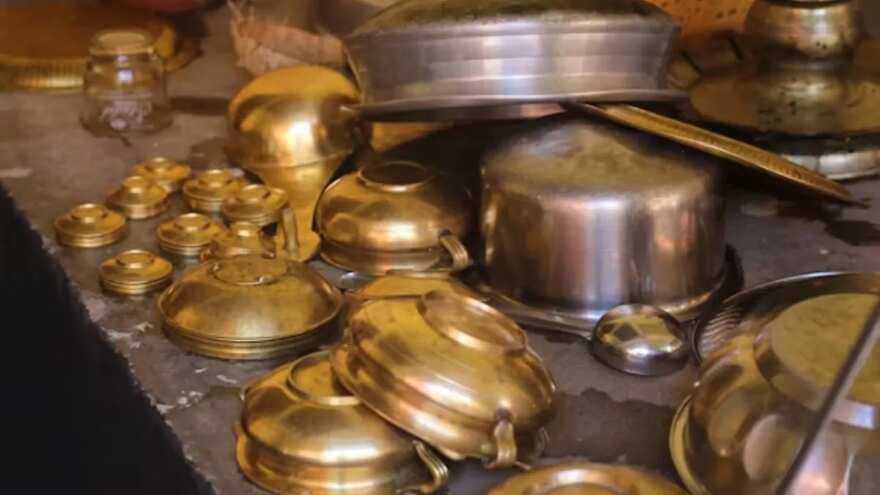
Image Credits: Unsplash
The stone grinder signifies female labour — rhythmic, repetitive, meditative. The brass uruli indicates wealth: only landowners could afford thick vessels that held heat evenly. The gingelly oil shows geography — sesame grows where coconuts don’t. The layered tempering reflects a philosophy: flavour must unfold in sequence, like argument.
Even the act of serving — rice in the centre, gravy on the side, vegetables at the edge, payasam at the end — encodes social order. Guests sat by age and status; children ate after elders. To eat was to enact hierarchy, but also to experience belonging.
When such rituals fade, cuisine loses meaning. Today’s urban kitchens, stripped of firewood and hierarchy, reproduce recipes without the ritual that gave them texture. Yet books like Mudaliar Jambam serve as anchors — textual temples for vanishing practice.
What Memory Tastes Like
Ask anyone raised in a Mudaliar household about taste, and the first word is almost always “pepper.” Not chilli — pepper. The spice defines their palate. Unlike the red-tinged curries of Andhra or the mustard-oil sting of Bengal, Mudaliar heat is dark, rounded, and deep. It doesn’t burn; it lingers.
“Vegetable, spice, and smoke — that was the trinity of the old kitchen.”
This flavour identity connects them to trade history. Black pepper, native to Kerala but traded across South India, was once called black gold. Arcot, near Vellore, was a key trading node under the Nawabs and the British. The wealth that flowed through those routes seasoned local kitchens. Pepper became not just a spice but a signature — an edible reminder of how power tasted.
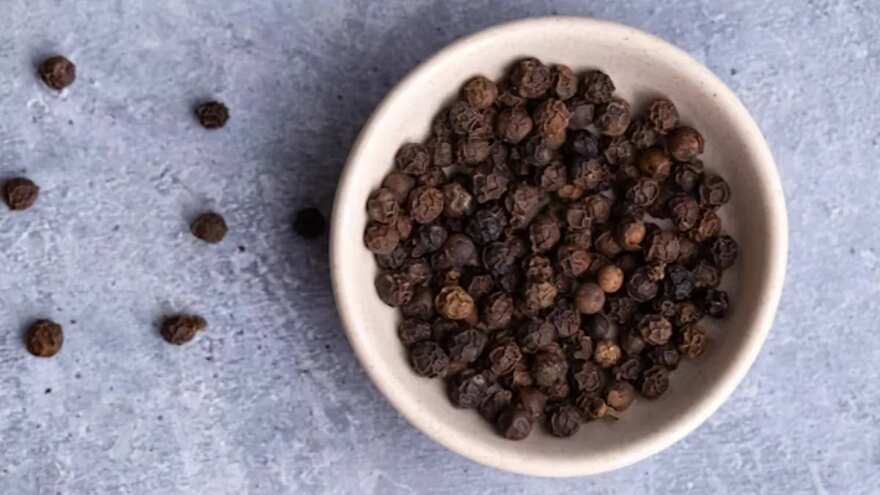
Image Credits: Unsplash
Even sweetness bears history. Elaneer sharbath — tender coconut water with mint — served before meals, speaks of tropical resourcefulness. It cools the body and cleanses the palate. Like the community that created it, it is refined without being extravagant.
The Vanishing Table
Every cuisine faces erosion, but few as quietly as this one. Urban migration has scattered families; nuclear homes no longer have time for three-hour curries or banana-blossom cleaning. Convenience has replaced craft. The grindstones have become flowerpots.
When asked about this, Kanchana Mala once said in an interview that her book was “not about nostalgia but responsibility.” She wrote so her grandchildren “would know what their kitchen once smelled like.” That line could serve as epitaph for many Indian cuisines: what we lose first is not the recipe, but the memory of smell.
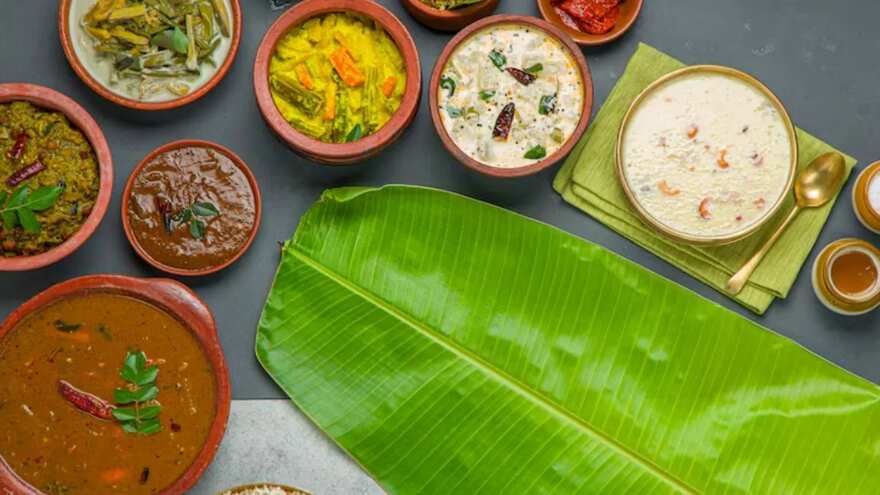
Image Credits: Freepik
In Chennai’s newer suburbs, a handful of restaurants now attempt “Mudaliar thali” meals. They serve mutton kolambu, aviyal, payasam — decent, but sanitized. The flavours are palatable to the metropolitan diner, yet the depth is missing. The smoke, the pepper, the oil that stains the fingers — all diluted for comfort. Heritage, reduced to branding.
But in smaller towns — Gudiyattam, Arcot, Walajapet — one can still find authenticity. In homes where matriarchs guard their recipes like relics, where appams are still ladled onto brass tavas, where even the vegetable peels become chutneys. It is there, between clay and flame, that the real Mudaliar jambam endures.
A Living Archive
Cuisines survive not by museums but by mouths. The Mudaliars, like many Tamil communities, are learning this again. Food festivals, diaspora reunions, digital recipe exchanges — all signal a quiet revival. Younger cooks, many of them women professionals, are beginning to document what their grandmothers took for granted.
They post videos of Vazhaipoo Vadai on YouTube, trade tips on WhatsApp, and debate whether gingelly oil can be substituted with sunflower. The debates may seem trivial, but they are acts of cultural resistance — proof that the fire hasn’t gone out.
Epilogue: Taste As Inheritance
The Mudaliar plate is a story of dualities: soil and smoke, thrift and luxury, vegetable and meat, restraint and desire. It is a cuisine that refuses to be boxed — too peppery to be mild, too nuanced to be fiery. Its genius lies in balance, in the way it turns agrarian ingredients into aristocratic fare, and feasts into acts of continuity.
Every community leaves its signature on history. The Mudaliars left theirs not in monuments, but in recipes — in the sizzle of a tempering pan, the scent of fried shallots, the glimmer of oil on a jambam plate.
To taste their food is to taste the story of a people who turned cultivation into culture, and culture into cuisine. And as long as one kitchen in Vellore still grinds coconut and pepper at dawn, the legacy of the Mudaliars will remain — simmering, fragrant, and defiantly alive.
Disclosure: The author of Mudaliar Jambam: Pride of Tamil Cuisine, Kanchana Mala, has no connection whatsoever to Avinash Mudaliar — apart from the coincidence of sharing a surname and, perhaps, a fondness for the same pepper-and-coconut-perfumed cuisine that generations of Mudaliar households have perfected at home.




