


 Share
Share

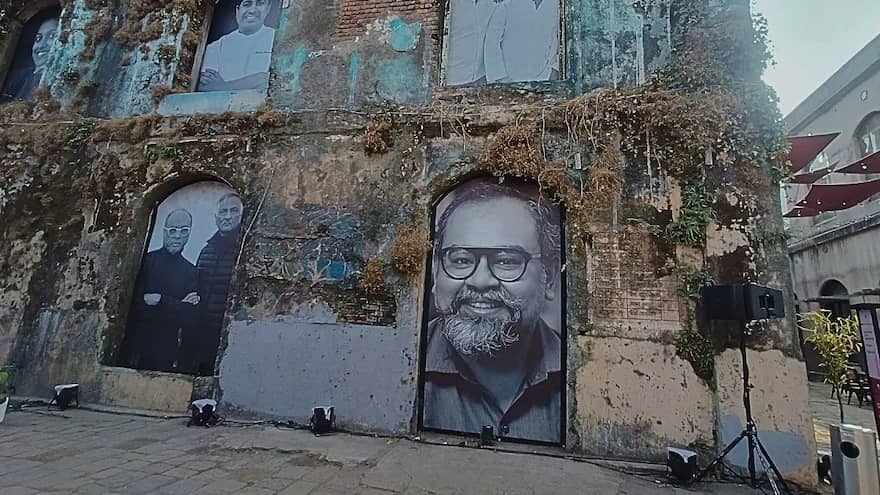
A quiet revolution is reshaping India's culinary landscape, transforming the way we understand what we eat. What was once simply sustenance has evolved into an art form, and nowhere was this more evident than at The Gathering's second edition in Mumbai. Following a successful debut in Delhi in 2025, the unique art and food festival arrived at Mumbai's historic Mukesh Mills this January, bringing together chefs, artists, and cultural visionaries in what founder Sushmita Sarmah described as "a food festival like no other".
A New Vocabulary For Modern Indian Foodies
Founded by Sushmita Sarmah, The Gathering transformed the once-abandoned mill into a living portrait of contemporary India, where food, design, and discovery blurred together in what the organisers called "a temporary city of creativity". Built on three core pillars - Conservation, Innovation, and Exploration - the festival aimed to preserve food traditions while driving creativity forward.
"Each edition is a once-in-a-lifetime experience, never before, never again," said Sarmah, the festival's director. "This is where we come together to celebrate our shared stories through flavour, art, and ideas."
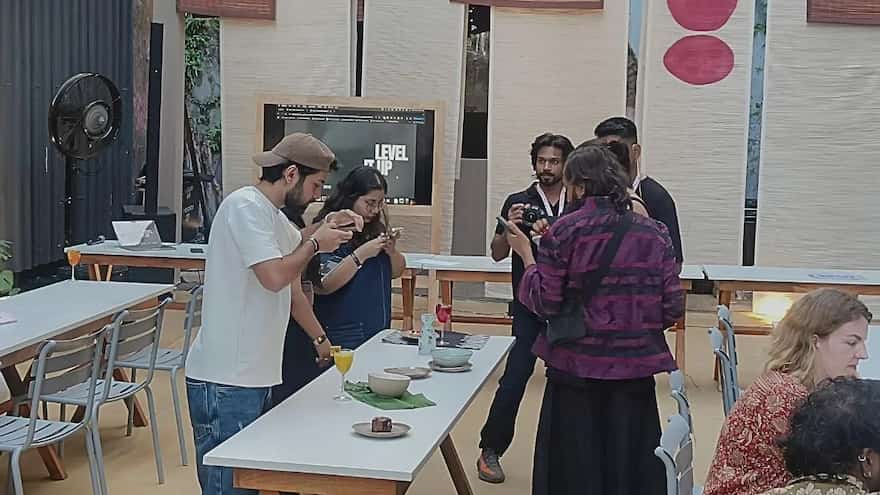
At the core of Edition 02 were five exclusive pop-up restaurants, each pairing a chef with an artist to create what the organisers described as "culinary manifestos". These temporary dining experiences, moving between fine dining and spirited experimentation, formed the festival's gastronomic centrepiece.
Collaborations included Chef Ralph Prazeres with artist Ankon Mitra; Chefs Doma Wang and Sachiko Seth with architect Udit Mittal; Chef Bawmra Jap with photographer Pablo Bartholomew; Chef Niyati Rao with designers Abraham and Thakore; and Chefs Priyam Chatterjee and Rishabh Seal with art studio Too Odd (Akshita Garud). These collaborative restaurants, open for limited lunch and dinner seating each day, offered radically different cuisines and concepts, each telling a story on the plate and beyond.
Beyond The Table
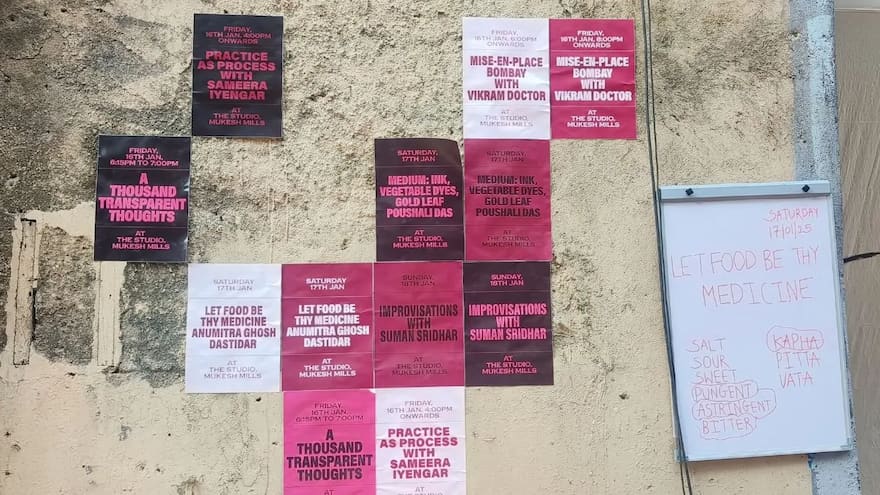
The festival sprawled beyond its dining tables into a canvas of interactive experiences. The Studio functioned as a modern-day gurukul where master chefs and artists openly practised their craft, with Chef Anumitra Ghosh Dastidar and Artist Poushali Das serving as premiere residents. Audiences gained rare insight into the creative process as it unfolded.
The Mills, a speakeasy cocktail bar referencing the venue's textile past, offered bespoke concoctions by acclaimed mixologists in an atmosphere of dim, nostalgic intimacy. By day, The Salon served as the festival's intellectual heart, hosting talks that used food as a lens to explore culture, politics, history, and innovation. By night, it transformed with After Dark sessions featuring live performances from some of India's most talented singer-songwriters and musicians that brought the evenings all the buzz of a festival.
Hands-on workshops invited participants to engage with everything from fermentation techniques to edible design, where visitors could learn food photography or the art of whisky tasting in experiences that will live on far after the weekend concluded.
Inside Kalimpong’s Noodle Factory
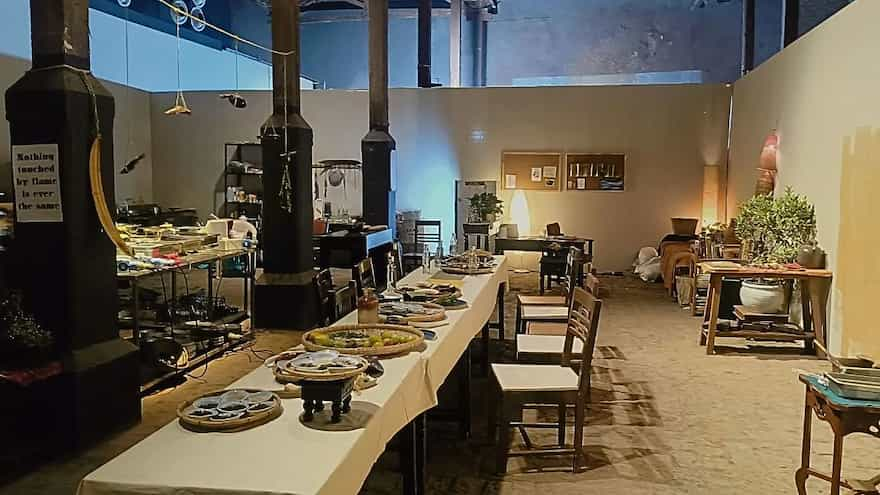
While each curated collaboration brought something unique to the table, one of the weekend’s highlights was the one-time installation by architect Udit Mittal inspired by Chef Doma Wang’s childhood in Kalimpong and the noodle factories she knew there. Chef Doma and daughter, Chef Sachiko took elements from their past to shape a menu replete with nostalgia while Mittal brought the vision to life through unfurling bamboo that wound their way through the space and into a beautiful Tibetan eternal knot on the ceiling, a nod to Chef’s Buddhist beliefs.
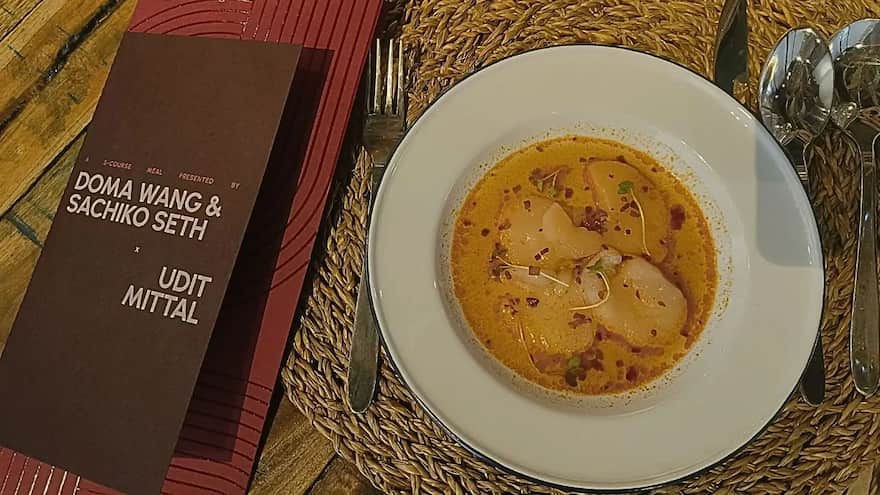
The menu opened with delicate cured scallops dressed in rice wine vinegar and punctuated with green herb oil and red chilli oil which brought a textured flair to complement the mild and buttery scallops. This gave way to a red rice and shiitake stuffed chilli, inspired by Bhutan’s famed Ema Datshi. The stuffed grilled pepper sat proudly on a datshi cheese sauce, with lashings of chilli garlic butter that played with expectations of sweetness and umami. The third course brought sun-dried yak paired with smoked pork lard, kinema gel, an airy churpi cremeux, and julienned spring onion, a dish that spoke to the chef's engagement with Himalayan ingredients and preservation technique, embodying the idea that simplicity can be inspired.
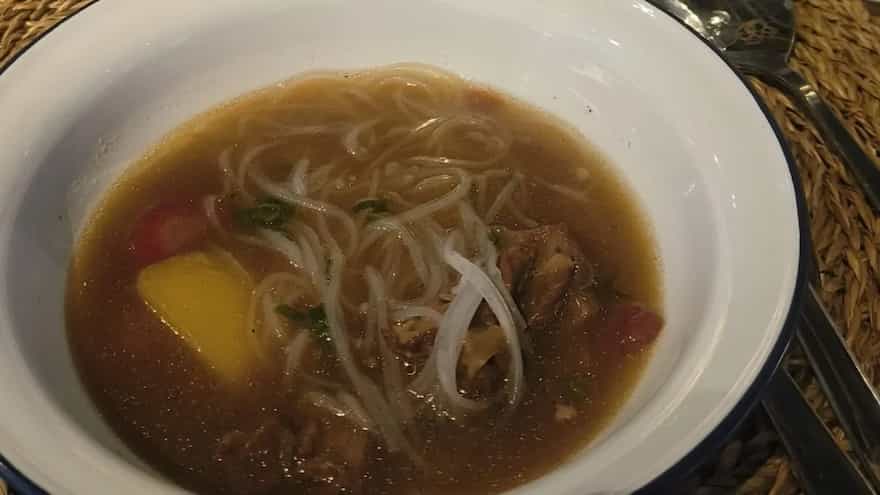
The meal built towards a comforting fourth course of blanched mung bean noodles with pork belly pot roast, served in a fragrant star anise broth alongside charred bok choy. The dish spoke to memories of her childhood, the rich warming broth perfect for the chilly Kalimpong evenings. The experience concluded with a signature dessert from Chef Sachiko, a walnut and jaggery dessert filling encased in a delicate mochi shell, finished with tart, bright peach and apricot sauce, a final gesture that balanced textural intrigue with the warmth of traditional Indian sweetness, bringing the journey full circle from refinement to nostalgia.
Each course brought a new taste and understanding of Chef Doma’s past and process, but it was Udit Mittal’s inspired designs that helped transport you to the mental setting. “Collaborating with a chef is something unique and new, for me to speak to them and know the mind of a chef was really interesting,” he says, “The food was very restrained, but I enjoy showcasing contradicting experiences, things where things become what you don’t expect. With the rustic look of the bamboo, the repurposed cable drums becoming tables, you wouldn’t expect such a high class fine dining experience in this setting, but that’s why I think it works. Creating this surreal, dreamlike atmosphere that contrasted with the refined dishes was something I really enjoyed.”
A Weekend Like No Other
Wandering amid the weathered walls of Mukesh Mills, every turn held new surprises and delightful discoveries for any foodie. The Gathering: Edition 02 invited attendees to slow down, savour, and witness India's creative future taking form in real time. Every moment was choreographed with intention - tables that told stories, workshops that invited touch, performances that stirred the spirit. Here, dining became dialogue and culture found its most vivid expression.




