


 Share
Share

Indian cuisine is a melting pot of cultures and culinary misconceptions. Somewhere down the line, we got so embroiled in the perceptions of Indian food shaped by what we see on restaurant menus the things that people eat at home took an unintentional backseat. For example when most people think of Awadhi cuisine, their minds immediately turn to the grandeur of royal kebabs, elaborate biryanis, and rich kormas served in restaurants across North India. However, this perception only scratches the surface of a culinary tradition that runs far deeper than is commercial persona. The true essence of Awadhi cuisine lies not in the opulent dining halls of modern establishments, but in the humble kitchens of homes across Uttar Pradesh, where generations of women have quietly preserved, nurtured, and evolved this magnificent culinary heritage.
The Women of Awadh project, presented at Mumbai's Waarsa by Chef Rahul Akerkar and Aditya Birla New Age Hospitality (ABNAH), offers a rare glimpse into this hidden world of home cooking. Through the collaboration of Writer and Curator Anubhuti Krishna and Home-Chef Sheeba Iqbal of Naimat Khana, this initiative celebrates the women who have been the true guardians of Awadhi cuisine, those who have passed down recipes not through written texts, but through memory, intuition, and countless hours spent watching their mothers and grandmothers work their quiet magic in family kitchens.
This project on a plate is an impactful insight into challenging the preconceptions about what Awadhi cuisine truly is through flavours passed down in the march of history, wisdom inherited through children watching their mothers at work, and a cultural identity preserved through food.
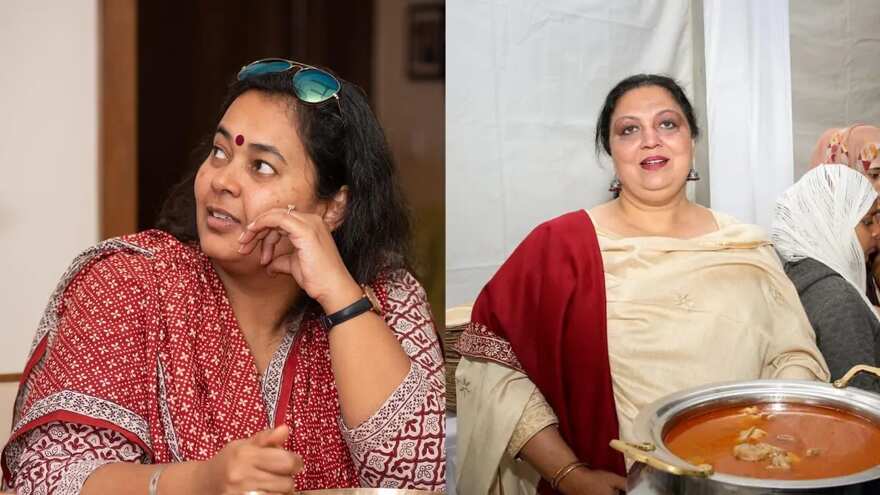 (L) Anubhuti Krishna (R) Sheeba Iqbal
History of Awadhi Cuisine
The historical narrative of Awadhi cuisine is typically told through the lens of the Nawabs' royal kitchens, where elaborate dishes were crafted by professional chefs like bawarchis and rakabdars. However, this grand culinary tradition had to find its way into ordinary homes, where it was adapted, simplified, and made practical for daily life whilst retaining its essential character and utilising the wealth of local flavours.
The region of Awadh, situated in the Gangetic valley, provided the foundation for this transformation. As Anubhuti Krishna explains, "it's the land which is among the most fertile. Ganga, Jamuna. So you have the most beautiful produce. And that produce then translates into the food that we eat." This abundance of quality ingredients meant that home cooks didn't need to rely heavily on elaborate preparations or excessive spicing to create flavourful meals.
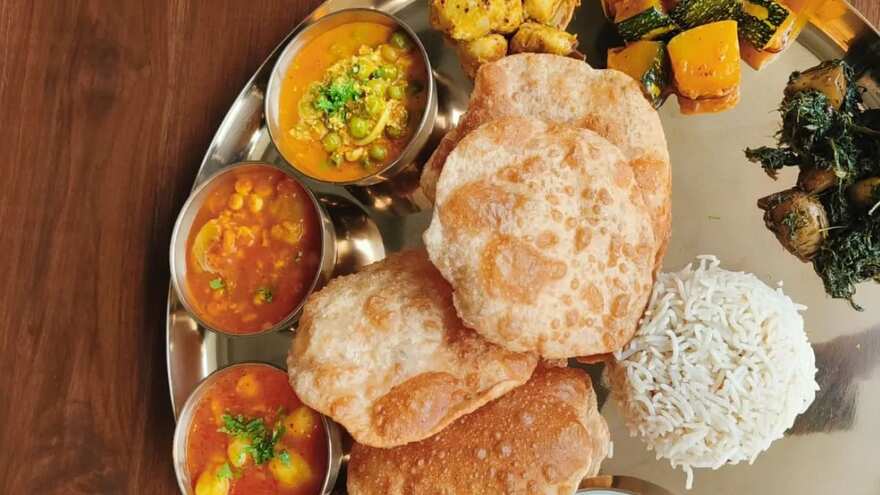 Simplicity is at the heart of Awadh's vegetarian fare
The transition from royal kitchen to home kitchen required a fundamental shift in approach. Whilst the palace kitchens could afford exotic ingredients and labour-intensive techniques, home cooks developed their own wisdom around simplicity and restraint. Anubhuti notes, "the spices are very minimal. There's hardly any tadka. There's just a little tadka. There's hardly any masala paste. No onion, garlic as well. So the idea is that you shine light on the produce." This evolution wasn't a dilution of the cuisine but rather a distillation of its essence. Home cooks understood that when you can use less ingredients and make a beautiful dish, that's the talent of a chef. They developed what she describes as "a light handedness in everything. There's a restraint in how you use the masala. You're not going all out just because you want to camouflage something."
The post-colonial period brought further changes. Sheeba Iqbal notes that Awadhi cuisine has been shaped by various historical influences, from royal patronage to cultural exchange and changing ingredient availability. Yet through all these transformations, the home kitchen remained the constant, the place where the soul of the cuisine was preserved and passed down through generations of women.
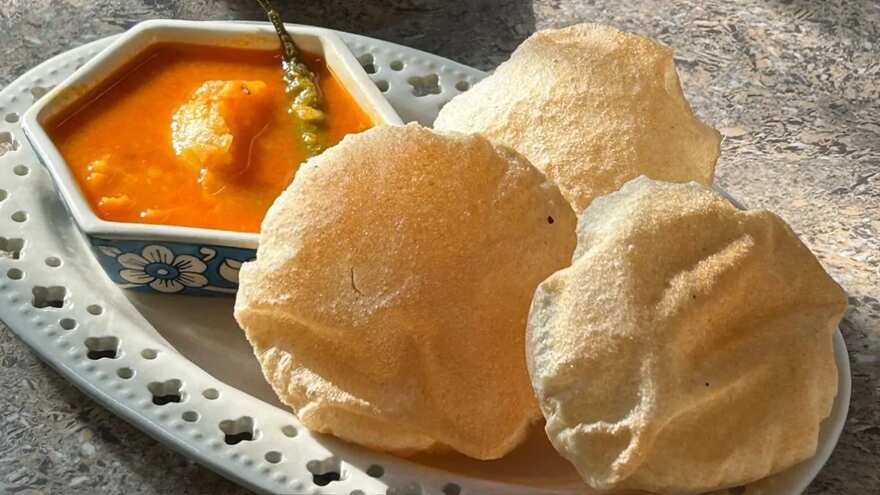 Like memories, recipes have been passed down through generations
The Role of Women in Awadhi Homes and Kitchens
Women have been the unsung heroines of Awadhi cuisine, serving as its true custodians and innovators. Their role extends far beyond mere food preparation; they have been the keepers of cultural memory, the adapters of tradition, and the bridge between past and present.
Anubhuti Krishna's personal narrative illuminates this beautifully. Speaking about her own culinary inheritance, she says, "all the food you eat today is my dadi's food. And my mother's, of course. Because my mother told me down a little bit, she couldn't eat too much masala. So my dadi loved masala. So there would be a little more spice." The Women of Awadh project emerged from Anubhuti's desire to challenge stereotypes about women from her region. As she explains, "there's this perception that the women of North India, primarily, and UP and Bihar, they're not empowered. They don't have a say. While that's true for all of the world at some level, I have to bring that out that that's not true for at least my people or the women I've seen." She recounts how her grandmother travelled alone across the country in the 1980s and 90s, demonstrating the independence and strength that these women possessed.
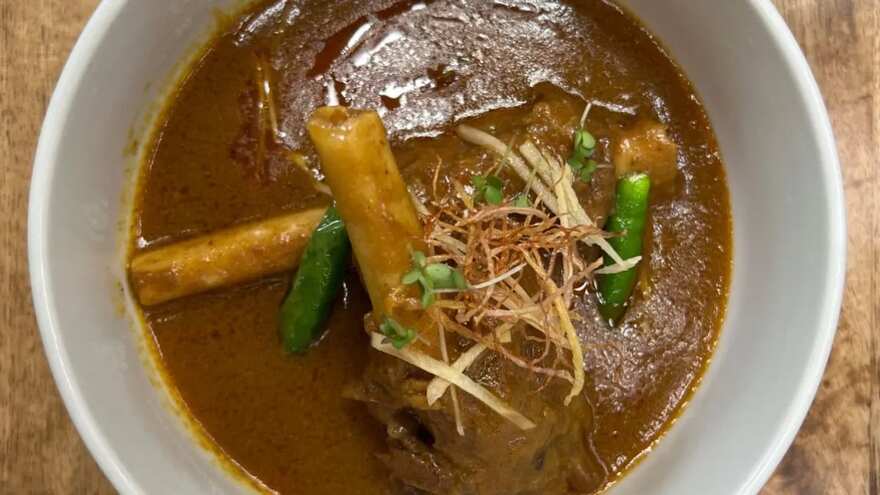 The women of Awadh safeguard the region's home cooking
Sheeba Iqbal has similar tales to tell about the women and home kitchens have shaped Awadhi cooking, “Women have played a vital role in preserving traditional recipes and techniques, passing down family secrets and heirloom recipes, innovating and adapting dishes to suit local tastes and ingredients, and nurturing the art of slow cooking and attention to detail," she explains, “Their contributions have been vital in maintaining the authenticity and richness of Awadhi cuisine, making it a treasured part of cultural heritage."
The philosophy these women brought to cooking was deeply rooted in care and connection. As Sheeba notes, the lessons from her mother taught her that "food is a way to connect with our heritage and culture" and that "every dish tells a story, and food is a way to share love and tradition." This emotional dimension of cooking—the understanding that food carries memory and meaning, is perhaps the most crucial element that distinguishes home cooking from its restaurant counterpart.
Modern Awadhi women continue this tradition whilst embracing contemporary life. Anubhuti describes this balance perfectly: "I have a career full time, I do everything, I also go bar hopping. But I also come back and make this whole meal. So while we are modern, and we are empowered, and we are doing whatever a modern movement across the world is, we're still rooted and we go back to where we belong."
What’s On The Thalis
Across the course of August, the Women of Awadh project presents two distinct thalis that showcase the diversity and depth of home-style Awadhi cooking, each reflecting the unique background and culinary philosophy of its creator. Anubhuti Krishna's menu is an ode to vegetarian home cooking, drawing from her Kayastha-Lucknowi upbringing and the sacred rhythms of Shravan. Her thali offers flavours of her past and the women who "cooked daily not out of duty, but out of devotion."
The expansive thali features Nimona, a seasonal dish that requires exceptional patience and skill, which varies across regions, adapting flavours and spices to the local palate. As Anubhuti explains, "Nimona is very special because it was made very, not so frequently. This morning I started making Nimona at 9.30. It took two hours to make. So for a vegetarian dish to take two hours, it's a big deal." The thali also features Soya Methi ka Saag, Khoya Matar ki Sabji (a dish she notes was "reserved for very special occasions" due to the expense of khoya), Rasey ke Aloo, Sookhi Ghuiyan, Khatta Meetha Kaddu, and Kheere ka Raita.
The meal demonstrates the intelligent use of spices in home cooking. Different vegetables receive different treatments based on their properties and everything is subconsciously shaped by Sattvic food traditions, eschewing onion and garlic in favour of simple spices. "The arbi for example,” she explain, “Has a little ajwain in it. Because that helps you digest it. The aloo has jeera in it. Because it adds a little bit of heat to the sabzi. Then the kaddu (pumpkin), that has methi in it. So that lends a different flavour to the food."
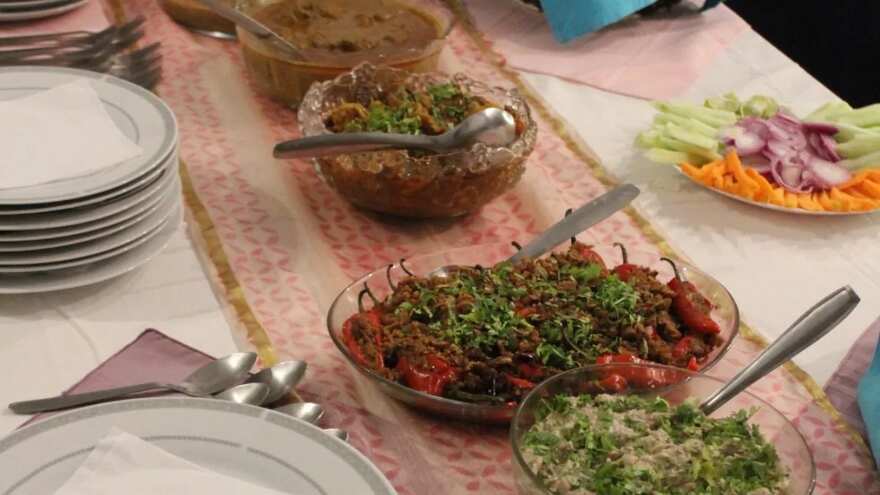 Home food is world's apart from the Awadh cuisine you see on menus
Sheeba Iqbal's menu however presents a completely different facet of Awadhi home cooking. Drawing from her dual culinary inheritance she is bringing together the practicality of her professor-mother's flavourful cooking and her marital haveli's royal, indulgent kitchen steeped in daawats, rituals and unapologetic abundance.
Her thali includes Ghutwan Kebab, Mutton Yakhni Pulao, Chicken Qorma, Achhari Machli, and Baingan ka Raita with Besan ki Tikiyan. The desserts, Qiwami Siwayin, Zarda, and Ande ka Halwa, honour "the sweet traditions of celebratory Awadhi tables." Sheeba's approach is described as "grounded, emotional and expressive, letting the dishes speak of their heritage while ensuring they remain accessible to new generations of diners."
Though very different at first glance, both menus share common characteristics that define authentic Awadhi home cooking, the emphasis on seasonal ingredients, the restrained use of spices that allows the natural flavours to shine through, and the deep emotional connection between the cook and the food. They represent what Sheeba describes as "food from Lucknow homes, distinguished by its rich and complex flavor profile achieved through slow-cooking, rich spices, luxurious ingredients, and a delicate balance of flavours."
The Women of Awadh project offers us a precious opportunity to understand Awadhi cuisine as it truly exists, not as a museum piece from royal kitchens, but as a living, breathing tradition that continues to evolve in the homes of contemporary families. Through the stories and menus of Anubhuti Krishna and Sheeba Iqbal, we discover that the most important message about this cuisine is that there’s more to UP’s cuisine than just great kebabs.
Women of Awadh at Waarsa
August 2–24, 2025
Timings: 12–4pm | 7pm–1am
Address: Waarsa, NCPA Gate 2, NCPA Marg, Nariman Point, Mumbai 400021




