
 | By Nirmalya Dutta |
 | tldr |  |
|  |

| In Pav We Trust: The Holy Trinity of Mumbai’s Gustatory Offerings |
Hello there, and welcome to the fourth edition of Foodgasm – a five-course meal for your inbox. In the previous editions, we have talked about Mughlai, Indian Chinese (or Sino-Ludhianvi), and Russian (sort of) cuisines. Today, our food trail will take us through Mumbai, which might be in the news for political turmoil, but has always stood as the proverbial shining city on the top of the hill – the destination of dreams. As Mint columnist Vivek Kaul noted in his newsletter Easynomics, a city is sustained by the myth surrounding it. In an essay titled Goodbye To All That, Eula Bliss writes: “The myth of New York seems to be sustained by the fact that so many people who live there are from somewhere else. They come to the city and immediately dedicate themselves to making it the city of their imagination. The—you know—glittering city of endless opportunity that oozes riches and delights for the young and talented. I also came from somewhere else.” One can easily replace New York with Mumbai.
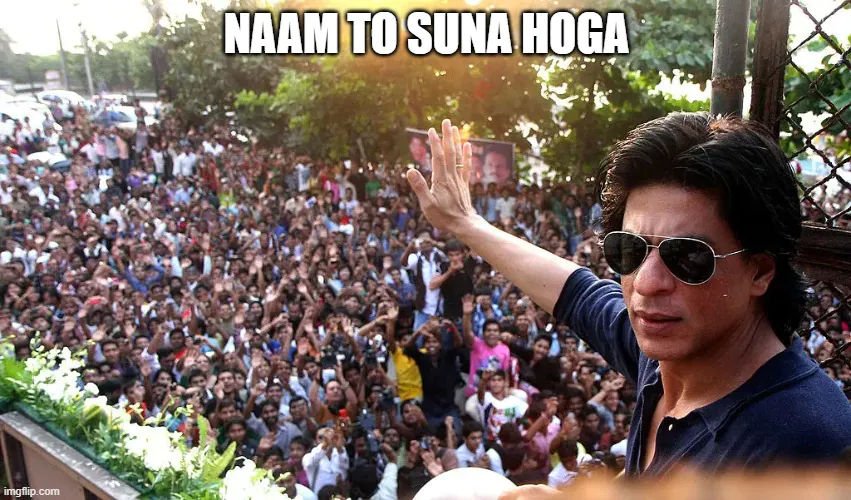
I like to call it the SRK Syndrome, a tribute to the Bollywood’s ultimate romance man who recently completed 30 years in the industry. The SRK Syndrome occurred to me while thinking about the thousands of fans who embark on a pilgrimage to Bandra (West) to catch a glimpse of Mannat. The journey has, at its heart, a singular message of triumph over adversity: If an outsider like Shah Rukh Khan could come here and make it, so can you. It’s the mantra that Mumbaikars repeat in their heads in trying times when even the commute makes one feel like Sisyphus pushing a boulder up a hill. The key to a happy life in Mumbai is to graciously accept its food. Now, to an outsider, some of the dishes might come across as culinary Stockholm Syndrome, particularly when it comes to items like Chinese bhel, ragda-infused pani puri, chilli cheese schezwan noodle frankies, and cheese-topped sandwiches that refuse to follow the basic etiquette of a sandwich that dictates that all the ingredients should be placed between two pieces of bread. In fact, eating at many a Mumbai street cart comes with the risk of getting PTSD – post-traumatic-schezwan disorder. |

But the item that holds the city together – from Panvel to Virar – is the pav.
The key to decoding the DNA of the Maximum City is to understand that a pav isn’t just a piece of bread. It’s a morsel of hope, an accompaniment to a thousand dreams. It’s the fuel, with some accompanying gruel, that runs India’s financial capital. It’s a morsel for the have-nots and nostalgia for the have-lots. A pav in time saves nine, especially when you have to catch the local at 9:10.
In fact, it’s utterly fascinating how Portugal’s greatest import to India came to be the holy bread in the city that was part of a messy dowry arrangement when Catherine of House Braganza was married to the Tudor monarch Charles II. So, this week we have the Holy Trinity of Mumbai’s pav offerings (sorry, missal pav, to be fair, you are more a Pune delicacy), along with an old Mumbai favourite as dessert.
But, before we begin this week’s food trail, we pay tribute to Obi-Wan Kenobi’s rematch of the century with his former apprentice.
|



| |||||
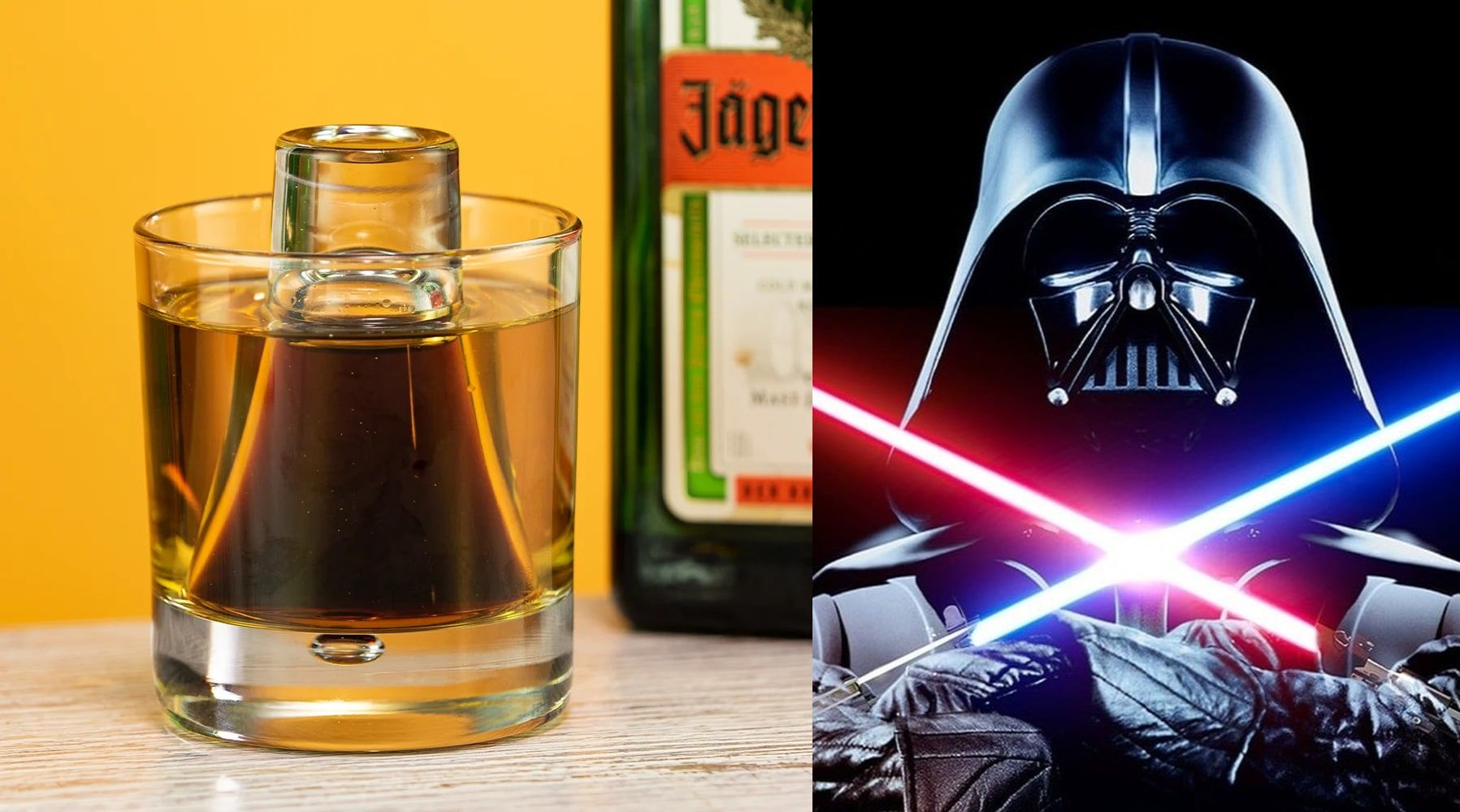
Disney+ finally junked the helmet phase of this Star Wars era (with apologies to Mando and Boba Fett) to give us the emotional arc of a mainstream character who has been iconic in the galaxy’s pantheon. We see the master Jedi go from strength to strength, and we’ve come up with a worthy cocktail to honour his and his former apprentice’s legacy – the Darth Jager. The unique tribute to the Dark Side was created by Darren Warburton at Buddha on Beach Bar in Thailand in 2012 and consists of two things – Jägermeister and apple cider. The cocktail is made in a specific way in which you’ve to first pour a shot of Jägermeister (30ml), hold it upside down in an old-fashioned glass, and pour the apple cider (90ml) before removing the glass. If you are confused, watch this video. | |||||
| |||||
 |



 |
| Vada Pav |
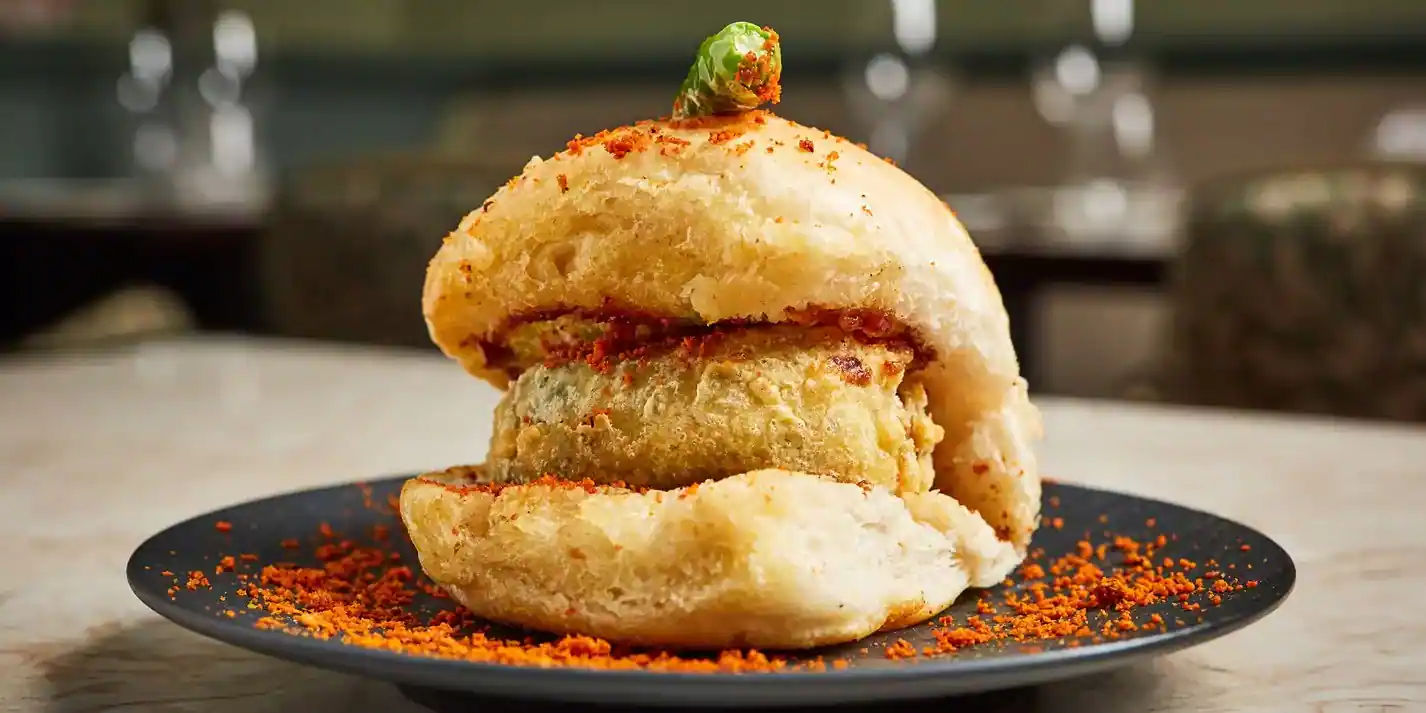 |
We start with a pav dish that evokes strong emotions from all concerned. Anthony Bourdain called it the “best thing he ever ate”. A New York Times article agreed: “Mr. Bourdain was right on the money. The vada pav is a glorious carb-on-carb overload — a spicy potato patty encased in a gram-flour coating, then sandwiched in a buttered bun and bathed in tangy garlic chutney.” On the other hand, a former colleague who happened to be Bengali, a group that thinks that they are the only ones born with functioning taste buds, eloquently rebutted: “Slicing open yeast-processed flour lumps and filling them with lipid-processed tuber discs does not make it food.” But either way, the offering has come to epitomise the city always on the move and something you can have on the go, even if you are “urban poor”. Thanks to Bollywood, the dish’s appeal has spread across the length and breadth of the country. In fact, it was a pivotal player in a terse scene in Kaminey (2009),which sees Amole Gupta’s Bhope Bhau at his menacing best and almost Tarantino-esque in his execution and plot (think Inglorious Bastards’ pub scene). Legend has it that the vada pav was created by Ashok Vaidya in the 1960s outside Dadar Station. Ashok Vaidya’s son Narendra told DNA that his father started off by selling pohaand vadas, while the stall next to his used to sell omelette pavs. Narendra added: “One day, my father decided to put the vada between the pav and add some garlic chutney for flavour. The combination was a hit, and the vada pav was born.” The unique creation was patronised by former Shiv Sena supremo Balasaheb Thackeray who would even ask BMC officials not to harass Ashok Vaidya. Now, everyone has their own favourite vada pav stall across the city and its suburbs, but its epicentre was Dadar. Here’s how you too can create Mumbai’s favourite snack. Check out the full recipe on Slurrp. | |||||||
| |||||||
 |


 |
| Keema Pav |
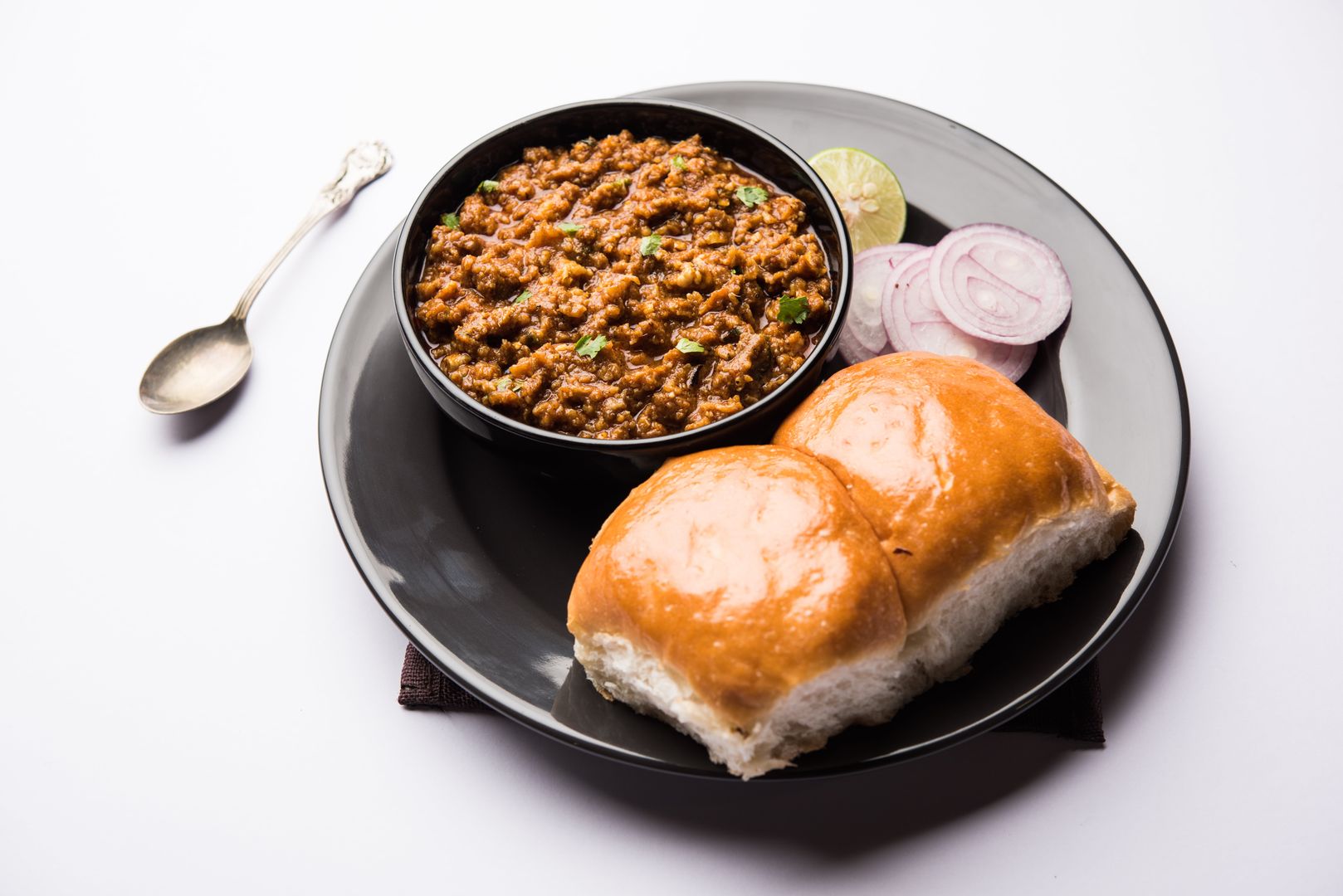 |
If the vada pav became the chow that encapsulated nativist sentiments, then the dish which captured Mumbai’s cosmopolitan nature was the keema pav – a staple of Irani Cafes. Irani cafes in Mumbai – now a dying breed – were run by Iranis (or Persians depending on the date of arrival) who came to India in various batches and opened what came to be known as Irani Cafes which were usually situated in corners. As Aakar Patel notes in his piece for Mint, there was a reason Irani cafes would end up on every corner. He notes: “The corner places were cheap because Gujarati merchants would not buy commercial property that was sinh-mukhi (lion-faced, wider at the front than the rear). They preferred gau-mukhi (cow-faced with an opening narrower than its rear). But all the corner properties are necessarily sinh-mukhi, and so, Bombay has many of these excellent cafés.” And the Irani cafes became important melting pots for different communities and even managed to attract a female clientele by having separate family rooms. The staples included chai, berry pulao, cherry sodas, mawa cake, bun maska, mutton patties, apple pies, and of course, keema pav. Like most other Mumbai dishes, the keema pav’s longevity is boosted by its utility. While larger mutton pieces would have to be broken (and would be hard to eat with a pav), a keema pav is a no-nonsense slap-dish that you can finish in a jiffy if you are in a rush. Sadly, many of the joints in Mumbai have closed down, while newer chains like SodaBottleOpenerWala have been trying to make Parsi food cool again. Here’s how you can make Bombay-style keema pav and take a gustatory time machine to simpler times. Check out the full recipe on Slurrp. | |||||
| |||||
 |


 |
| Chocolate Sandwich |
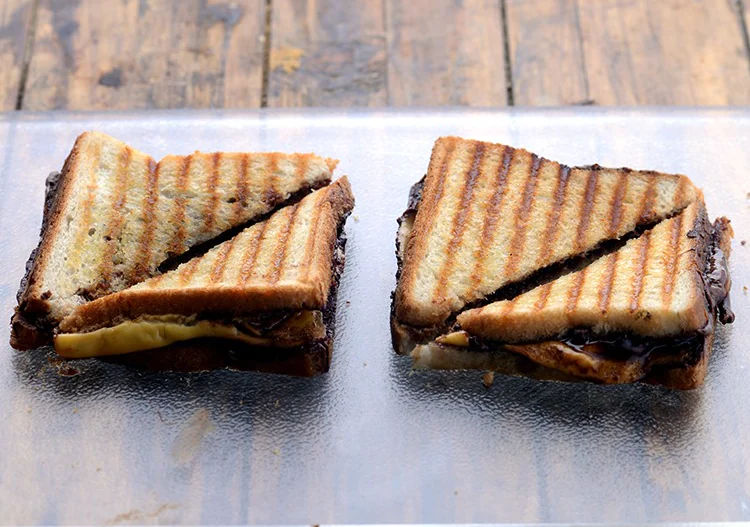 |
While one might have written slightly mean words about the Bombay-style grilled sandwiches that refuse to follow the etiquette of sandwiches, they were certainly important fillers when we were working on a news desk and needed to silence our rumbling tummies. There were the usual favourites, the chilly cheese toast, masala sandwich, and even plain butter toast. However, what really stood out was a delightful concoction that our under-the-bridge sandwich (Elphinstone Road Bridge) guy called a chocolate sandwich. Was it a dessert? Was it a meal? It didn’t matter because it was delectable. The sandwich bhaya (SoBo pronunciation of bhaiya) made it using Hershey’s syrup, and just as Don Draper told the folks from Hershey’s: “It was the only sweet thing in my life.” Check out the full recipe on Slurrp. | |||||||
| |||||||
 |


 |
| How Lincoln helped ‘create’ an iconic Mumbai dish |
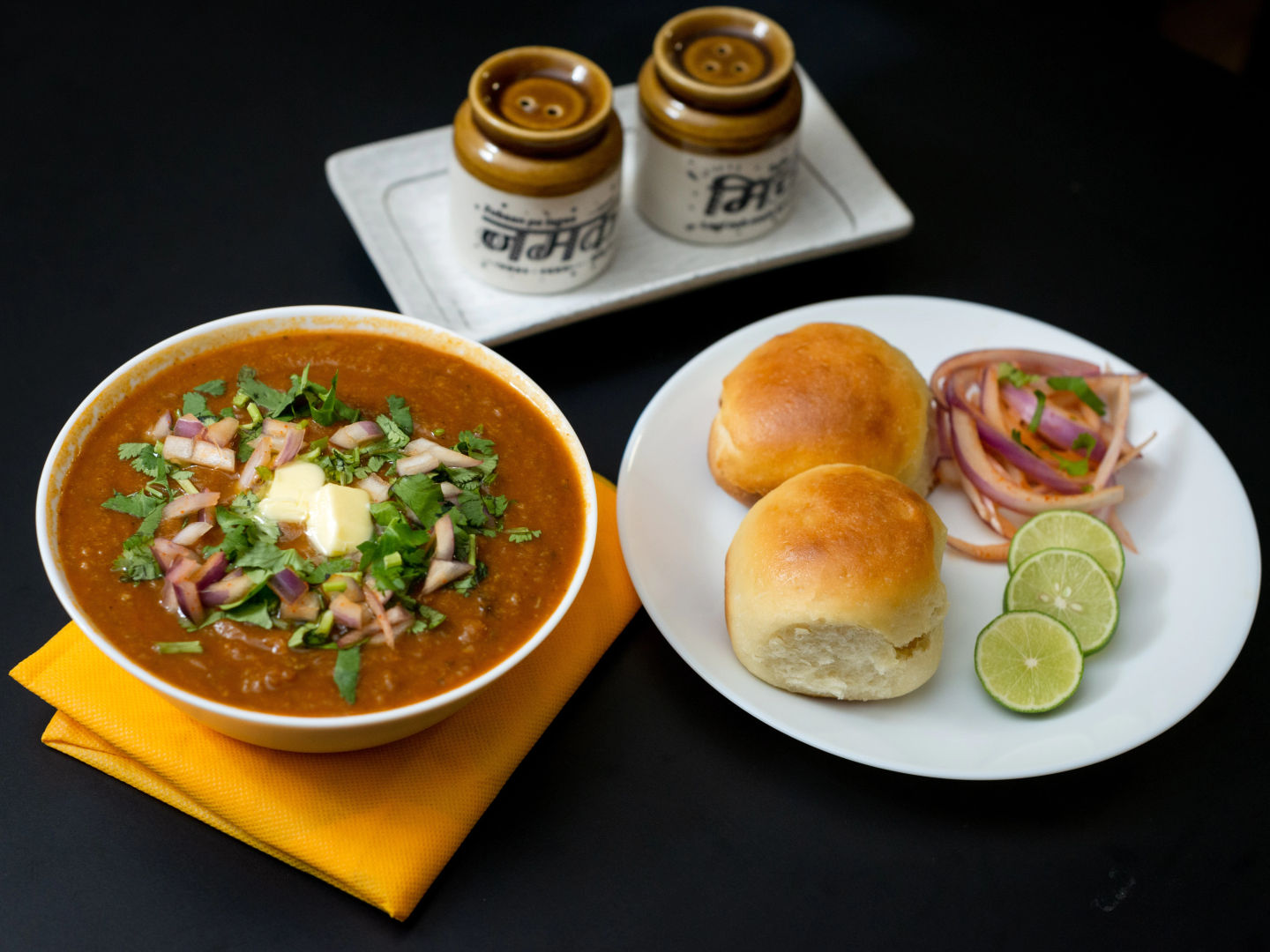 |
The Holy Trinity of Pav dishes – after vada pav and keema pav – is the pav bhaji, gustatory proof of Aristotle’s anecdotal phrase that the whole can be greater than the sum of parts. One can use a thousand different adjectives to describe it, but let me borrow the words of Sidin Vadukut from his column about the dish’s origin: “A mongrel dish of uncertain origin, flexible loyalties, epic history, shallow roots, convenient assembly, instant despatch, infinite scalability, a spicy kick, satisfying mouthfeel, and a tart finish. A dish, my reader, that is truly worthy of Mumbai.” Interestingly, the pav bhaji’s ingredients are sourced from across the world. Chillies came from Mexico. Garlic, most probably, is from central Asia. Tomato, capsicum, and potato from South America. And created most probably for hungry Gujarati traders thanks to the American Civil War. At the height of the American Civil War, Gujaratis would trade cotton when the global supply was affected by the American Civil War. Aakar Patel notes in his Mint column: “Abraham Lincoln’s navy blockaded New Orleans and the Mississippi and Manchester’s looms came to a halt, sending cotton prices shooting. The Gujarati merchants, being one of the world’s finest managers of uncertainty, made a lot of money. These early globalizers worked in a fashion similar to today’s call centre workers, late into the night when the rates were wired in, and orders wired out at American and European times. By then, everyone would be quite famished, and the wives would be asleep at home.” He adds: “This demand for regular food at an unusual time created a unique supply. The traders were served by street stalls that invented a late-night special: pav bhaji. This is mashed vegetables (all the leftovers) cooked in a tomato gravy and served with buttered loaves. The loaf came from the Portuguese Jesuits, who settled in Bandra around the mid-1500s. It has been neatly absorbed into Indian fast food, soaking up the oil and gravies that Indians love.” The rest is culinary history. The pav bhaji exploded with more versions than Loki variants. Now you can eat Jain pav bhaji (no onion or garlic or potatoes), Punjabi pav bhaji (with extra spices), khada pav bhaji (where the ingredients aren’t mashed together), pav bhaji wraps, and many other combinations that your brain can't even begin to fathom. And it all happened because Abraham Lincoln stood up against slavery. | |||||
| |||||


 | |||||
| |||
| Written and edited by Nirmalya Dutta. Send flowers and cakes to Nirmalya.dutta@htdigital.in |
| Contact Address |
| Hindustan Media Ventures Limited, Hindustan Times House, 18-20, Second Floor, Kasturba Gandhi Marg, New Delhi – 110 001, India |
| Download App |
  |
| Follow Us |
   |
| If you need any guidance or support along the way, please send an email to slurrp@htmedialabs.com. We’re here to help! |
| Terms and conditions apply. View our privacy policy here. |